How do you ensure proper wetting during soldering in Pcb rigid flex?

proper wetting during soldering in Pcb rigid flex
Ensuring proper wetting during soldering in PCB (Printed Circuit Board) rigid flex assemblies is essential for achieving reliable and robust solder joints, which are critical for the overall functionality and performance of electronic devices. Proper wetting refers to the formation of a uniform and well-defined solder fillet that adheres to the surfaces of the component leads or pads and the PCB traces or pads. In the context of rigid-flex PCBs, which feature both rigid and flexible sections, ensuring proper wetting presents unique challenges due to the varying material properties and surface finishes of the board substrates.
One of the key factors in ensuring proper wetting during soldering in pcb rigid flex is selecting the appropriate solder paste formulation and flux chemistry. Solder paste serves as the medium for solder deposition during the reflow soldering process and plays a crucial role in promoting wetting and solder joint formation. The solder paste must have the right viscosity, particle size distribution, and flux activity to enable proper wetting and ensure good solderability on both rigid and flexible sections of the board.
Moreover, optimizing the soldering process parameters, such as temperature profiles and ramp rates, is essential for achieving proper wetting in PCB rigid flex assemblies. The reflow soldering process involves heating the assembly to a specific temperature to melt the solder paste, followed by controlled cooling to solidify the solder joints. Proper temperature profiling ensures that the solder paste reaches its melting temperature uniformly across the entire assembly, allowing for consistent wetting and solder joint formation without overheating or damaging the components or board substrates.
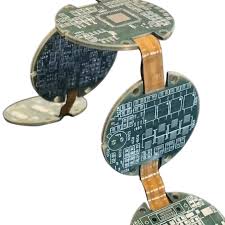
How do you ensure proper wetting during soldering in Pcb rigid flex?
Furthermore, ensuring proper surface preparation of the PCB substrates and component leads is critical for promoting wetting during soldering. Surface contaminants such as oxidation, flux residues, and organic residues can inhibit solder wetting and lead to poor solder joint quality. Therefore, thorough cleaning and surface treatment processes, such as chemical cleaning, plasma treatment, or solderability preservatives, may be necessary to remove contaminants and improve solderability on both rigid and flexible sections of the board.
Additionally, optimizing the design of the PCB layout and component footprints can help facilitate proper wetting during soldering in rigid-flex assemblies. Design considerations such as pad geometry, solder mask openings, and component spacing can influence solder paste deposition and wetting behavior. Ensuring adequate clearance and spacing between components, especially in areas with high-density interconnects or tight routing constraints, can prevent solder bridging and facilitate proper wetting of individual solder joints.
Moreover, implementing advanced assembly techniques such as nitrogen reflow or vapor phase soldering can help improve wetting and solder joint quality in PCB rigid flex assemblies. Nitrogen reflow creates an inert atmosphere inside the reflow oven, which reduces oxidation and promotes more consistent wetting and solderability. Similarly, vapor phase soldering provides uniform heating and cooling of the assembly, resulting in reliable solder joints with minimal risk of defects such as solder voids or non-wetting.
In conclusion, ensuring proper wetting during soldering in PCB rigid flex assemblies requires careful consideration of solder paste formulation, process parameters, surface preparation, design optimization, and assembly techniques. By addressing these factors, electronics manufacturers can achieve reliable and robust solder joints that meet the stringent quality and reliability requirements of modern electronic devices. Proper wetting not only enhances the mechanical and electrical performance of rigid-flex PCB assemblies but also contributes to the overall durability and longevity of electronic products.