Audi’s Most Power-Dense Engine Is Nearing Death’s Door

Quick Links
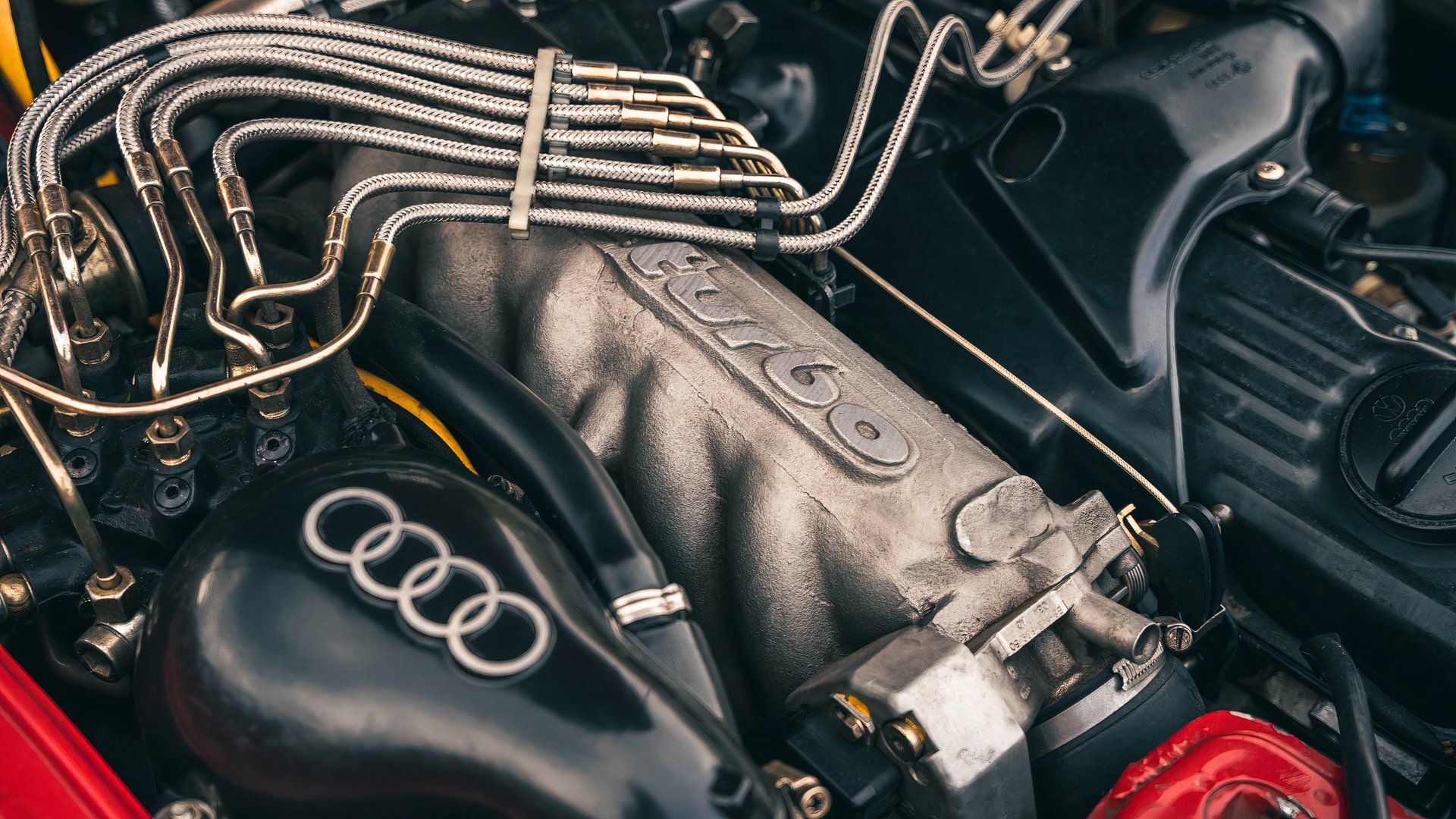
Many interesting powerplants have found their way under the hoods of cars for decades, and up there with the best of them is the celebrated Audi five-cylinder. Most car companies have never even touched the design, instead opting for more conventional four, six, and eight-cylinder setups, but Audi believed the five-cylinder had its merits, and throughout the decades perfected the design until they created one of the most award-winning engines of all time: the 2.5-liter TFSI.
Debuting in 2009, this engine immediately went to work in the TT RS, followed by the RS3. Both models have garnered acclaim throughout the industry for their performance, and a big part of this is thanks to this turbocharged engine, but all good things come to an end. The TT RS is dead, cast off at the end of 2023, and the next generation of the RS3 is reportedly going electric. This leaves no room for the five-cylinder in the lineup, and a huge asterisk on its future.
A Champion’s Pedigree
The 2.5 TFSI has an illustrious history, one that stretches back to Audi’s deep-rooted love affair with the five-cylinder configuration. In the early 70s, Audi engineers were tasked with creating an engine that could produce more power than a four-cylinder while not sacrificing efficiency. The result was the Audi 100 (5000 in the US), which debuted the brand’s first-ever inline-five, a 2.1-liter naturally aspirated unit that produced a blistering 136 horsepower. Pretty big stuff when V8 Mustangs were producing just about the same at the time.
It wasn’t until the 80s when the five-cylinder made its way into Audi’s Quattro rally car that the engine cemented its place in history. The engine, combined with AWD, rewrote the rules of motorsport, earning multiple Group B World Rally Championship titles for the brand. The power, balance, and unmistakable sound of that five-pot made the car a legend, and one of the greatest of all time.
Add CarBuzz to your Google News feed.
Fast-forward to 2009, and the introduction of the 2.5 TFSI marked the rebirth of a performance Audi five-cylinder. The engine became an instant success, winning the coveted International Engine of the Year award by 2010. Over the next decade, it continued to rack up accolades, taking home nine consecutive awards from 2010 to 2018. Its triumph wasn’t just limited to racetracks or awards ceremonies; enthusiasts worldwide praised its unique combination of compact size, incredible power output, and everyday usability.
The 2.5 TFSI: A Modern Engineering Marvel
|
Engine |
2.5-liter Turbocharged Inline-five cylinder |
|---|---|
|
Power Output |
401 hp |
|
Torque |
369 lb-ft |
|
Hp/liter |
160.4 hp/liter |
|
Special Features |
Audi Valvelift System, plasma-coated cylinder walls |
2.5 liters may not seem like a lot, but this is why turbocharging and its overall design do wonders. When it first debuted, it made 335 horsepower, but today, it makes an astounding 401 horsepower and 369 lb-ft of torque in US. spec, making it one of the most power-dense engines on the market today. That doesn’t mean it isn’t capable of supercar performance, as it can catapult the Audi RS3 from 0 to 60 mph in just 3.6 seconds.
This feat of engineering didn’t come easily. The engine’s early version featured a cast-iron crankcase, a durable choice but also more weight. In 2016, Audi took the bold step of redesigning the engine, replacing the cast-iron block with aluminum. This switch shaved nearly 40 pounds off the engine’s weight, improving both performance and handling. Audi also incorporated advanced features such as variable valve timing through the Audi Valvelift System (AVS), which optimizes exhaust gas flow to reduce turbo lag and improve throttle response. Plasma-coated cylinder walls were introduced to reduce friction, and even more efficiency and durability in performance were netted.
Beyond its raw numbers, the 2.5 TFSI possesses a character entirely unique in the industry. Its distinctive firing order creates a glorious sound. Whether at full throttle or just cruising, the engine’s roar immediately makes you feel like you’re in the glory days of the WRC. It’s proud history that’s impossible to forget, but its connection with the past may be one of the big reasons it’s going away.
The Last of Its Kind
While the 2.5 TFSI continues to perform admirably in the current Audi RS3, it’s difficult to ignore the growing signs that this engine’s time is running out. The RS3 is now the sole model in Audi’s lineup to use the 2.5 TFSI, with the TT RS having been discontinued and the RS Q3 unavailable in the U.S. market. It’s nearly impossible to justify an engine for just one model, which is a bad sign for sure.
Audi, like most major automakers, is transitioning toward an electrified future, and the future of the internal combustion engine appears increasingly bleak. European emissions regulations, which are progressively becoming stricter, have already limited the engine’s output to 394 horsepower in the EU due to the addition of a gasoline particulate filter. While U.S. models escape this restriction for now, it’s clear that regulatory pressures are making it harder for engines like the 2.5 TFSI to survive in a world pushing for cleaner, more efficient alternatives.
Audi has already announced plans to electrify its entire lineup by the end of the decade, meaning that combustion engines, even ones as iconic as the 2.5 TFSI, may not have much time left. The focus is now shifting toward hybrid powertrains and fully electric models, which, while impressive in their own right, lack the visceral thrill and character of a roaring five-cylinder engine. Could the engine be hybridized? We wouldn’t say it’s impossible, just highly unlikely.
A Fitting Farewell?

As of right now, Audi hasn’t officially confirmed the demise of the 2.5 TFSI. The discontinuation of the TT RS in 2022 marked the first major step toward the engine’s retirement. Meanwhile, the RS3 soldiers on, but a successor will be required at some point. The fourth-generation A3 is already more than halfway through its lifecycle. The issue is Audi just doesn’t need the five-cylinder engine anymore, because turbocharging has allowed even smaller engines to produce the same amount of power and more, and they’ll return better efficiency.
For now, we can still enjoy the 2.5 TFSI in the RS3, and it looks like it still has a few tricks up its sleeves. Audi Sport Boss Sebastian Grams has said a more powerful version of the model is on the way, and earlier this year the 2025 model recently reclaimed the Nürburgring lap record from the BMW M2 in a dominant show. We wouldn’t be surprised if an RS3 Performance pops up in the next couple of years as a final sendoff to the iconic engine, and even though we know it’s going to be incredible, it won’t make it hurt any less.