The Most Power Dense Dodge Engine’s Time At The Top Will Be Limited

The days of big, thumping-great V8s seem to be, sadly, coming to a close. As emission restrictions tighten and governmental focus on eco-consciousness further creeps over the assembly lines, the V8 is being slowly phased out of existence. Some manufacturers are trying to save them by reducing displacement and attaching hybrid drives. But, it seems, the humble eight-pot is slipping further and further into memory.
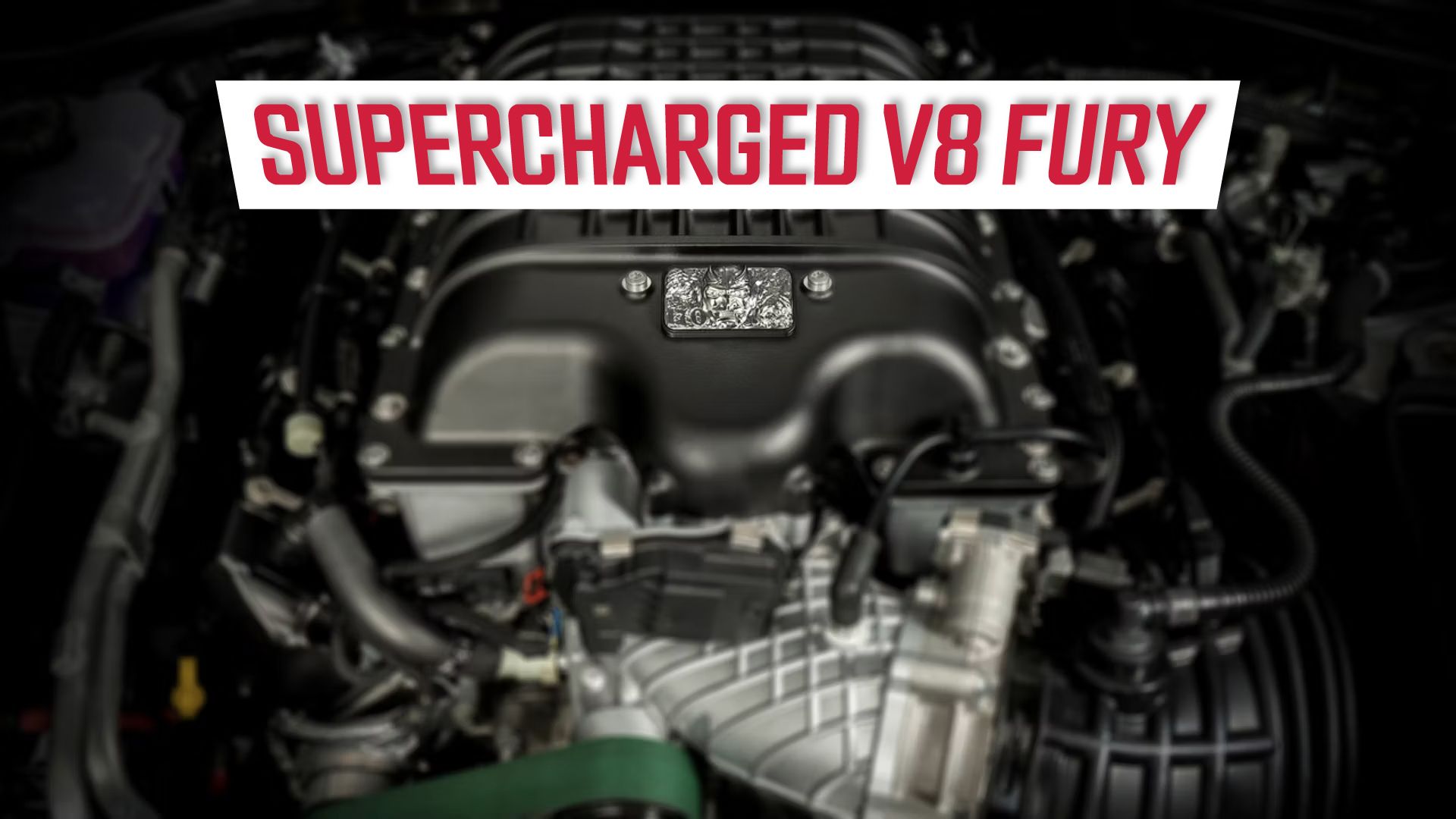
One (former) champion of the V8 is Dodge, responsible for some seriously powerful engines. One such engine is the focus of our write-up today, the 6.2-liter, 1,025-horsepower supercharged V8 found within the 2023 Dodge Challenger SRT Demon 170. It’s a seriously impressive mill, especially considering the sheer amount of acceleration force it can achieve. Read on, and we’ll discuss the Demon 170’s engine and just how power-dense it is.
The following write-up contains information sourced from official Dodge press materials. We did not consider the 3.0-liter Hurricane high-output inline-six, which boasts a higher power density than the Demon 170’s V8, because it has not yet been installed within a Dodge product. The Hurricane motor is set to be showcased in the 2025 Dodge Charger, which is not yet available for purchase. It is coming in the first quarter of 2025, however.
Loads Of Power: The Demon 170’s Engine
|
2023 Dodge Challenger SRT Demon 170 Specs (E85 Fuel) |
|
|---|---|
|
Displacement |
6.2-Liter Supercharged V8 |
|
Horsepower |
1,025 hp @ 6,500 rpm |
|
Power Density |
163.5 hp/l |
|
Torque |
945 lb-ft @ 4,200 rpm |
|
0-60 MPH Time |
1.66 Seconds |
|
1/4 Mile Time @ MPH |
8.91 Seconds @ 151.17 mph |
|
Top Speed |
215 mph |
- Boasts a power-density of 163.5 horsepower per liter
- Most powerful stock Challenger ever created
- Marked the final Challenger variation to be produced
The engine found within the Demon 170, while somewhat similar to most other Challenger 6.2-liter V8s, contains a slew of key differences which help it make that astronomical 1,025 horsepower figure. One of the largest differences is the Demon 170’s affinity for E85 fuel, which allows the motor to unlock its full potential. The “170” in this particular Challenger’s name denotes the alcohol proof content of the E85 fuel.
If you’re a connoisseur of uplifting beverages, you’ll know alcohol proof is whatever the elixir’s alcohol percentage is, times two. If you’re just using regular old E10 pump gas, you’ll have to make do with just 900 horsepower and 810 lb-ft of torque.
Running on E85, the 170’s specific power output, or power density, is 163.5 hp/l. That means for every liter of capacity, it produces 163/5 horses. While that may sound impressive, it’s actually not that great. While it’s true that forced induction increases power density, the Demon 170 is easily beaten by Ford’s 3.5-liter EcoBoost engine, not to mention Mercedes-AMG’s latest turbocharged four-pot. It’s actually on par with the engine in the Civic Type R.
A History Of Go-Faster Challengers
The Dodge Challenger as we knew it is no more. December 22, 2023, marks the date when the final Dodge Challenger, a black SRT Demon 170, left the factory, closing the book on Dodge’s most powerful production car ever built. Not only was the Demon 170 the most powerful Dodge to ever come off a factory floor, it also boasted Dodge’s most power-dense engine, as we mentioned earlier.
The Challenger’s story is a brief one, compared to other pony cars like the Chevrolet Camaro and the never-discontinued Ford Mustang. Dodge released its Challenger for the first time in 1970 as an answer to Ford’s Mustang and Chevy’s Camaro. While it was a bit late to the party, it still sold well, and sported a mean look and powerful engine options. After just four years, Dodge discontinued the Challenger, only to bring it back for another five years, beginning in 1977.
2008 marked the third time the Challenger was resurrected, and with it came an unbelievably nostalgic design. It was a hit, and no doubt it helped inspire Chevrolet to bring back the Camaro just a couple of years later. In 2015, the Challenger received a facelift, along with the newly-developed SRT Hellcat powertrain, which the Demon 170’s was based on. It sported 707 horsepower and 650 lb-ft of torque, not bad for 2015.
The Challenger’s top-spec engine just kept putting out more power as time went on. 2018 saw the introduction of the CHallenger SRT Demon, which boasted up to 840 horsepower and 770 lb-ft of torque, so long as you filled up with 100-octane or higher racing fuel, otherwise you’d have to make do with just 808 horsepower. Then, in early 2023, the Demon 170 was unveiled, with its ludicrously-high horsepower rating of 1,025 horsepower.

Add CarBuzz to your Google News feed.
Dodge’s Muscle Cars Aren’t Dead, Only Evolving
We are, of course, saddened by the gradual death of the V8. No other engine has been responsible for providing as much fun, noise, and need for speed as the V8 has. The sound a V8 makes alone is enough to spur on primal feelings of “hell yeah”. Dodge, having been one of the champions of the V8 for decades, was one of the first to phase them out completely. However, they’re not doing away with all of their muscle, at least, not yet.
The 2025 Dodge Charger and Charger Daytona were recently =unveiled, and will boast both conventional powertrains and an all-electric one. The gas-powered model will use the new Hurricane twin-turbocharged 3.0-liter inline-six. The high-output version will be capable of producing up to 550 horsepower. We’re sure this won’t be the most powerful model, and that more potent SixPack models are in the pipeline. Still, it easily beats the supercharged V8 with a specific power output of 183.3 horsepower per liter.
The Demon engine may be the king for now, but as soon as the new Charger arrives in the first quarter of 2025, the humble Hurricane will take over.