The World’s Best Concept Car Of 1988 Became An Iconic Luxury Brand

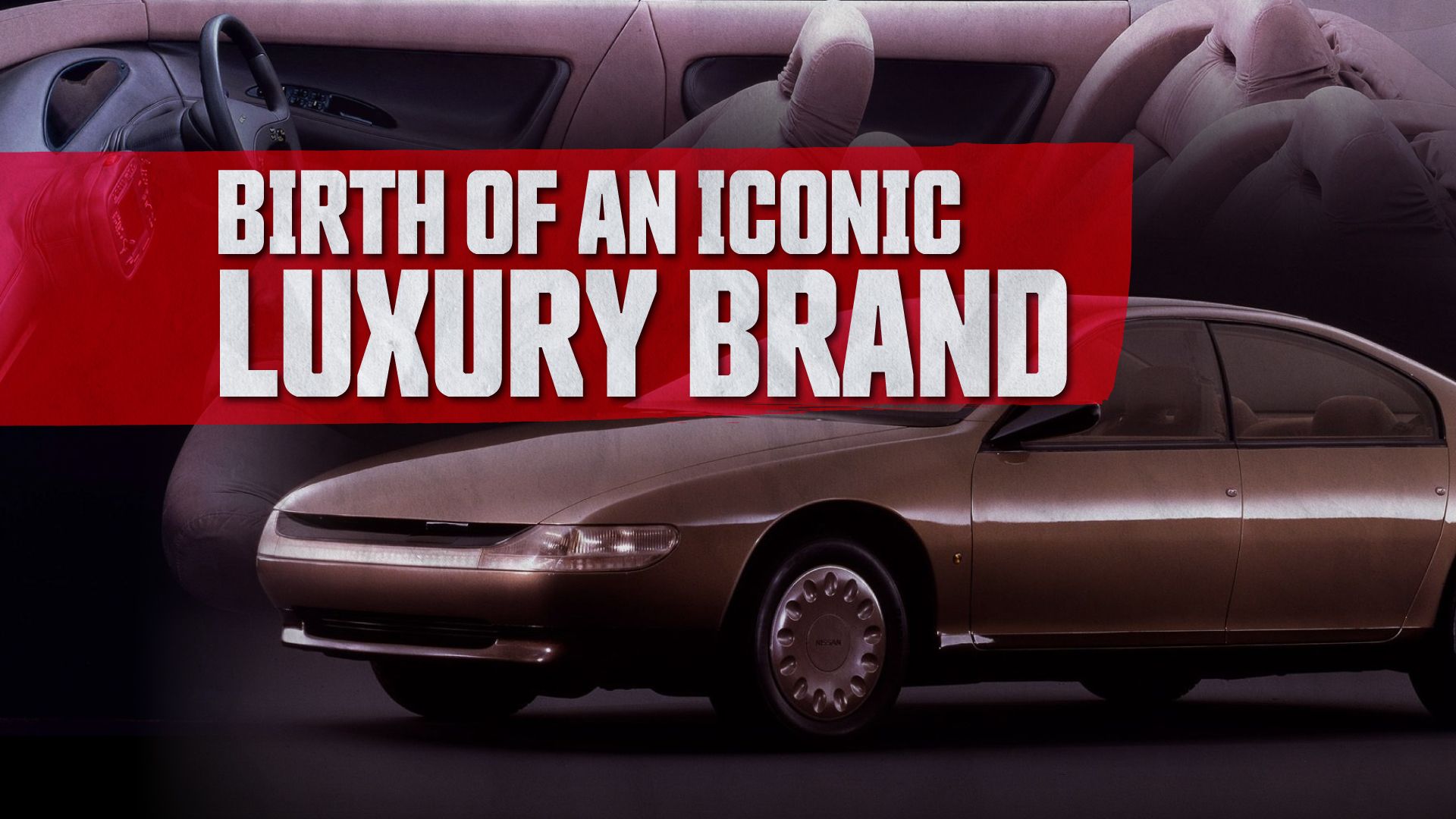
In the dynamic automotive world of the late 1980s, concept cars often served as dazzling previews of future possibilities. While many remained purely experimental, the 1987 Nissan Arc-X transcended the typical show car role. Recognized by Automobile magazine as the “Concept Car of the Year” for 1988, this advanced vehicle provided key inspiration and technological groundwork for Infiniti, Nissan Motor Co.’s ambitious entry into the global luxury market.
The Arc-X emerged during a period of intense activity for Japanese automakers, who were leveraging economic strength and engineering prowess to challenge established American and European luxury brands. It showcased Nissan’s forward-thinking just before the Infiniti division was formally launched, signaling the company’s intent.
The Origin of Infiniti
Unveiled at the 1987 Tokyo Motor Show, the Nissan Arc-X was designed by Shigeru Miki as a concentration of futuristic ideas. The Arc-X’s powertrain featured a transversely mounted 24-valve V6 engine, reportedly producing 190 horsepower – an unusual layout for a potential luxury sedan. It also integrated an advanced four-wheel-drive system with four-wheel steering (4WS). This rare combination promised superior handling, stability, and enhanced maneuverability in tight spaces.
Aerodynamics was emphasized, with the Arc-X’s smooth, flowing body. It achieved a remarkable 0.26 drag coefficient, aided by flush glass and clean surfaces. Inside, the design prioritized ergonomics and technology. An unconventional layout placed the gearshift and other controls in a console between the front seats, opening up space on the dashboard for advanced electronics, including a CRT display for navigation and vehicle information systems.
Nissan also used the Arc-X to explore emerging technologies. Sophisticated onboard computers managed the 4WD torque split and a computerized limited-slip differential. It experimented with “drive-by-wire” throttle control, foreshadowing systems that are just now starting to become common. Other cutting-edge features included multi-function glass and a transparent roof using liquid crystals to adjust tint and control glare. The car’s blend of innovative systems earned it the AARD Design Award in 1987 prior to the Automobile magazine honor.
|
Feature |
Nissan Arc-X (1987) |
|
Engine Type |
Transverse V6 (190 hp) |
|
Drivetrain |
4WD, 4WS |
|
Key Technology |
Advanced Electronics, Drive-by-Wire |
|
Aerodynamics |
Cd 0.26 |
The Luxury Wars Heat Up
The Arc-X debuted against a backdrop of significant change. The 1985 Plaza Accord had altered currency exchange rates, making Japanese exports more expensive. Combined with voluntary export restraints limiting the number of cars Japanese manufacturers could send to the U.S. market, this created a strong incentive to shift from high-volume economy cars to lower-volume, higher-profit luxury vehicles.
Honda had already successfully launched its Acura brand in 1986, proving American buyers could embrace Japanese luxury. Toyota was deep in development of its Lexus division, set to launch in 1989. Nissan recognized the need to establish its own premium brand to compete effectively against its domestic rivals and European giants like Mercedes-Benz and BMW. The U.S. luxury market was booming, and Nissan needed a dedicated strategy to capture a share.
Nissan’s Secret Weapon: The Horizon Task Force
Responding to this pressure, Nissan launched a top-secret project in 1985, known as the “Horizon Task Force”. This handpicked group of designers, engineers, and planners operated largely outside Nissan’s main structure. Their mission: build a new performance luxury brand from the ground up.
This wasn’t simply a rebranding exercise. The task force conducted extensive market research, analyzing competitors and identifying opportunities. They aimed to create vehicles and an ownership experience that would appeal to discerning American buyers, potentially those who found German offerings too rigid or American luxury cars too traditional.
Beyond Chrome and Leather
A core goal of the Horizon Task Force was differentiation. The team sought to define Infiniti with a unique identity rooted in Japanese culture while simultaneously tailored for American tastes. Early concepts focused on a “human-centric” approach, prioritizing intuitive technology, driver engagement, and a sense of harmony.
This philosophy extended beyond the cars themselves. The task force envisioned a customer service model inspired by luxury hotels and other high-end service industries, aiming for an ownership experience superior to existing automotive convention.
The name “Infiniti,” officially chosen in July 1987, was selected to convey concepts of forward motion, limitless possibilities, and sophistication. The brand’s logo, often called the “infinite road,” featured two central lines stretching toward a vanishing point, symbolizing the future while also subtly suggesting Japan’s Mount Fuji.

A Rocky Debut
Infiniti officially launched in the United States in November 1989, through an initial network of 51 carefully selected dealers. The launch was spearheaded by one of the most discussed advertising campaigns in automotive history. Developed by agency Hill Holliday, the initial television spots avoided showing the cars directly. Instead, they featured artistic imagery of natural elements – flowing water, stones, forests – accompanied by calming music and reflective voiceovers.
The intended message was one of Zen-like tranquility, sophisticated aesthetics, and a departure from typical marketing focused on features or status. Infiniti aimed to intrigue buyers and establish an aura of unique, unconventional luxury. However, the abstract campaign baffled many, who were left asking “Where’s the car?” Critics argued the ads failed to build brand awareness or communicate the vehicles’ attributes effectively, especially compared to Lexus’ more direct marketing for its LS 400 sedan.
Infiniti’s Opening Salvo

The flagship model for Infiniti’s launch was the Q45 sedan. It embodied the brand’s performance ambitions with a powerful new 4.5-liter V8 engine (VH45DE) producing 278 horsepower and 292 lb-ft of torque, making it highly competitive. It featured advanced options like active suspension and Nissan’s Hicas four-wheel steering, echoing what was previewed in the Arc-X.
The Q45’s design was also unconventional, most notably its lack of a traditional front grille. Instead, it featured a sculpted hood ornament containing the Infiniti logo. While intended as a symbol of minimalist confidence, the look was polarizing among Americans accustomed to more traditional luxury touches. The interior design also did away with wood trim in favor of a monochrome look.

Alongside the Q45 was the M30, available as a coupe and convertible. Based on the existing Japanese-market Nissan Leopard, the M30 was less ambitious technically. Powered by a 162-horsepower V6, it was considered underpowered and a placeholder to expand the initial launch lineup.
Course Correction
The combination of the off-note marketing campaign, the Q45’s polarizing design, the M30’s limitations, and intense competition resulted in slow sales for Infiniti in the early 1990s. The Q45, despite its potent V8, gained a reputation among some for becoming softer following refreshes.
Recognizing the need for a clearer identity and stronger appeal, Infiniti began a strategic shift in the late 1990s and early 2000s. Executives openly stated their intention to benchmark BMW, focusing more on performance, handling, and driving dynamics. This led to the adoption of the unofficial “Japanese BMW” positioning.
The G35 Era: Infiniti Hits its Stride
This pivot gained momentum with the introduction of the G35 sport sedan for the 2003 model year. Based on Nissan’s FM (Front Midship) platform, shared with the contemporary Nissan 350Z sports car, the G35 offered rear-wheel-drive dynamics (with all-wheel drive available), a powerful V6 engine from the acclaimed VQ series, and crisp handling.

Related
Everyone Forgot About The Coolest SUV Infiniti Ever Made
A V8 Luxury SUV with timeless looks? Sign us up.
The G35 was an immediate critical and commercial success. It won MotorTrend’s prestigious Car of the Year award for 2003, providing crucial validation for Infiniti’s new direction. The G35 coupe later solidified the brand’s sporty image. This era also saw the launch of the innovative Infiniti FX (later QX70) crossover in 2003. With its aggressive styling and powerful engine options, the FX pioneered the concept of the performance luxury crossover and became another halo vehicle for the brand.
From Minimalism to ‘Artistry’
While the direct visual link between the Arc-X and production Infinitis remains indirect – the 1985 Nissan Cue-X concept also heavily influenced the Q45 – the Arc-X’s spirit informed the brand’s approach. Infiniti’s design language evolved from the stark minimalism of the first Q45. The performance-focused G35/FX era introduced more muscular shapes.
In more recent years, Infiniti’s design philosophy, described as embodying a duality of “power and artistry,” aims to blend performance cues with natural forms. Signature elements like the “double-arch” grille, “human-eye” headlights, and crescent-cut rear roof pillar provide brand continuity. Infiniti has also increasingly emphasized its Japanese heritage. It has explicitly incorporating aesthetic principles like “Ma” (mastery of empty space) and “Utsuroi” (seamless transitions) into concepts like the QX Monograph.

Related
Nissan’s Ambitious Vehicle Onslaught Proves It Won’t Go Down Without A Fight
This is your first look at the new Nissan Leaf, plus plans for a potential Xterra revival and so much more from the Japanese brand.
Legacy and Future Direction
Infiniti established itself as a credible player in the global luxury market by blending performance, technology, distinctive design, and a strong emphasis on customer care. While facing ongoing competition and navigating the transition towards electrification, the brand continues to leverage its heritage. The journey from the advanced 1987 Arc-X concept – a vehicle celebrated for its forward-thinking – to the established Infiniti brand illustrates how a visionary design can help launch a new era of automotive history.
Sources: Nissan, Infiniti, Story Cars, Hagerty, Concept Nissan, The Globe And Mail, The News Wheel