Why The Nissan 300ZX Was Too Advanced For Its Own Good

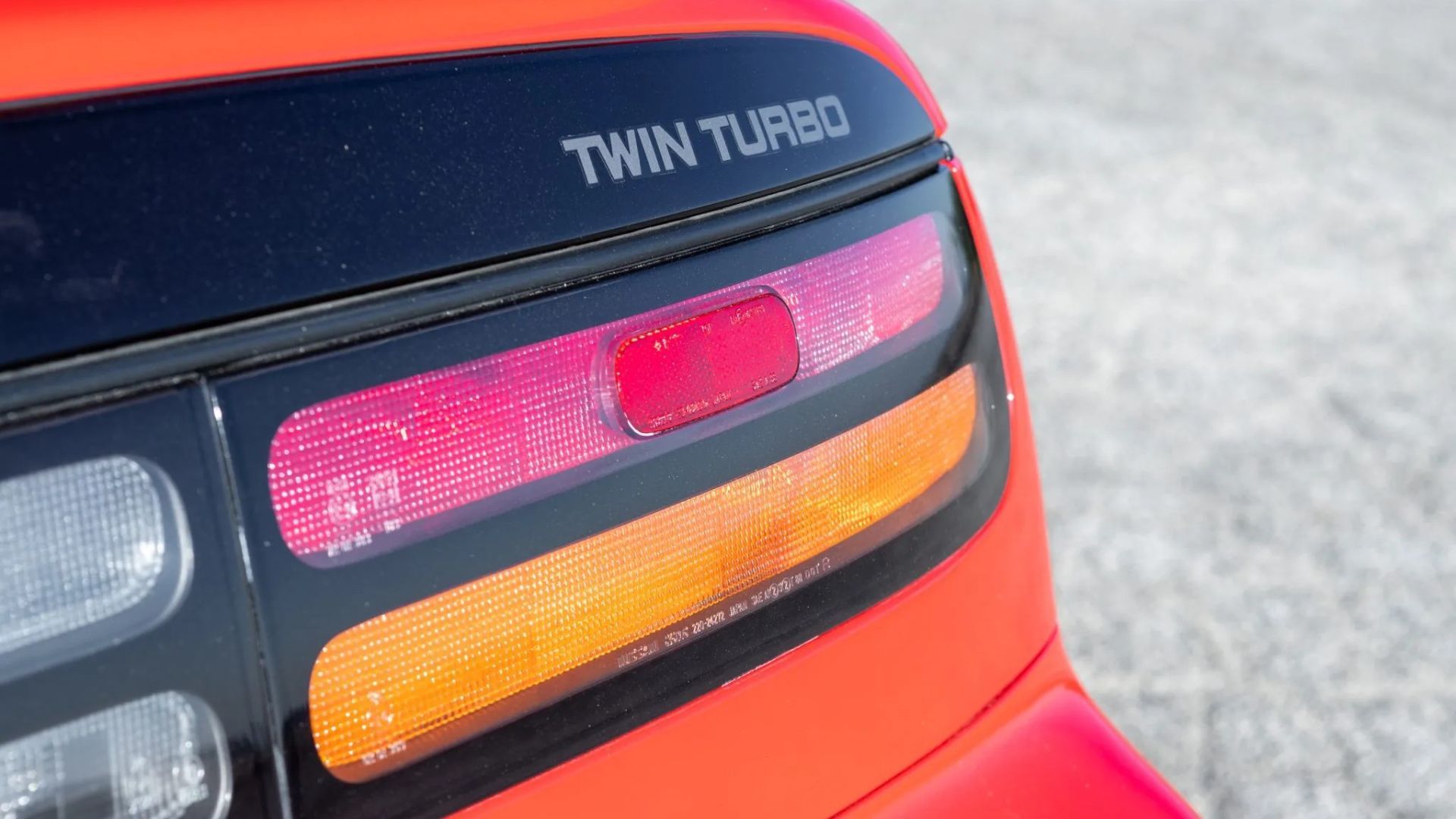
When Nissan launched the Z32 generation of the 300ZX, it’s fair to say that it stunned the automotive world. At the time, it was very technologically advanced and one of the most forward-thinking Japanese cars available. The car was offered with a naturally-aspirated or twin-turbocharged 3.0-liter V6, and had a level of sophisticated design that you would very rarely see outside of Europe.
Nissan
Nissan Motor Corporation is a Japanese automaker founded in 1933 and the parent automaker of Infiniti and formerly Datsun. Nissan produces a wide variety of mass-market vehicles, including popular SUVs like the Rogue, sedans like the Sentra, and trucks like the Nissan Frontier, but is also responsible for iconic sports cars like the Nissan Z and GT-R. Since 1999, Nissan has been part of the Renault-Nissan-Mitsubishi alliance (the name changed when Mitsubishi joined in 2016).
- Founded
-
26 December 1933
- Founder
-
Yoshisuke Aikawa
- Headquarters
-
Nishi-ku, Yokohama
- Owned By
-
Publicly Traded
- Current CEO
-
Ivan Espinosa (as of 1 April, 2025)
In fact, today’s Nissan Z is comparatively simple by comparison, without much of the advanced electronic trickery that would mark its Z32 forerunner. As brilliant as the Z32 was, it eventually became more a symbol of over ambition. You could say that it was too far ahead of its time, but there were other reasons why it ultimately failed. This is the story of the Nissan 300ZX and its all-too-brief life in the US.
We looked into the US story of the Nissan 300ZX to see why it did not last for very long in this market, taking into account factors such as its price, maintenance issues, and market compatibility. The figures in the table are for the top, twin-turbocharged model.
The Nissan 300ZX Was Always Going to Fail
|
1990-1996 Nissan 300ZX Specifications |
|
|---|---|
|
Engine |
3.0L twin-turbo V6 |
|
Transmission |
5-speed manual | 4-speed auto |
|
Power |
300 | 280 hp |
|
Torque |
283 lbs./ft |
|
0-60 mph |
5.5 | 6.5 seconds |
|
Top Speed |
155 mph |
With sophistication often comes complexity, and one of the Nissan 300ZX’s most celebrated aspects was to be one of its biggest downfalls. Unfortunately, the twin-turbo version in particular was very advanced and intricate, and this level of high-performance engineering was simply not practical from an ownership point of view. For example, engineers had to shoehorn its twin-turbocharged VG30DETT engine into a very cramped space. This was a beast of a V6 which had dual intercoolers for the turbos too – but if you wanted to do some work on it, good luck. In this situation, the engine may have been impressive, but it was tough to carry out even the most basic level of service, like a spark plug change. A mechanic may have to remove multiple components before they could perform such a simple task which would, of course, rack up the hours and the associated cost.
1:27

Related
Video: The Nissan Z Is Finally Appealing To Sports Car Buyers
The Nissan Z’s chief rival has become a lot more expensive, and buyers are noticing.
Then there were the suspension and steering systems, which many felt were over-engineered for the task. For example, the car had the HICAS rear-wheel steering system which was way ahead of its time. It was meant to improve high-speed handling but was very complex and this often left many mechanics scratching their heads.
The electronically controlled adaptive suspension may be familiar today, but this type of approach was very uncommon in most repair shops at the time. It required specialized diagnostics and knowledge and ultimately proved to be one of the car’s biggest problem areas. Remember that this was the time before widespread OBD-II diagnostics hit the automotive industry. Also, you couldn’t simply go online and search for answers and many independent shops were just not prepared to service the Z32 correctly. When you consider that the climate control was also fully electronic and difficult to fix if it failed, the list of problems becomes more acute.
Costs Started High and Ballooned
Not only was the Z32 a bit of a mechanical handful, but it was also quite costly all-round. Nissan had certainly gone to town to try and create a world-class GT car, but the company had put a lot of money into production and tooling costs as well. Unfortunately, this showed in the sales price. In 1989, the 300ZX could be yours for around $30,000 ($77,000 in today’s money). While that was already quite a spicy price, by 1985 the turbocharged version was almost $50,000. For many people, this was encroaching on Porsche 911 territory, and they weren’t quite ready to make the comparison.
The 300ZX had some expensive materials on board, with precision molded plastics, premium electronics, and many aluminum components. The Japanese yen was fluctuating in value as well and all of these factors contributed to a price creep that would ultimately hurt sales. Other competitors may have introduced similar performance features, but their offerings tend to be at a lower price. Toyota came along with its Supra Turbo with its revered 2JZ engine, while Mitsubishi brought the 3000GT VR-4 which had active aerodynamics and all-wheel drive.

Related
What Made The Toyota 2JZ Engine So Great?
Toyota’s 2JZ engine is a legend in its own right, but how did it develop such an iconic status?
By some accounts, the profit margins on this car were razor-thin. While Nissan may not have intended it to be a high-volume seller, decision-makers wouldn’t want to waste a fortune on it either. So, perhaps it’s less of a surprise that the 300ZX was a casualty when Nissan started to feel some financial pressure.
Customers Started to Look Elsewhere
To add insult to injury, consumer preferences were changing. This type of car may have been in style in the early nineties, but as the decade passed, people were starting to turn to SUVs instead. There was less interest in a two-door coupe, so the 300ZX would never have gained greater appeal. When you look at its aggressive styling and tight confines, you can see why this particular vehicle was increasingly less practical.
The 300ZX Was Still a Great Machine
It seems unfair to look at all the negative points without realizing that the 300ZX was indeed a brilliant machine, with its 300 hp and zero to 60 mph time of 5.5 seconds for the twin-turbo model. It also had a wide track and great aerodynamic balance, so it was very stable at high speed. In fact, few cars could claim to be as aerodynamic as the 300ZX, with that low-slung silhouette, flush-fitting headlights, and flowing lines throughout. It could stand alongside many sophisticated European competitors in terms of its design. The interior was also tight but very functional with supportive bucket seats, a well-appointed dash, and driver-centric controls.
Legendary Performance
With this type of performance and look, the 300ZX became a fan favorite. It performed brilliantly at time attack or other forms of motorsport and a variety of online forums and social media groups would eventually appear. If you want to find one of these vehicles at an auction today, they are around, but a pristine example will typically command a high price. As they are so rare, and as they have so much performance on tap, it’s no surprise to find that one clean, low-mileage and twin-turbocharged 300ZX went for as much as $135,000 at auction.

Related
10 Awesome JDM Cars We Bet You’ve Never Heard Of
If you live in the US, we bet you’ve never seen any of these.
Aftermarket Potential
Aftermarket tuners love the engine for its potential as well. It has an iron block with forged internals, so it would stand up well to abuse. If you added an aftermarket twin turbo kit, you might be able to get north of 450 hp from the engine and there were various other ways to upgrade the 300ZX to make it even more fun.
The Legacy Remains
The Nissan 300ZX does leave behind a legacy, but even though sales declined, and Nissan eventually pulled the plug, you can find a lot of its influence in today’s offerings. In fact, the Nissan Z (or the Z34) features a twin-turbo V6 layout that owed a lot to its ancestor, the Z32.
The 300ZX Was In The Right Place – But at the Wrong Time
Manufacturers must be forward-thinking to survive and grow, but the Nissan 300ZX was a little too futuristic. It may have had good reliability and performance that could stand up in any scenario, but the market just wasn’t ready. Also, Nissan couldn’t afford to maintain it at a sensible cost structure, and it just became hard to sell.
Nevertheless, this vehicle was certainly a great expression of Nissan’s engineering ambition. In a world where everything seems to be modular and overly safe, the Z32 was a reminder that carmakers can build a legend of a vehicle after all.
Sources: Nissan, Bring a Trailer.