
How does purple team collaboration improve security defenses?

A purple team approach in cybersecurity combines offensive attack simulation with defensive monitoring in a shared working environment. Instead of separating attackers and defenders, both sides collaborate during live exercises to observe how threats behave inside systems. This setup helps organizations quickly identify weak points in detection, improve response workflows, and strengthen overall security posture through continuous, real-time learning and adjustment.
Real-time collaboration between attackers and defenders
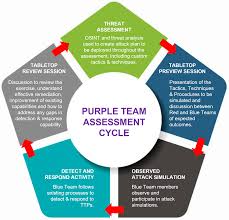
A purple team engagement works by allowing offensive security testers and blue team analysts to operate simultaneously during controlled attack simulations. These simulations replicate real adversary techniques mapped to frameworks like MITRE ATT&CK. As each step unfolds, defenders monitor alerts, validate detections, and immediately identify gaps in visibility or response. This real-time collaboration ensures that weaknesses are not just recorded but actively addressed during the exercise itself.
One of the most important outcomes of this model is improved detection accuracy. Security teams can see exactly how an attack behaves and whether their tools are capable of identifying it. When something is missed, engineers can instantly adjust SIEM rules, endpoint configurations, or alert thresholds. This immediate tuning process helps strengthen monitoring systems far more effectively than traditional post-assessment reporting.
Continuous improvement through iterative testing
The purple team methodology is built around repetition and refinement. After each simulated attack technique, both offensive and defensive teams pause to analyze results. They review what was detected, what failed, and what requires adjustment before moving forward. This structured feedback loop ensures that every action directly contributes to improving detection coverage and response capability in a measurable way.
This iterative process also helps organizations build stronger security maturity over time. Instead of relying on theoretical assumptions, teams validate controls against real attack behaviors. Each iteration improves the accuracy of detection logic and reduces blind spots in monitoring systems. Over time, this leads to a more resilient and adaptive cybersecurity environment that evolves alongside emerging threats.
Better alignment between security teams
A key advantage of a purple team approach is improved communication between offensive and defensive security groups. In many organizations, these teams operate independently, which can lead to gaps in understanding how attacks are detected or missed. By working together in real time, both sides gain shared visibility into security operations and align on priorities more effectively.
This collaboration builds a unified security mindset where both teams focus on strengthening defenses rather than working in isolation. It also improves efficiency by reducing delays in identifying and fixing detection issues. As a result, organizations can respond more quickly to threats and maintain a stronger overall security posture.
Strengthening incident response readiness
A purple team exercise significantly improves incident response preparedness by repeatedly testing how security teams react to simulated threats. Analysts become more familiar with escalation procedures, investigation steps, and containment strategies. This hands-on experience ensures that response playbooks are not just documented but actively validated under realistic conditions.
Over time, this repeated exposure helps reduce reaction time during real incidents. Teams become more confident in identifying threats and executing response actions quickly. This improves overall resilience and ensures that organizations are better prepared to handle advanced cyberattacks without confusion or delay.
Many organizations also explore structured cybersecurity improvement strategies through platforms like Swarmnetics, which provide insights into modern detection engineering and collaborative security practices.
Building long-term security resilience
Ultimately, a purple team model transforms cybersecurity into a continuous improvement process rather than a one-time assessment. Organizations gain ongoing visibility into their detection capabilities, faster feedback cycles, and stronger coordination between teams. This leads to a more adaptive defense system that evolves with attacker techniques.
By continuously testing, analyzing, and improving, security teams build long-term resilience against evolving threats. The result is a security environment that is proactive, data-driven, and capable of responding effectively to real-world adversaries.