10 Important Dates In The History Of Speeding

Hunter S. Thompson once famously said: “faster, faster, until the thrill of speed overcomes the fear of death,” and since the first car hit the road, human beings have chased their thrill rides behind the wheel. But “not so fast,” scolded the lawmakers who, at every twist and turn, have fascinated and frustrated drivers with their various levels of enforcement. Many speed limit milestones weren’t simply about slowing things down, but they also reflected how manufacturers had evolved their cars to tempt drivers into going faster. Each of the following 10 dates signifies a pivotal moment in automotive history. We also highlight a standout car from that era, such as the Mercedes-Benz SLR McLaren, that symbolizes the level of technology and the culture behind the need for speed.
2005 Mercedes-Benz SLR McLaren Coupe
- Base MSRP
-
$450,000
- Model
-
SLR McLaren
- Base Trim Drivetrain
-
Rear-Wheel Drive
- Base Trim Horsepower
-
617 HP @6500 RPM
We’ve listed 10 milestones that define the history of speed limits. We’ve also mentioned one car that was on sale at the time of each milestone, indicating a steady growth in power and performance. The information in each table relates to the chosen car from that era.
1
1896
Here Comes the First Speeding Ticket
|
1896 Benz Motor Carriage Specifications |
|
|---|---|
|
Engine |
0.9-liter single cylinder |
|
Transmission |
Single-speed belt |
|
Drivetrain |
Rear-wheel-drive |
|
Power |
0.75 hp |
Walter Arnold has the dubious distinction of being the first person to receive a speeding fine for driving at 8 mph in a 2-mph speed zone in Kent, England. Arnold was driving a state-of-the-art Benz Motor Carriage, which was revolutionary indeed, but tame by today’s standards. He may have been driving at the car’s maximum speed at the time, prompting the authorities to clamp down on his “dangerous” driving, but Arnold’s fine would usher in the start of a speed-limiting era. Indeed, financial penalties like this would ultimately define automotive history for hundreds of years to follow.
2
1901
America’s First Speed Limits
|
1901 Locomobile Steam Car Specifications |
|
|---|---|
|
Engine |
Steam |
|
Transmission |
Direct drive |
|
Drivetrain |
Rear-wheel-drive |
|
Power |
3 hp |
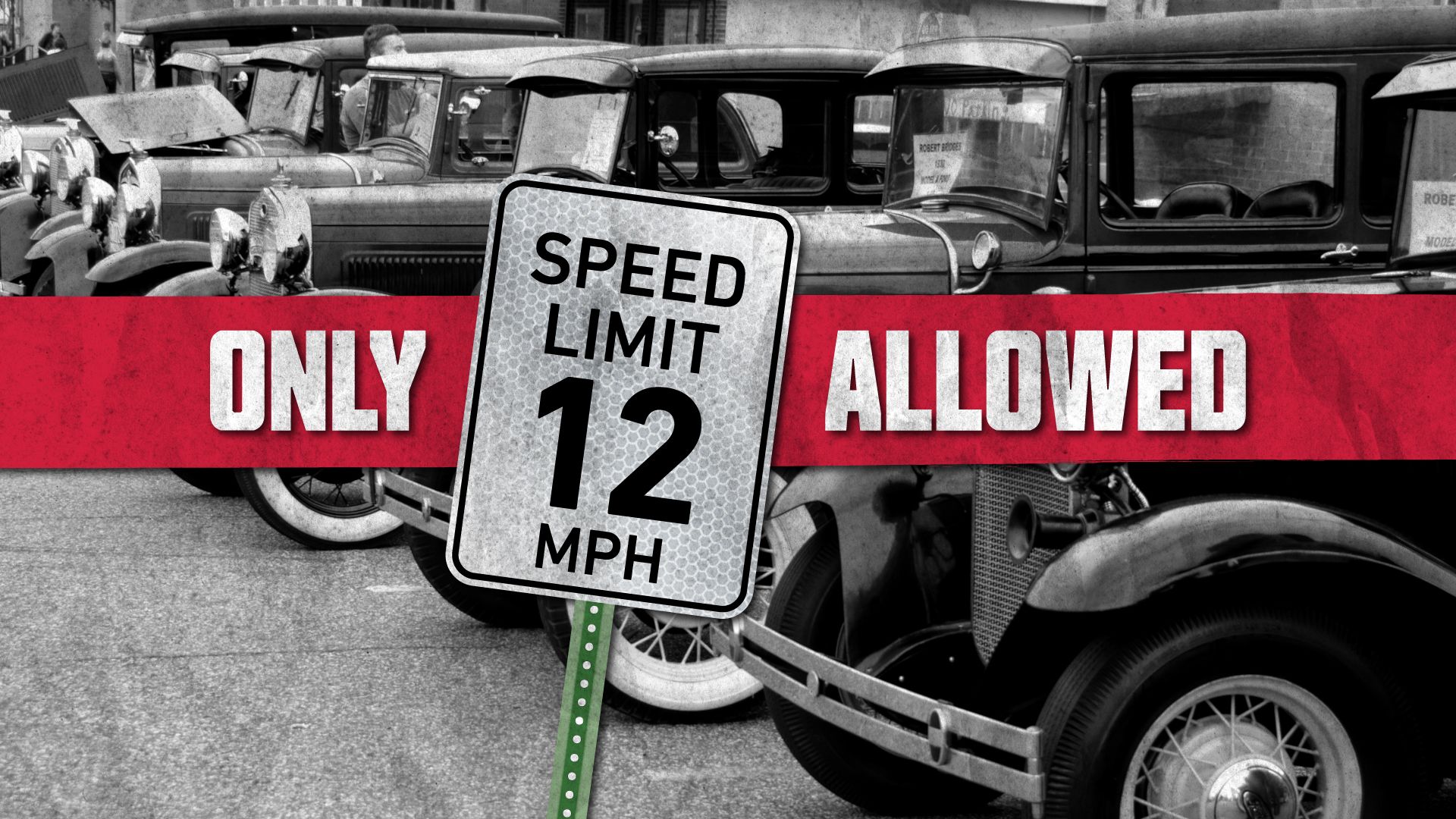
In 1901, Connecticut became the first state to enact a law that would restrict vehicle speeds, decreeing that you could drive no faster than 12 mph in cities or 15 mph on rural roads. Perhaps the law-makers were reacting to some of the early steam-powered vehicles, such as the Locomobile Steam Car. Things had moved on quickly since the original Benz Motor Carriage and the Steam Car could now do a hair-raising 40 mph. Regulators wanted to balance this progress with public safety and thought that a formal speed limit was the perfect idea. It was an unusual approach for the time but would gain rapid adoption elsewhere.
Related
One US State Has A Solution To Speeding That Could Change Everything
Virginia is about to make speeding impossible for some drivers using court-ordered technology, with several surprising benefits.
3
1923
Radar Experiments Begin
|
1923 Stutz Bearcat Specifications |
|
|---|---|
|
Engine |
5.9-liter inline-four |
|
Transmission |
Three-speed manual |
|
Drivetrain |
Rear-wheel-drive |
|
Power |
88 hp |
Speed limits may have been one thing, but enforcement was another and regulators were anxiously looking for solutions. So, in 1923, engineers started to experiment with the earliest radar technology. These primitive electromagnetic detection efforts might detect car speeds from a distance, but they would certainly lay the foundation for modern enforcement tools. Perhaps the officials wanted to catch drivers in cars such as the Stutz Bearcat, a more sophisticated vehicle with an 88 hp engine and speeds of up to 80 mph. While the early radar efforts were certainly not comparable to the radar gun of today, they showed that the human eye alone was not sufficient in a time of increasingly powerful automobiles.
4
1949
Police Radar Guns Enter the Fray
|
1949 Buick Roadmaster Specifications |
|
|---|---|
|
Engine |
5.2-liter inline-eight |
|
Transmission |
Two-speed auto |
|
Drivetrain |
Rear-wheel-drive |
|
Power |
150 hp |
Although engineers had been looking for radar solutions in the 1920s, it took until 1949 before the option became practical. The first radar guns fell into the hands of the Michigan State Police, and this was to significantly change how authorities handled speeding and punishment. In those days, a car such as the Buick Roadmaster could cruise at up to 110 mph. Car technology had certainly improved since World War II and traditional enforcement methods were no longer of any use. Instead, the radar gun gave officers a solution that could quickly and accurately measure speed from a distance. It was high-tech speed policing then, and it’s appropriate to this day.

Related
The Worst Countries To Get Caught Speeding
Speeding is a rampant issue in the US, but there are other countries where you would not want to get caught speeding.
5
1955
Germany Loosens the Reins
|
1955 Mercedes-Benz 300SL Gullwing Specifications |
|
|---|---|
|
Engine |
3.0-liter inline-six |
|
Transmission |
Four-speed manual |
|
Drivetrain |
Rear-wheel-drive |
|
Power |
215 hp |
In 1955, German lawmakers wanted to know if speed limits were even necessary on certain roads. They conducted a major speed study on the autobahns and concluded that in certain areas, no limit was necessary. At the time, cars such as the Mercedes-Benz 300SL Gullwing were capable of up to 160 mph and this showed the level of technological excellence available. Still, the regulators felt that high-speed travel was safe under the right conditions and, to the delight of many, maintained the “no limit” status quo.
6
1974
A Crisis Triggers a Nationwide US Speed Limit
|
1974 Ford Mustang second generation Specifications |
|
|---|---|
|
Engine |
2.3-liter inline-four |
|
Transmission |
Four-speed manual |
|
Drivetrain |
Rear-wheel-drive |
|
Power |
89 hp |
The US Congress imposed a nationwide 55 mph speed limit in 1974, in response to the critical oil crisis. Lawmakers felt that such a limit would help to conserve fuel, but this was a major cultural shock to motorists, especially as vehicles were getting so powerful. Ford launched the second-generation Mustang that year as a less powerful but more efficient vehicle for the current era. But nevertheless, the 55-mph mandate was not very popular, as enthusiasts were forced to be more efficient rather than chase any thrills.

Related
Next Tesla Update Will Help Dodge Speeding Tickets
New features in the latest update suggest nifty functions are coming to Teslas.
7
1995
The Nationwide 55 mph Limit Disappears
|
1995 Dodge Viper RT/10 Specifications |
|
|---|---|
|
Engine |
8.0-liter V10 |
|
Transmission |
Six-speed manual |
|
Drivetrain |
Rear-wheel-drive |
|
Power |
400 hp |
In 1995, individual states had the authority to set their own maximum speed limits as the federal 55 mph rule came out of the statutes. Many state regulators immediately raised their limits and acknowledged that a one-size-fits-all speed law no longer made sense. This was welcome news indeed for many who might have rushed out to buy the Dodge Viper RT/10 in celebration. This was a true American performance car and, with its monstrous 400-hp engine, could certainly help drivers celebrate freedom and speed again.
8
2005
Swiss Driver Gets a Record-Breaking Speeding Fine
|
2005 Mercedes-Benz SLR McLaren Specifications |
|
|---|---|
|
Engine |
5.4-liter Supercharged V8 |
|
Transmission |
Five-speed auto |
|
Drivetrain |
Rear-wheel-drive |
|
Power |
617 hp |
A rapid driver made dubious history when they received a staggering $1 million speeding fine in Switzerland. Behind the wheel of a Mercedes-Benz SLR McLaren, this unlucky driver fell afoul of Switzerland’s draconian speeding laws. In that country, a fine is based on the individual’s income, which made such an astronomical figure possible. Swiss regulators felt that the supercars of the day were so fast that traditional punishment was woefully inadequate, and the SLR McLaren was actually capable of doing higher speeds due to its supercharged V8. However, there was plenty of debate about this fine in an era where drivers could now access vehicles with unprecedented power.
9
2013
Average Speed Cameras Make Speeding Difficult
|
2013 Tesla Model S Specifications |
|
|---|---|
|
Engine |
Electric motor |
|
Transmission |
Single-speed direct |
|
Drivetrain |
Rear-wheel-drive |
|
Power |
416 hp |
In 2013, some US authorities came up with an exasperating way of catching motorists as they would now measure a vehicle’s speed over a distance, rather than at a single point. These average speed cameras changed everything, as drivers could no longer simply slow down near a well-known camera zone. These rules came in while manufacturers were pushing boundaries even more. For example, Tesla introduced its Model S, which had stunning acceleration and a top speed of more than 155 mph. These and other performance EVs meant it was easier than ever to sustain high speeds. As an answer, average speed cameras reminded drivers that they needed to maintain their discipline and not just react to visible enforcement points.
10
2024
AI Makes Speed Enforcement Even Easier
|
2024 Lucid Air Sapphire Specifications |
|
|---|---|
|
Engine |
Tri-motor electric |
|
Transmission |
Single-speed direct |
|
Drivetrain |
All-wheel-drive |
|
Power |
1,200 hp |
In the modern era, some US cities are beginning to use AI-driven speed enforcement systems, which can track and ticket violators, maybe even in real time. This could make it easier for jurisdictions to issue and collect fines as machines might now set the pace of enforcement. Lawmakers may have felt the urge to act as today’s cars are faster and smarter than ever before. Consider the Lucid Air Sapphire as an example, with its all-electric powerhouse producing more than 1,200 hp. Such vehicles are now capable of exceeding 200 mph, and perhaps it was only a matter of time before intelligent monitoring systems matched the level of automotive technology seen today.
Sources: Mercedes-Benz, Ford, Tesla, Lucid, Dodge, Bonhams, Bring a Trailer.