10 Mistakes Every Off-Roader Has Made At Least Once

The off-road market share in the USA used to be limited to a few hardcore fanboys in Jeep Wranglers, but the landscape is changing. According to Global Market Insights, this segment is set to increase by 7.5% by 2032. That might not seem like much, but 7.5% of 15.5 million vehicles is a lot of cars. That means there will be loads of rookie off-roaders out there, making mistakes and learning. Although we have an off-road guide handy for you, those who just want the basics will want to identify the 10 most common mistakes people make going off-road.
Related
The Basic Rules Of Off-Roading
These are the basic rules you should always follow.
But before we get to them, let’s recite the golden rule of off-roading in general: When parked in front of an obstacle, ask yourself if there’s a possibility that you might hurt yourself, your car, or the environment. If the answer to any of those questions is yes, don’t do it. With that out of the way, let’s dive into those rookie errors.
1 Driving Too Fast

One rule to remember is to go as slow as possible, but as fast as necessary. What this basically means is that off-roading should be done at crawling pace, unless you require a bit of momentum to get over an obstacle. And even then, the amount of throttle you use should be restrained and well-calculated. A lot of it comes down to understanding your vehicle.
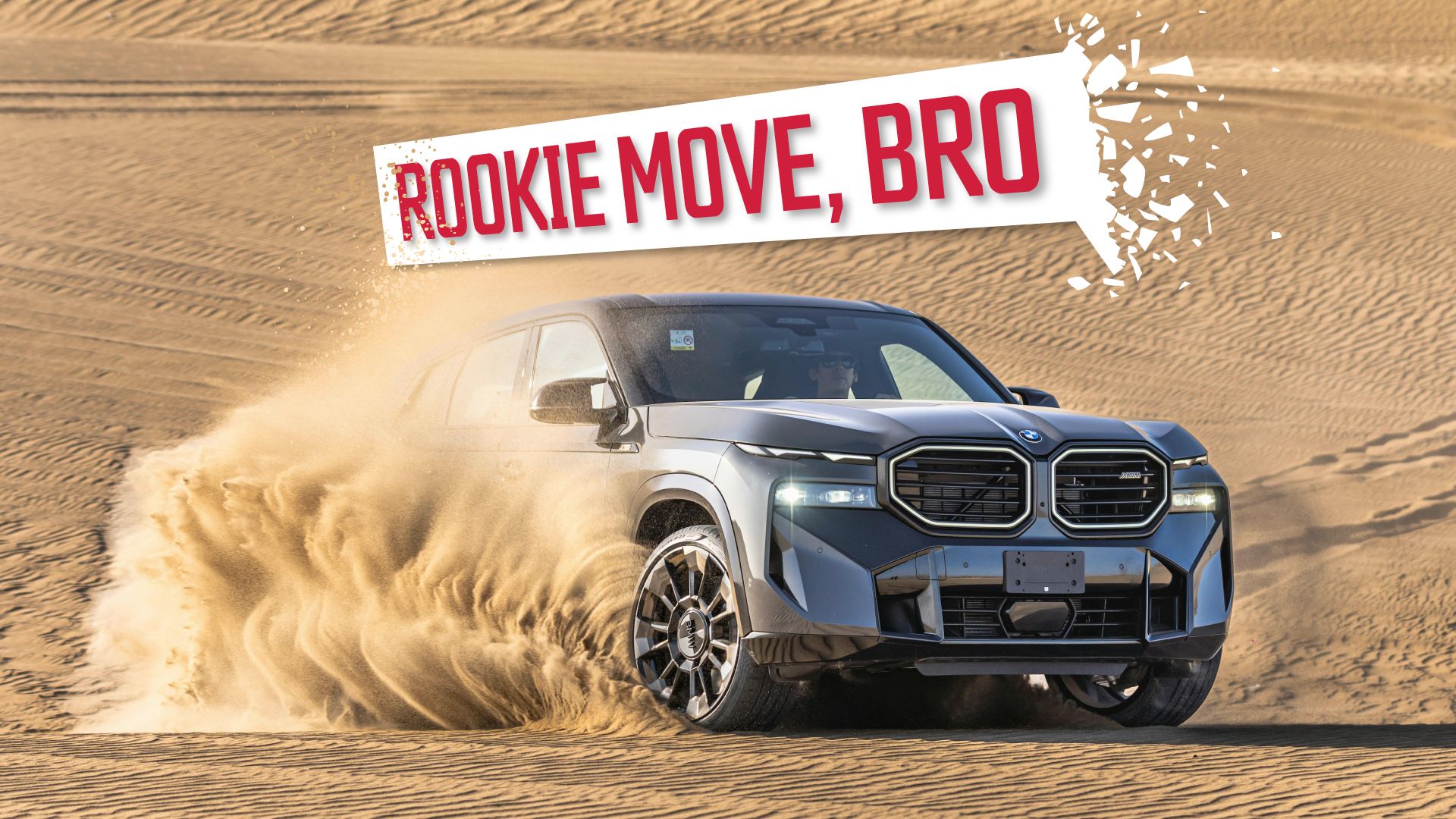
If you drive a Toyota Land Cruiser, you should know that it produces a maximum torque of 465 lb-ft at 1,700 rpm, which means in most cases it will simply climb over an obstacle at a few hundred revolutions per minute above idle. Yes, there are certain kinds of off-roading where speed is key. If you try dune bashing at 30 mph, the car is going to grind to a halt, and you’ll start digging to China. But for specialist off-road activities like dune driving and rock climbing, it’s best to get the right training before you give it a bash.
2 Driving Through Water

Yes, we know driving through water makes for good hero shots, but if there is an alternative route that doesn’t include water, use that instead. And what if you have a snorkel? Well, those only really exist to keep dust out of your intake. There is no way to totally waterproof an engine, and even if you do have a snorkel, water is unpredictable and things can always go wrong. You can use a stick to see how deep the water is, but there’s no guarantee that it will be that deep the entire way. You also don’t know of any sharp rocks hiding under the surface, or how strong the current is. You’d be surprised at how little water is required to carry a heavy SUV away, and there’s a reason why automakers’ maximum wading depth claims are so conservative.
Once your vehicle is claimed by the water, there’s no getting it back. In the days before ECUs, you could shoot a hole in the floor to drain the water and rebuild the engine, but the average modern car has roughly 50 microprocessors running everything from the door locks to the driving modes. If those get wet, that fancy new Ford Bronco is nothing more than a paperweight.
3 Driving Through Mud

The same lesson we just learned with water applies to mud. It’s to be avoided at all costs, unless you’re a mudding buff and own a vehicle specifically built for that purpose. There are two main reasons to avoid mud. The only way to get through it is to step on the accelerator and hope the car goes somewhere near where you intended to go. If you do this, loads of mud will shoot up into the engine bay and work itself into all sorts of important components, like the alternator. It also gets into the suspension, and once it hardens, it’s nearly impossible to get out again, and your struts will start squeaking.

Related
Basic Modifications For Off-Road Vehicles
A guide to maximizing your off-road performance
Mud also turns most tires into slicks. Once it fills the grooves in the tires, you’re basically driving a car on slick tires on a slippery surface. This is especially scary if you’re on a slope because gravity will do what it does best, and force you down to the bottom. No amount of braking or downhill assist control is going to help a car with zero grip. There are ways around this, but we’ll cover tire upgrades later on.
4 Not Scouting The Correct Line
Simply put, the correct line is the path of least resistance, perfectly demonstrated by the Ford Bronco Raptor above. As you can see, all four tires are touching the ground, which means the car has maximum grip while trying to get up a muddy slope. As you build confidence, you’ll feel like you don’t need to get out and scout ahead – but don’t fall into that trap. It’s always worth getting out and finding the correct line, which also means avoiding sharp rocks, or just simply finding out what’s on the other side of an obstacle. So many stupid accidents happen because the driver had no idea what was coming next. It may be a sharp decline, for which you’re carrying too much speed; the next thing you know, the roof of your fancy new 4×4 is scraped.

Related
Things to Keep in Your Car
A list of essential items to have on hand in your vehicle
5 Going Off-Roading Alone

Off-roading is one of the most romantic automotive-based activities you can do. Heading into the hills alone, hoping to escape the digital world and live in solitude for a few days sounds pretty epic, right? It also sounds like the start of 99% of slasher films, and who do you turn to when things go wrong? Yes, there are self-recovery methods, but what if your car is beyond recovery? Losing two spare tires is not unheard of, not to mention mechanical failures like a broken propshaft.

Add CarBuzz to your Google News feed.
It might seem absurd in this modern connected world, but you can still get properly stranded for days. During a trip to a remote part of Namibia, we came across the burnt remains of what used to be a Land Cruiser Prado. About 50 yards from it was an empty cooler. We stopped at the next town to find out whether anyone had made it out, and the answer was yes. The man crashed, but was smart enough to recover his backup resources before the entire thing went up in flames. He still spent more than two days sitting on the cooler, waiting for the next car to come by. Never go alone because it’s just not smart. You need at least one other car, which has additional benefits: You can send the other driver out to do your scouting for you.
6 Not Having The Correct Emergency And Recovery Equipment

Every car needs to have a basic first aid kit, including the following items:
- Bandages – both triangular and crepe rolled
- Plasters in various shapes and sizes
- Gauze dressing
- Antiseptic spray and cream
- Antihistamine medication
- Painkillers such as aspirin or paracetamol
- Disinfectant hand wipes
- Distilled water
- Disposable sterile gloves
- Scissors
- Tweezers
- Safety pins
- Any important allergy or chronic medications you require
With that out of the way, we can move on to the recovery kit. We have an entire feature dedicated to recovery gadgets and how to use them, but there are certain steps you should follow before you get to straps and winches. The first is to lower the tire pressure as much as possible (a mini compressor is a must) to provide maximum treat width. You can also try road building, which is using small rocks to build a makeshift road to provide better grip. After that, you can try the more hardcore tactics. This is why you always need a buddy with you. And for heaven’s sake, don’t be the idiot who stands directly next to the strap. If that thing snaps, you will be cut in half.
7 Not Knowing When To Give Up

There’s a big problem in the off-roading community and it’s called ego. Not all off-roaders suffer from it, but there are fanboys who refuse to believe that their chosen off-roader isn’t as good as the other person’s car. So they’ll drive their car to breaking point on a slippery slope, and ramp over the other side. You won’t believe how many snapped sideshafts I’ve seen because of ego. This is just one example of many, and it goes against the number one rule of not damaging yourself, your car, or the environment.
Before you go digging holes in an obstacle by refusing to give up, think about the impact your actions will have on the next guy to come down the path. What used to be a Class 5 obstacle has become a Class 7 because of stubbornness.
8 Not Knowing The Basic Etiquette

There are a few things off-roaders consider good manners. It’s simple stuff like keeping a decent distance between you and the car in front, staying on the trail, and not leaving garbage behind. Then there are the lesser-known rules, like giving smaller users right of way. These days, off-road trails are shared with horses, hikers, mountain bikers, and ATVs. If you were to collide with any of these, they stand no chance of coming out on top, so give them loads of room. Also, a vehicle going uphill always has the right of way, and it’s on you to make space to let them pass. If you want to know why, try reversing down a particularly gnarly uphill obstacle.

Related
Polaris Wants You To Go On A Different Kind Of Off-Road EV Adventure
All the fun of an off-road vehicle, but without the noise – and now a new dedicated charging network.
9
Finally, respect the environment. An open field might look like a fun place to do some donuts, but it’s not your ground, and how would you like it if some dude did the same on your front lawn.
10 Lacking A Basic Understanding Of Tires

The two best upgrades you can do to an off-roader are a lift and a decent set of off-road tires. But as with most things in life, there are upsides and downsides. A lift will give you more ground clearance, but it increases the car’s center of gravity, and it can put more strain on other suspension components. Almost every off-road vehicle is sold with all-terrain tires, unless you opt for a very specific trim like the Toyota Tacoma TRD, which comes standard with Goodyear Territory R/T tires, among many other upgrades. People often make the mistake of fitting mud terrain tires because they look cool, but we’ll let you in on a little secret: They have no grip on wet tarmac, which makes your off-roader useless during the daily grind.

Related
How Long Do Tires Last?
We uncover all the factors that affect tire life.
Before you buy tires, you need to know what kind of territory you’ll be facing. It’s also a good idea to buy a separate set of rims with your off-road biased tires, so you can keep the standard wheels and tires in place until you need the gnarly rubber.
11 Buying The Wrong Car For The Job
We’ve all seen somebody drive along in a Wrangler that has never seen a patch of dirt. It’s often purchased by people who simply want the cool styling, and you have to wonder whether the sacrifice is worth it. Personally, I’d rather daily a Mitsubishi Mirage than a Wrangler. There is a tendency to buy more car than you actually need, and the reason is rooted in marketing. A car is an extension of our personality, and we want to show the world that we’re the adventurous type, even though the closest we get to nature is a Sir David Attenborough documentary on Netflix.
There’s nothing wrong with buying more than you need, but just so you know, your oversized overlanding truck that’s actually built for the Walmart parking lot is making my school run much tougher. Before you buy an off-roader, you need to be honest about what you’re going to do with it. If the idea is to explore Class 2 or 3 gravel roads, you simply don’t need a Wrangler Rubicon or Bronco Raptor. Honestly, for the kind of off-roading most people do, a Kia Telluride is more than ample. Its unibody design means you’ll get a more comfortable ride that even the best ladder-frame SUVs simply can’t provide.