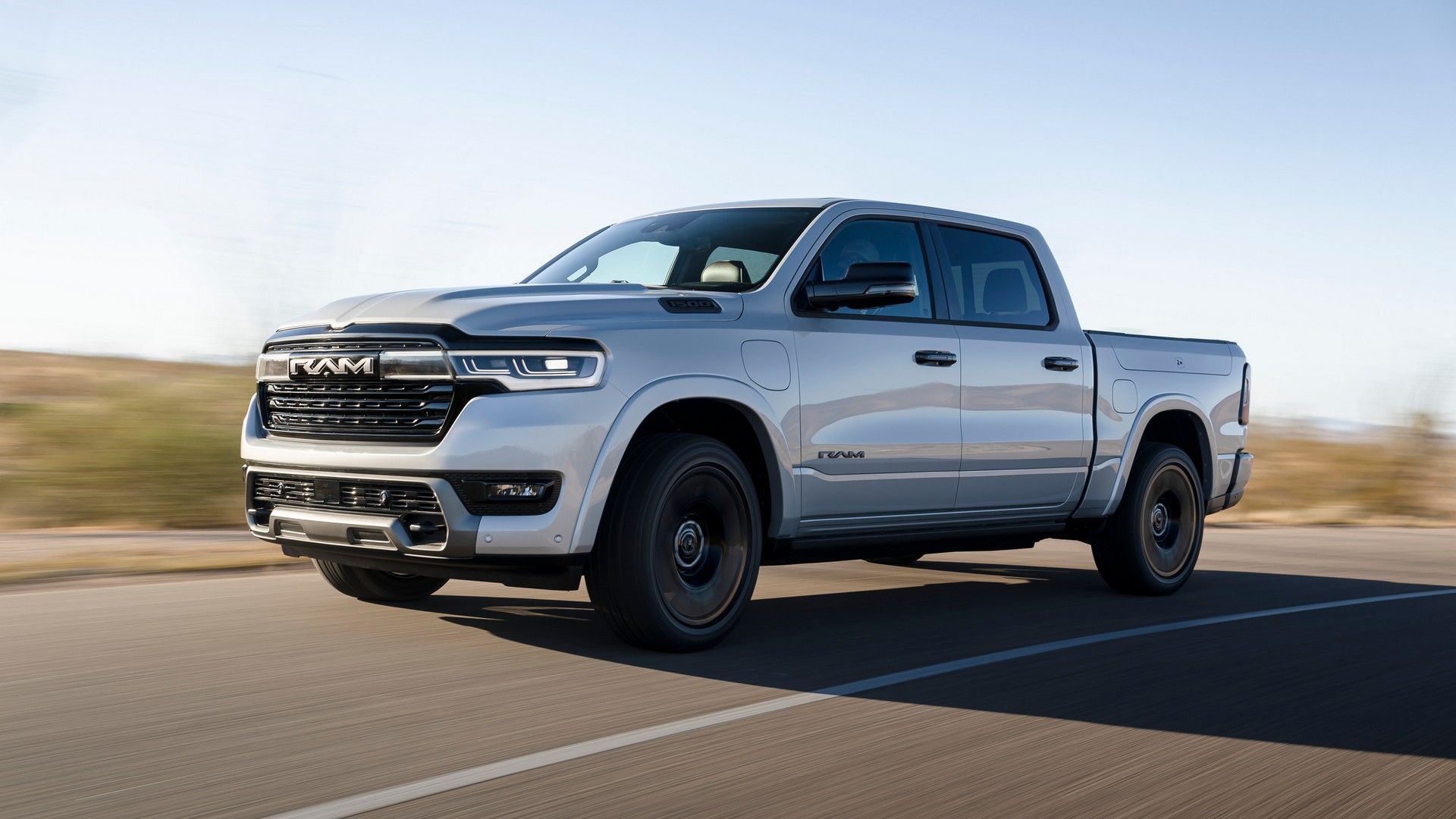
2026 Ramcharger Has Bad Fuel Economy, But Great Electric Range

Getting American buyers to embrace electric trucks is akin to making chocolate sauce taste good on a hamburger; it’s not just the right combination. No matter how far you say the truck can go on a charge, there will always be a truck owner that needs to tow further. Enter the 2026 Ram 1500 Ramcharger, an extended-range electric vehicle (EREV) that could change the game for electrified pickup trucks in the United States. Unlike a traditional EV like the Ford F-150 Lightning or Chevrolet Silverado EV, the Ramcharger boasts a 3.6-liter Pentastar V6 under the hood, which can charge the battery on-the-go so long as it has gasoline in the tank. This isn’t chocolate on a burger, this is good old ketchup. Sounds like the perfect recipe for America.
2025 Ram 1500 Ramcharger
- Engine
-
3.6L V6 (Gas Engine + Electric Motor)
- Horsepower
-
663 hp
- Torque
-
615 lb-ft
- 0-60 MPH
-
4.4 seconds
- Towing Capacity
-
14,000 pounds
Ram has been mum about the Ramcharger’s specifications up to this point, but the company recently shared some new specifications with journalists during a media call. We now have a much clearer picture of how the first EREV truck will perform, and whether it could be a breakthrough model that makes Americans embrace the idea of an electrified pickup.
Big Range, Low MPG
Ram promises a 690-mile total range, which bests any EV sold today, but how it achieves that number is a deeper story. A 91.8 kWh battery (69.7 kWh usable) enables a 145-mile electric-only range, which is an outstanding number for a PHEV, but not particularly efficient. For comparison, a Toyota Prius Prime (now with a new name, for the record) can only go 44 miles on electric power, but it only needs a tiny 13.6 kWh battery to do so. Doing some math on these numbers, the Ramcharger achieves around 2.08 miles per kWh, while the Prius sits at 4.03.
Ram promises a 690-mile total range, which bests any EV sold today, but how it achieves that number is a deeper story. A 91.8 kWh battery (69.7 kWh usable) enables a 145-mile electric-only range, which is an outstanding number for a PHEV, but not particularly efficient. For comparison, a Toyota Prius Prime can only go 44 miles on electric power, but it only needs a tiny 13.6 kWh battery to do so. Doing some math on these numbers, the Ramcharger achieves around 2.08 miles per kWh, while the Prius sits at 4.03.

Related
Ram Will Have First PHEV Pickup To Market
Ram is flipping the schedule of its electrified pickups. The range-extended Ramcharger with a gas engine will now arrive in 2025.
Once the V6 kicks on, you will get an additional 545 miles of range. That’s comparable to a Ram 1500 with the 3.0-liter twin-turbocharged Hurricane inline-six engine. Ram has finally revealed that the Ramcharger gets a 27-gallon fuel tank, which is smaller than the largest tank (33 gallons) available in the gas-powered model. The EPA has not officially rated the Ramcharger yet, but once again, by crunching the numbers, we can predict the truck will achieve around 20 miles per gallon. That’s only one mpg less than the gas-powered Ram 1500 with the 3.6-liter V6. Honestly, it’s not bad considering it has to haul around a Tesla’s worth of batteries. The Ford F-150 with the PowerBoost Hybrid is more efficient, averaging 23 mpg with 4WD.

Electric Performance With A Twist
It may yield lower fuel economy than a traditional hybrid like the F-150 PowerBoost, but the Ramcharger holds the advantage in performance. The V6, though it doesn’t send power to the wheels, is rated at 271 horsepower and 226 lb-ft of torque and is rated to run on 87-octane fuel. It can deliver 202 kW peak (271 hp) and 175 hp continuous as a generator to recharge the batteries. Alternatively, the Ramcharger can be plugged in, charging at up to 11 kW on a home charger in around eight hours. It can also be charged in just 45 minutes at 350 kW on a fast charger. Two electric motors combine to produce 647 hp and 610 lb-ft of torque (previous estimates were 663 and 615, respectively), rocketing the Ramcharger to 60 mph in 4.5 seconds and up to a 114 mph top speed. That’s a similar 0-60 time as the more powerful Silverado EV, which doesn’t have to carry a V6 engine under its hood.
The biggest question surrounding the Ramcharger is how the EREV system will work in practice. An EREV is different from a plug-in hybrid because the gasoline engine only functions as a generator to charge the battery, not as a propulsion unit. America’s exposure to EREVs has been limited, with the only past examples being the BMW i3, Chevrolet Volt, Cadillac ELR, and the Fisker Karma. The upcoming Scout vehicles will also be available as EREVs with a 500-mile range. All of those cars had small engines (four cylinders or less), but the Ramcharger uses a massive 3.6-liter V6.
We will have to wait to experience the Ramcharger in-person, but this might be the perfect solution America’s EV problem. It can easily handle a daily commute with its 145-mile battery range, but can then be road trip or towing ready with its 27-gallon gas tank and 690-mile total range. Ram didn’t exactly achieve these numbers efficiently, but neither has Ford nor GM with their all-electric trucks that have massive battery packs. Depending on how Ram prices the Ramcharger, it could be an instant hit or a confusing disaster.