
5 Reasons Why Modern Infotainment Has A Bad Reputation

The history of car infotainment is a long and varied one: from basic radio units to standalone sat-navs, phone connections, and the AUX cable, to – finally – integrated infotainment units with touchscreens and wireless connectivity. While infotainment tech has made rapid progress in recent years, it hasn’t always gone in the direction the end users would like it to. Some aspects of the infotainment user experience can be a source of frustration for drivers.
The 2024 JD Power US Automotive Performance, Execution and Layout (APEAL) study, which analyzes owner satisfaction with the design and performance of new vehicles, has revealed some interesting points about the way modern infotainment systems aren’t always satisfactory in terms of everyday usability. Here are 5 reasons why modern infotainment systems have gained a reputation for poor user experience, and some ways things can be improved in the future.
We’ve all been there: after buying a new car (or, sometimes, while sitting in a car we’ve owned for years), we’re looking for a specific function in the infotainment menu, and it’s hidden behind several menus you have to browse through to find what you need. 23% of users in the APEAL study mentioned difficult menu structure as a reason behind their poor experience with infotainment systems. As infotainment systems have added more and more features, the unfortunate end result has been that even the most basic, essential features are now buried beneath five layers of touchscreen menus, making them very difficult to access. Some systems offer shortcut buttons or customizable interfaces to solve this problem, but it’s not really enough to solve the problem at its root.

Related
Dear Automakers: You’ll Never Do Infotainment Better Than Apple And Android, Please Stop Trying
We’ve got to get a few things off of our chests, so we’ve penned an open letter to manufacturers about their biggest weakness.
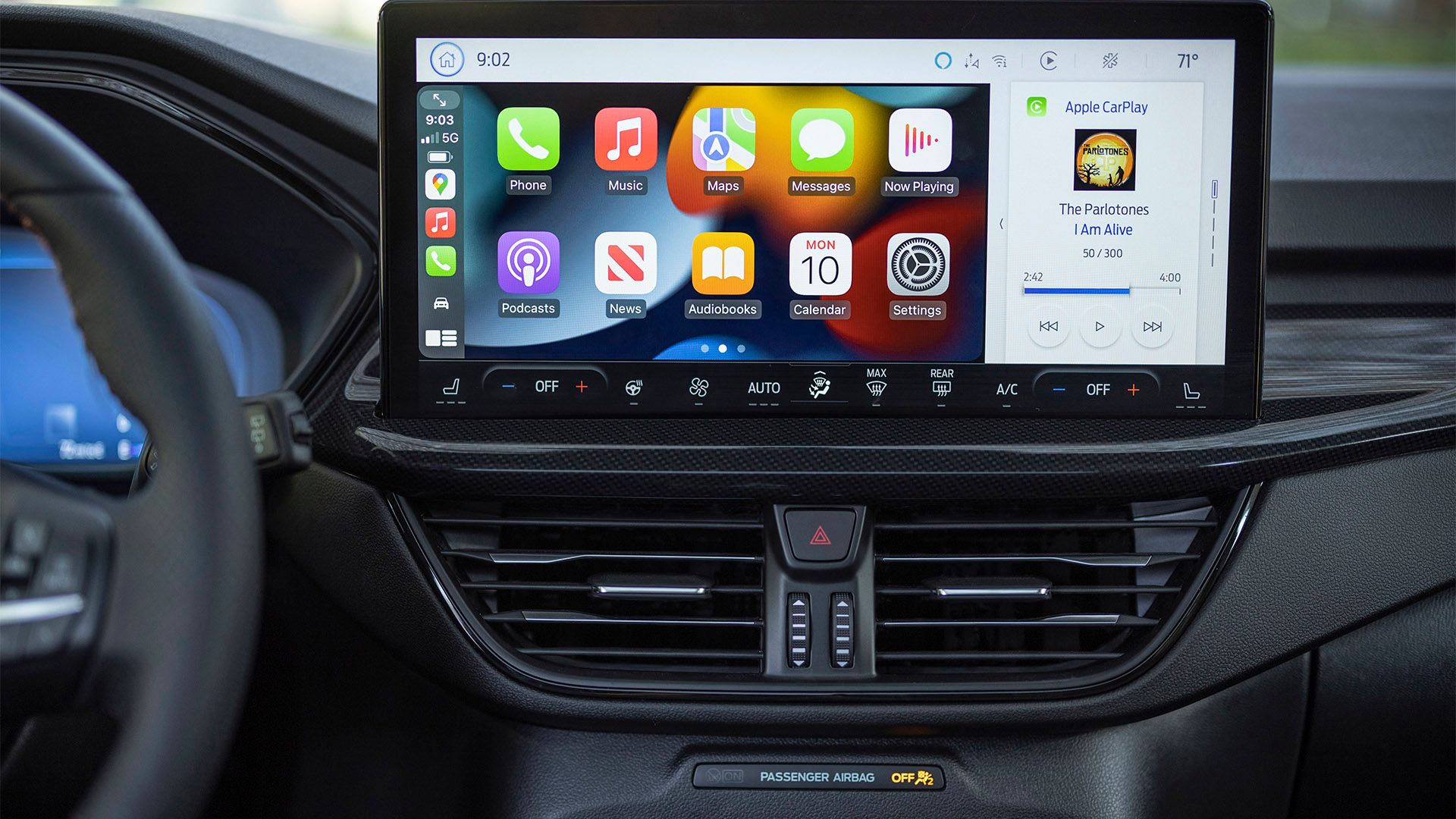
While there has to be, of course, a place for advanced features in modern infotainment systems, the key to creating a better user experience is to separate these from the basic, everyday functions that need to be accessed on a regular basis. Menus need to be simplified and whittled down, ideally to the point where most essential functions likely to be used on the move (music, climate control, navigation settings) are accessible through one single screen view without having to go through any sub-menus. This is something that Apple CarPlay and Android Auto have accomplished fairly well, but other types of infotainment systems have been slower to catch up.
2 Lack Of Physical Controls

When talking about modern car infotainment systems, one of the points that gets raised most often is the rapid disappearance of physical controls. While in the past, the simple act of turning the volume up or down, changing the radio station, or regulating cabin temperature could be accomplished even while driving, turning a knob or pushing a button by feel without having to look at it, in today’s touchscreen-based world, the tactile aspect is in danger of disappearing.

Add CarBuzz to your Google News feed.
This is true not just of infotainment functions such as navigation and music, but also of cabin controls such as climate control and heated seats that may need to be operated while on the move. The demise of physical controls has also made things worse from a safety standpoint: users are far more likely to get distracted and take their eyes off the road if they have to use a touchscreen for basic controls.

Related
Hyundai Designer Says Physical Buttons And Knobs Are Here To Stay
SangYup Lee believes traditional controls are a lot safer than digital controls.
Some automakers, such as Hyundai, have stated their intention of keeping physical controls alive, while others like Honda are cutting back on them dramatically. Some, like Ford, have come up with innovative solutions like customizable analog controllers. It is likely the way forward will be somewhere in the middle, with physical controls still available for a handful of essential functions and the touchscreen handling everything else.
3 Difficulty Switching Between Audio Sources

The number of available sources for audio in a car infotainment system has gone up over the decades. The very first car radios were AM-only; this later extended to AM and FM, then cassette and CD players were added, and today we have a variety of audio sources to pick from including Bluetooth, satellite radio and Apple CarPlay/Android Auto. However, switching between them is not always the simple, seamless task it should be.
The complexity issue mentioned by customers in the JD Power study specifically related to audio and the act of switching between different sources, with 25% of users stating it contributed to a poor audio experience. This is an issue that most of us will find relatable; we are all familiar with a sudden jump in volume when switching from listening to music via our phone to listening to the radio, or having connectivity issues that mean linking our phone to the car isn’t as easy as we thought it would be.
Owners struggle to perform simple audio-related tasks, so it begs the question whether automakers are actually in tune with the desires and needs of their customers.
– Frank Hanley, senior director of auto benchmarking, JD Power
Since audio and music are such a big part of the infotainment user experience, this is definitely one area that automakers will need to zero in on when making improvements in the future.
4 Too Many Unnecessary And Underused Features

Most difficulties users have experienced with their car’s infotainment systems can ultimately be boiled down to a single factor: too much stuff. Most people prefer a basics-only approach, with high-priority features such as navigation, music and phone calls easily accessible. All the other fancy gimmicks modern infotainment systems have been equipped with (from Tesla’s video streaming to BMW’s gaming service) are nice to have, but shouldn’t be prioritized in a stripped-down interface. Having a system crowded by too many features means the essentials are at risk of getting lost, compromising the final user experience. In this respect, the way forward for automakers would be to either cut back on some of the least frequently used features, or tuck them neatly out of sight in a menu.
5 Patchy Smartphone Connectivity

In today’s connected world, a car’s infotainment system is less of a standalone device and more of a vehicle for whatever your smartphone of choice is. This is reflected in the results for customer satisfaction in the APEAL study: while average user satisfaction for in-vehicle infotainment system obtained one of the lowest scores in the study with 805 points, the score went up for drivers who use Apple CarPlay (840) or Android Auto (832). Most modern vehicles tend to be equipped with a mix of wired, Bluetooth, and Apple CarPlay/Android Auto smartphone connections. While connectivity issues are more common with the first two, the latter option is increasingly becoming the industry standard, with even cheaper models now offering it either as an option or as standard.

Related
How Automakers Deal With The Distraction Of Modern Infotainment
CarBuzz asked several brands this question. Here’s what some had to say.
While CarPlay and Android Auto offer a consistent user experience every time, with all the features we have come to expect of a modern infotainment system being carried over from the user’s phone, in older systems with smartphone connectivity some features may be available while others are not (such as phone and music, but not navigation or hands-free texting). This can cause frustration among users who have now grown to expect seamless smartphone connectivity in their car. Even in the newest models, rollout of smartphone connection features has been slow. Luxury EV brand Polestar, for example, didn’t support Apple CarPlay until last year, only offering Android Auto.
How Can The Infotainment Experience Be Improved?
The takeaway on how automakers can achieve a better infotainment user experience ultimately boils down to a few key concepts that most car enthusiasts or just everyday drivers will already be familiar with; there is no need to reinvent the wheel. The first is the presence of physical controls. Even adding a few buttons and knobs for key functions like turning the volume up and down, or regulating cabin temperature, would create a more straightforward tactile experience and enable drivers to safely use the system while driving.

Related
Crash Testing Could Force Automakers To Stop Using Massive Touchscreens
Common sense will prevail: from 2026, critical functions must be handled by switches or buttons.
The other principle of the improvement process has to do with smartphone connectivity. Since Apple CarPlay and Android Auto are now ubiquitous on vehicle infotainment systems, the logical next step is to make them the car’s main interface, rather than an extra option tacked over the top. For Apple users, who are used to having their devices connect seamlessly with one another, doing the same thing with their vehicle will be the way forward to solve most of the user-experience issues. And for Android users, who are similarly accustomed to using their Google account to log in to everything, the experience will be equally smooth.

This would also solve the complexity issue, as automakers would no longer need to work on creating their own custom interfaces with dozens of menus and sub-menus. The car would simply become another device in the family’s tech ecosystem, like a smartphone or tablet.

