8 Times Automakers Had To Rebrand Their Rudest Nameplates

Last week, Subaru announced that the Trailseeker, while retaining the name for the North American market, would henceforth be known as the E-Outback in the UK. Which, while a bit clunky, is not that uncommon. Nissan, for example, marketed the Qashqai as the Rogue Sport when it first arrived in the United States to piggyback off decent sales of its established crossover. The Ford Kuga in Europe, meanwhile, became the Ford Escape in the US to placate the Blue Oval’s North American nomenclature (‘E’ for SUVs, ‘F’ for pickups, etc.)

- Base Trim Engine
-
Electric
- Base Trim Transmission
-
single-speed Automatic
- Base Trim Drivetrain
-
All-Wheel Drive
And then there are those model names that were changed, not for any marketable reasons, but because they were pure filth. In certain parts of the world, anyway. This is a subject we’ve glossed over in previous lists on CarBuzz. We’ve even explored some risqué (and dumb) car names in the past. This time though, and since there were more eyebrow-raising examples than we’d expected, we’re truly embracing the smut. But no, we’re not including the Subaru Forester Ultimate Customized Kit Special. Despite the official apology, Subaru Singapore must have known what they were doing when they signed off on that.
This article explores a selection of cars which boast some of the most unfortunate model names in history.
8
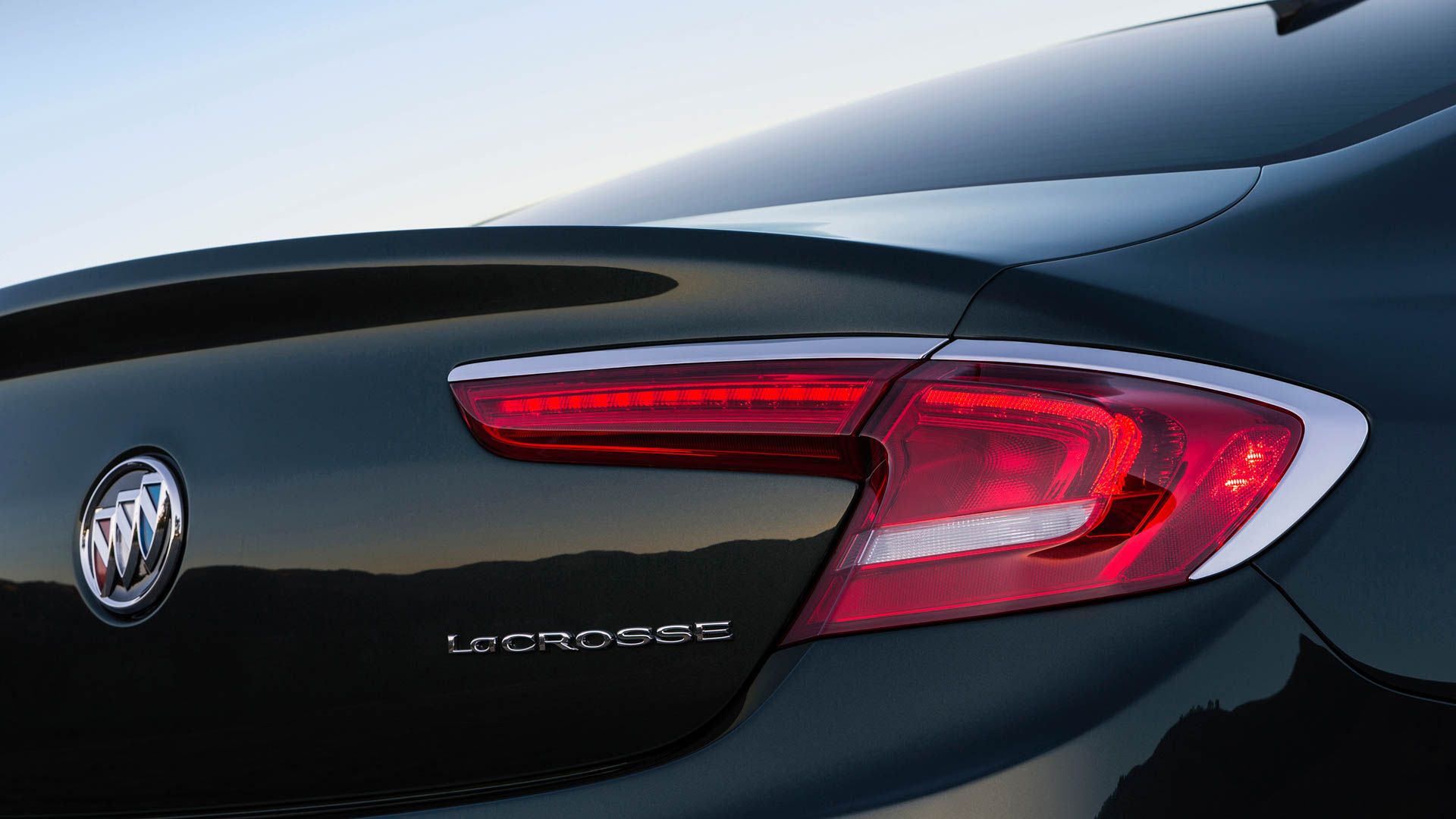
Buick LaCrosse
Learned To Love Itself
Fun fact, did you know that Buick first introduced the LaCrosse name at the 2000 Detroit Auto Show as both a design study and a curvaceous homage to its 1940s fleet of sedans? A more sedate (boo…) production model wouldn’t arrive until 2005, however, and while the LaCrosse name was heavily promoted in the United States, in Canada, the sedan was renamed the Allure, given that La Crosse, in Quebec slang, means to masturbate. Interestingly, the Allure name was binned altogether when the second-gen model arrived in 2010, Buick reasoning that far more Canadians would draw the more sophisticated connection to the collegiate sport than a puerile reference to self-love. Well, that and marketing one name rather than two internationally was considerably cheaper too.
7
Mitsubishi Pajero
Too Hands-On In Spain
Alongside the epochal and similarly discontinued EVO, the Pajero makes a strong case for the most significant Mitsubishi of them all. More than 3.25 million examples of the SUV were sold across more than 170 countries between its launch in 1982 and the end of production in 2021. This includes obscure spin-offs like the Junior and iO compact SUVs of 1995 and 1998, and (good grief!), the Mini kei-car from 1994. Across four generations, the Pajero took on – and regularly beat – the likes of Toyota’s Land Cruiser on the road, took the first overall win for a Japanese manufacturer at the fearsome Dakar Rally in 1985, and still holds the event record for most overall wins (12). Unsurprisingly, a hybrid revival for 2027 is already on the cards. A shame then that the Pajero had to be marketed as the Montero in select markets, given that ‘Pajero’ quite literally refers to the physical act of self-love in Spanish.
6
Hyundai Kona / Honda Fit
Big On The Inside
The most recent of our two-for-one, the Kona, was launched as Hyundai’s answer to Toyota’s C-HR and Honda’s HR-V in June 2017, and, according to Hyundai itself, derives its name from one of the more desirable coastal regions in Hawaii. A bid by the Korean manufacturer to (ahem) replicate the state’s “adventurous and energetic spirit.” In Portugal, meanwhile, the crossover was renamed the Kauai – another island in the Hawaiian archipelago – since ‘Kona’ is also Portuguese slang for, er, an intimate part of the female anatomy. Ironically, 16 years earlier, Honda only just managed to avoid a similar faux pas when it launched the Fit in 2001. Its original name – Fitta – has a similarly colorful translation in Swedish, and though it’s never been 100 percent confirmed, Honda even planned to market the surprisingly roomy subcompact with the tagline, ‘small on the outside, big on the inside.’
5
Renault Koleos
Dropping The Ball
From one set of genitals to another, we present the Renault Koleos, which, translates as ‘sheath’ if you’re Greek, and ‘testicle’ if you happen to speak Latin. Not that this stunted the model’s momentum, in all honesty. Following the concept’s debut in 2006, and with the French marque finally admitting that the European MPV sector it invented in 1984 was starting to lose steam, Renault launched its first dedicated 4X4 crossover in 2008. Begrudgingly: peel back the bodywork, and the Koleos was essentially a Nissan X-Trail underneath. Sadly, after a decent start, sales for Renault’s nutjob fell off quickly after the third year, and the Koleos, unable to keep up with the more established likes of Hyundai’s Tucson and Volkswagen’s Tiguan, was discontinued in 2017. ‘But where’s the name change?’ I hear you ask. Well, a third-generation model will continue to be sold in Korea and select markets in South America, albeit now known as the QM6.
4
Ford Pinto
A Total Cock-Up
We’ve slightly shot ourselves in the foot here. On the one hand, the Pinto is one of the most infamous Fords of them all. The Blue Oval’s sub-2,000-pound answer to the Volkswagen Beetle, and a more economical alternative to the fuel-guzzling sedans indicative of 1950s America, was developed in just over two years to meet a hard 1971 release date. Under the lash of the equally legendary Lee Iacocca, Ford’s engineers did so by borrowing spare parts from its European operations – including the engine from an Anglia – and overlapping product development with machine tooling, essentially freezing the design early on. Hence, why the fuel tank, short-sightedly, ended up being mounted right behind the rear axle (borrowed from the Capri), where it could easily rupture, and ignite, if the Pinto was rear-ended. Far from prime real estate for a lighthearted top 10 list then. But on the other hand, Pinto basically means ‘small manhood’, for want of a better word, in Brazilian Portuguese, so the fireball was sold as the Corcel in South America.
3
Toyota MR2
When The MR2 Hits The Fan
Our good buddy Ty Duffy glanced on this subject last month when he included the Audi e-tron in his ‘10 Times Automakers Should Have Thought Twice…’ list, given that étron is literally the French word for ‘turd.’ Possibly a tangential reason why the German marque has been moving away from the name as of late. Sticking with that theme, we instead present the legendary MR2, Toyota’s answer to the Pontiac Fiero that punched so far above its weight, it not only outlived its American rival by two decades, the ‘Midship Runabout 2-seater even gave the Mazda Miata MX-5 and the Honda S2000 a run for their money before disappearing in 2007. Hardly surprising then that the MR2, in GR Supra fashion, is due to be revived in 2027. And yes, Toyota will almost certainly preserve that legendary name, even if the original MR2 had to be renamed ‘MR’ in France, given that the soft ‘r,’ harsh ‘t’ pronunciation was a little too close to ‘merde’ for comfort, which sports a very similar defintiion to that of the aforementioned Audi.
2
Mazda LaPuta
Rode Island
Long gone, this city car was essentially a re-badged Suzuki Kei – hey, it still counts as a name change! – when it debuted in 1999, and was Mazda’s attempt to expand and take on Suzuki (Alto), Daihatsu (Mira) and Honda (Life) to other micro-mini kei cars. A game attempt it was too, as Laputa was cleverly packaged to maximize cabin space, and was even offered with two turbo engines, albeit capped at 60-horsepower. After a facelift in 2001 though, Mazda’s experiment ended due to poor sales in 2006. The name, meanwhile, is derived from the diamond-shaped, floating island in Jonathan Swift’s classic novel Gulliver’s Travels, and was chosen to evoke “images of fun, sportiness, and casualness.” Interestingly, the name also appears in Hayao Miyazaki’s film, “Laputa: Castle in the Sky.” Sadly, Spanish cinema goers and car fans found the name difficult to ignore, given that it refers, very colloquially, to a professional of the night.
1
Ferrari FXX-K
Meet The FXX-KERS
We’re cheating slightly, as this name change was only done once, for Car Crushers 2, on the Roblox online gaming platform. And even then, ‘Ferrari’ was renamed ‘Fierra’ to avoid copyright issues. The original FXX, meanwhile, was a limited-edition, track-spec model, based on the Enzo hypercar, launched at the Scuderia’s Finali Mondiali event in 2005. It was the first performance model from Ferrari’s ‘XX’ research and development program, created to give Maranello’s long-term customers an ‘eXperiential’ luxury experience on-track. Just 30 were built, but the FXX program proved so popular, Ferrari followed this up with FXX Evoluzione in 2008, the 599XX in 2010, and, tellingly, the FXX-K in 2014. That K, incidentally, referred to the newly-added, Formula 1-style KERS system. So yes, we were a heartbeat away from the most dynamic Enzo of all time being called ‘FxxKERS’ and a lot of parents getting very cross about a new Technic LEGO set.
Sources: Ferrari, Mazda, Toyota, Ford, Renault, Hyundai, Honda, Buick, Mitsubishi