How do you solder components onto a printed circuit board assembly services?

solder components onto a printed circuit board assembly services
Soldering components onto a printed circuit board (PCB) is a fundamental process in PCB assembly services, crucial for the creation of functional electronic devices. Soldering involves joining electronic components to the conductive traces on the surface of the PCB using molten solder, which creates strong electrical connections and mechanical bonds. Proper soldering techniques are essential for ensuring the reliability, performance, and longevity of PCB assemblies.
The first step in soldering components onto a PCB is to prepare the board and components for assembly. This includes ensuring that the PCB and components are clean and free of contaminants that could interfere with the soldering process. Components should be carefully inspected for any damage or defects before assembly, and the printed circuit board assembly services should be properly aligned and secured in place to prevent movement during soldering.
Next, solder paste or flux is applied to the pads on the surface of the PCB where the components will be soldered. Solder paste is a mixture of tiny balls of solder suspended in flux, which helps to clean the surfaces to be soldered and promotes the flow of solder during the soldering process. Flux is also applied to the leads or terminals of the components to be soldered, further enhancing solder flow and ensuring strong, reliable solder joints.
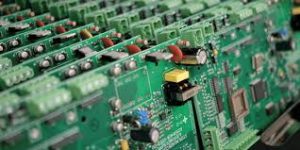
How do you solder components onto a printed circuit board assembly services?
Once the solder paste and flux are applied, the components are carefully placed onto the corresponding pads on the PCB. Precision and accuracy are crucial during this step to ensure that components are properly aligned and oriented according to the PCB design and assembly documentation. Automated pick-and-place machines may be used to accurately position components on the PCB, especially for high-volume assembly processes.
With the components in place, the PCB is then heated to melt the solder and create solder joints between the component leads or terminals and the PCB pads. There are several methods for heating the solder, including infrared reflow soldering, convection reflow soldering, and vapor phase soldering. These methods use controlled heat sources to melt the solder paste and form reliable solder joints without damaging sensitive electronic components.
During the soldering process, it is essential to ensure that the temperature and heating profiles are carefully controlled to prevent overheating, which can damage components or the PCB itself. Proper temperature profiles also help ensure that the solder joints form correctly, with good wetting and sufficient bond strength. Real-time monitoring and feedback systems may be used to adjust the soldering process parameters as needed to maintain optimal soldering conditions.
After soldering, the PCB assemblies undergo inspection to verify the quality of the solder joints and overall assembly. Visual inspection, automated optical inspection (AOI), and X-ray inspection are common methods used to detect solder defects such as solder bridges, cold solder joints, and insufficient solder. Any defects or issues identified during inspection are addressed promptly to ensure the quality and reliability of the finished PCB assemblies.
In conclusion, soldering components onto a printed circuit board is a critical process in PCB assembly services, essential for creating functional and reliable electronic devices. By following proper soldering techniques, including preparation, solder paste application, component placement, controlled heating, and inspection, manufacturers can produce high-quality PCB assemblies that meet the highest standards of performance and reliability. Soldering requires precision, skill, and attention to detail, but with the right techniques and equipment, manufacturers can achieve consistent and reliable solder joints, ensuring the success of their PCB assembly projects.