The First Hot Hatch Was Not The Golf GTI

The Volkswagen Golf GTI may have been responsible for the hot hatch boom in the late 1970s, the vehicle combining enthralling pace with affordability, practicality, and reliability, though this doesn’t mean it was the first of the breed. As it turns out, the first true hot hatch turned up over five years before the GTI made its debut in 1975.
CarBuzz decided to take a deeper look into the vehicle that started it all as far as hot hatches go, and why fans of the vehicle class should be thankful that it started a trend that would soon grip the automotive world.
Related
The Lotus Hot Hatch Nobody Knows About
Lotus has had a hand in many different cars over the years, but it also helped to develop the handling on an unknown Malaysian hot hatch in the 1990s.
The cars used in this piece are the earliest examples of hot hatches sold to consumers. All technical and pricing data used throughout was sourced from trusted providers such as vehicle manufacturers and consumer sites.
The AMC Gremlin Was The First
|
1970 AMC Pacer Specifications |
|
|---|---|
|
Engine |
3.2-3.8-liter inline-six |
|
Power |
128-145 hp |
|
Torque |
182-215 lb-ft |
|
0-60 mph |
10.5-12.0 seconds |
|
Top Speed |
110 mph |
|
Weight |
1,520 pounds |
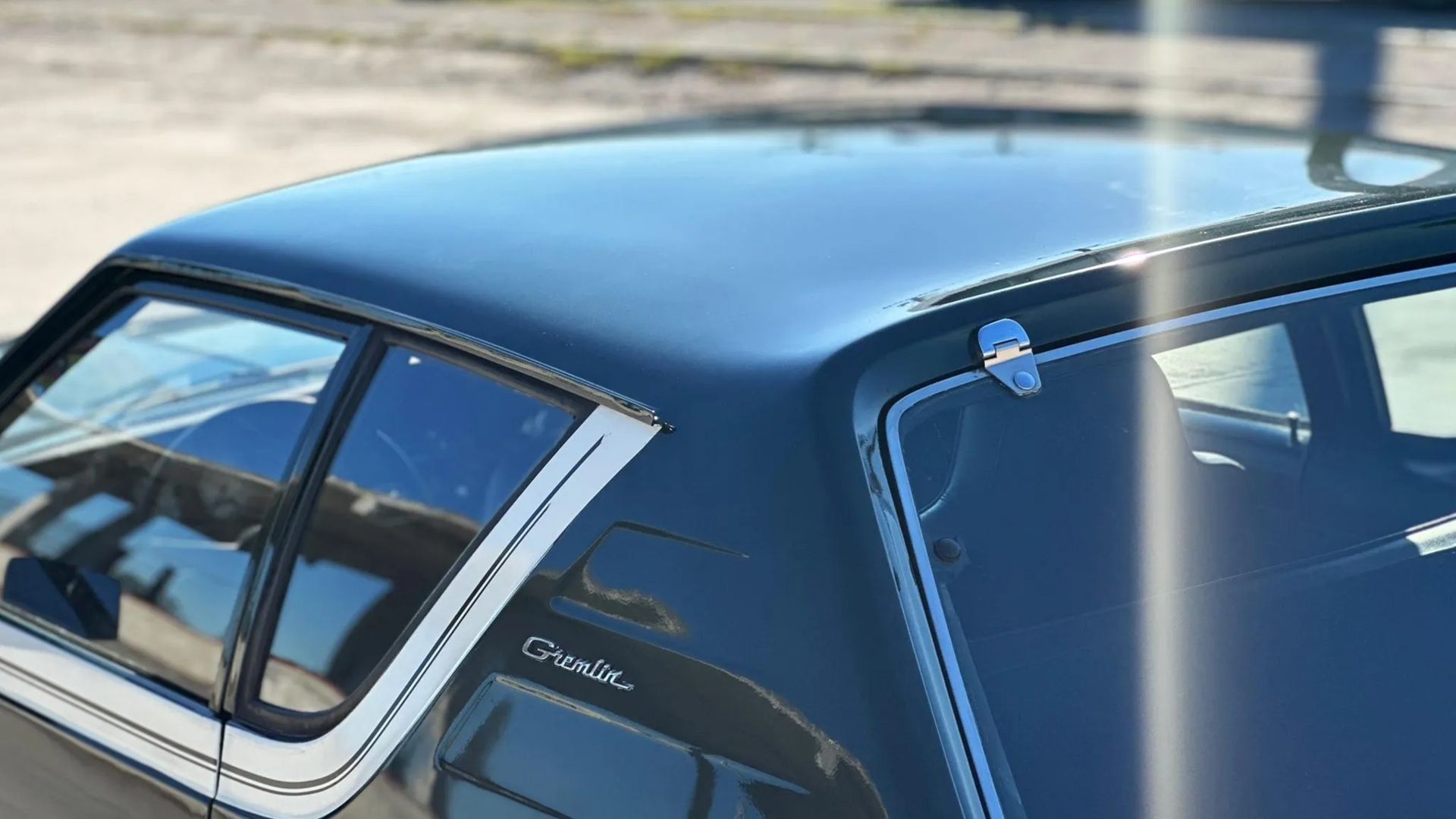
The first production hot hatch to ever hit the road was the AMC Gremlin, a small subcompact model from American manufacturer AMC. The car made its debut in April 1970, over five years before the Golf GTI wowed the world. The idea came about because rivals Ford and General Motors were set to unveil new subcompact cars, the Pinto, which was responsible for one of Ford’s biggest scandals, and, Vega respectively. AMC wanted to get there first.
Rather than develop an all-new model though, AMC elected to shorten the chassis used on its Hornet and design an all-new body to place on top. The car was aimed at being more usable in tighter spots, such as when winding through city streets and in car parks. The Gremlin hit the brief in terms of standing out from an aesthetic point of view, with its long Hornet-like hood and sloping hatchback tailgate, which boosted it aerodynamically, allowing it to stand out from its rivals.
It also looked sporty, making it a good base for those looking to retain muscle car looks but in a much more practical package. While all versions came in three-door form, buyers had the choice of purchasing versions with seats in the back or not, the former being cheaper. The two-seater option came with an MSRP of $1,879, while the four-seater came in at $1,959. This translates to just $15,286 and $15,937 in today’s money, making them extremely affordable.
With some options fitted, the Gremlin became the genesis of the hot hatch.

Discussion
What are the best hatchbacks of 2024?
When it comes to hatchbacks, you’re running out of options in 2024. The VW GTI and Golf R are automatic frontrunners, with the Honda Civic and Mazda 3 not far behind. For pure performance, you can’t ignore the GR Corolla either, so which is your favorite?
A Collection Of Six-Cylinder Engines Brought The Power
Rather than the compact four-cylinder engines that would soon be used by its European counterparts, the Gremlin launched with a choice of two six-cylinder engines. The standard 3.2-liter inline-six powerplant came with a healthy 128 hp, though the larger 3.8-liter unit was the one you wanted if you were after a little more zest. The engine, which came topped with a 1-barrel carburetor, brought 145 hp to the party. While not exactly the lightest hot hatch ever constructed, fun could still be had, with 60 mph taking 10.5 seconds to achieve.
It also came as standard with a three-speed manual transmission, though a three-speed automatic unit was also available for those who didn’t want to get after it as much. While the standard Gremlin wasn’t the best for a white-knuckle ride down a back road, it was available with a series of options that could help achieve this. Power steering and power brakes were available to afford the driver easier control, while a twin-grip rear differential could be equipped to ensure the rear tires didn’t light up on the corner exit.
Arguably the most important option was the handling package, which brought along heavy-duty springs and shocks, as well as a front sway bar that helped to stiffen up the body. AMC went even further for the 1971 model year version.

Add CarBuzz to your Google News feed.
The Gremlin X Package Was Introduced In 1971
Aside from the options already available in its debut year, the X package was added for the Gremlin’s sophomore year on sale. While it didn’t boost the Gremlin’s performance in any way from a mechanical perspective, it made it look the part. A racier paint scheme was the headline act here, with decals similar to the Hornet and Javelin muscle cars being introduced to the model. The standard front bench seat was also replaced with bucket chairs, while stickier Goodyear tires were also included.
Alongside this, a larger 4.2-liter I6 engine was made available for 1971. Power was raised to 150 hp, with torque peaking at 240 lb-ft. It may have been outclassed by its future European rivals dynamically, mainly due to it being around 1,000 lbs heavier, but the Gremlin had become the first-ever hot hatch.
The First Hot Hatch Is A Bit Of A Bargain In 2024
For gearheads wanting a slice of where the hot hatch began, you’re in luck. According to Hagerty’s Valuation Tool, great deals can be had on the more powerful 3.8-liter versions of the car. Examples in good condition can be had for less than $9,000 at the moment, while those in concourse spec are currently worth around $27,000. Be warned though, as values of the car have risen by around $1,000 over the past year, so now may be the best time to strike.

Related
Revisiting The AMC Gremlin: Does The Compact Car Deserve Its Bad Reputation?
The AMC Gremlin is a quirky compact car with a unique design that holds a bit of charm and appeal to this day. Is its poor reputation deserved?
Drivers wanting the slightly later Gremlin’s equipped with the X package will need to part with significantly more cash. For Xs with the 150 hp 4.2-liter I6 powerplant, expect to pay around $13,750 for one in good condition, and north of $35,000 for pristine examples. Values for these have remained consistent year-on-year, but this could change should the wider automotive landscape begin taking into account its historical importance.
The Autobianchi A112 Abarth Quickly Followed The Gremlin
|
1971 Autobianchi A112 Abarth Specifications |
|
|---|---|
|
Engine |
903 cc inline-four |
|
Power |
58 hp |
|
Torque |
54 lb-ft |
|
0-60 mph |
13.1 seconds |
|
Top Speed |
93 mph |
|
Weight |
1,520 pounds |
In 1971, Italian automotive giant Fiat took over Abarth, a race team and vehicle tuning company that had been active for over two decades. Wanting to utilize the firm’s expertise to boost some of its own models, Fiat soon tasked its new acquisition with jazzing up its Autobianchi A112 city car. While both the A112 and Gremlin were hatchbacks, they couldn’t have been more different.

Related
10 Hot Hatches We’ve Lost In The Last Decade And What They’re Worth Today
The humble hot hatch is fast disappearing from the market. Here are ten models we’ve said goodbye to over the last 10 years
The A112 was front-wheel-drive, unlike the rear-wheel-driven AMC, and it used a tiny 903 cc four-cylinder engine compared to the much larger six-pot units utilized in the Gremlin. The A112 also weighed just 1,520 lbs, well over 1,000 lbs less than the Gremlin. Abarth focused on extracting more power from the base engine, with the handling and chassis aspects of the already-agile car deemed enough to get the job done even with the extra grunt.
Abarth enlarged the engine to 982 cc, and upgraded the carburetor to a more potent twin-barrel version. The exhaust line was also modified, which boosted power from 42 hp to 58 hp. To complete the A112s transition into a hot hatch, it was kitted out with a racy red and black paint scheme, which also included black side stripes. On the inside, the A112 Abarth was graced with a three-spoke aluminum steering wheel, sportier seats, and extra dials.
It was introduced in September 1971, and was the first hot hatch built to the recipe that became the norm after the Golf GTI took the world by storm just four years later.
Sources:
AMC
,
Hagerty
,
FCA Heritage