Are all flex PCB manufacturers the same?

flex PCB manufacturers
Getting the right flex PCB manufacturer for your project is crucial. A manufacturer that knows your industry and understands the challenges you face will be able to offer you customized solutions. They will also be able to meet your production demands in a timely manner. Moreover, a reputable manufacturer will help you avoid cost overruns, which can be costly for your business.
A flex circuit is more expensive than a rigid one due to the many steps involved in manufacturing it. Moreover, they require different processes that cannot be replicated in a rigid board. The process involves molding, laminating and surface treatment. Additionally, a flex circuit is bonded to a base material such as a plastic. It is also a challenge to get the flex circuit to move the same way as a rigid PCB when the board is bent, folded or twisted.
The most significant difference between a rigid PCB and a flex pcb manufacturer is that the former can be made in a single layer while the latter requires multiple layers to form its structure. However, a lot of the other features are similar. Both types of PCBs contain an insulating layer, a copper or conductive material layer and a protective overlay.
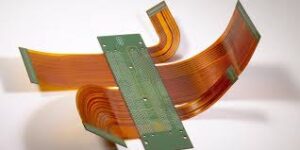
Are all flex PCB manufacturers the same?
In addition, both types of PCBs feature plated through holes (PTH). These are necessary to connect copper circuit layers in different layers. The PTH in a flex PCB are called Microvias. They are laser-drilled holes that are plated through to make them conductive. Fabricators can stagger or stack Microvias to simulate the blind and buried plated through holes that are common in regular rigid PCBs.
Using a flex PCB can help reduce the overall weight and size of your product. This is important because it can improve the portability and design space of your device. In addition, a flexible circuit board is an ideal solution when it comes to adding components in areas that are difficult or impossible to reach with a rigid PCB.
The flexibility of a flex circuit allows it to conform to the body, making it an excellent choice for medical devices. It also provides greater functionality and ergonomics than traditional rigid PCBs. This is because it can eliminate the need for bulky and heavy wiring.
Another advantage of a flex PCB is its ability to handle higher voltages than rigid ones. For example, a 1 mil kapton flex circuit can handle 5kV. This means that it is better equipped to protect electronic components against electromagnetic interference (EMI) from electromagnetic radiation.
Another significant trend in the Flex PCB manufacturing industry is sustainability. Manufacturers are focusing on environmentally friendly practices by reducing waste, optimizing resource usage, and complying with international environmental standards such as RoHS (Restriction of Hazardous Substances) and REACH.
In addition, a flex PCB can be coated with an adhesive to stick to a surface or other substrates. This is especially useful if you need to use your PCB in an area with high electromagnetic fields. However, it is important to note that coating a PCB with an adhesive increases the cost.