Automakers That Failed To Compete In The Ultra-Luxury Segment

At the low end, a 2024 Flying Spur with a V8 engine will cost you around a quarter million dollars, and people who buy these cars tend to buy another one every few years rather than priding themselves on high mileage like a Toyota buyer. If you’re an automaker looking at the high-end luxury market, you’re probably going to take any opportunity you can to get into that niche and start making three to four times as much per unit sold. The profit margins on these high-end cars are massive.
2:03
What’s The Price Of Every New Bentley On Sale In 2024?
Let’s go window shopping with one of the world’s most renowned luxury automotive brands.
Breaking into the ultra-luxury market with Rolls-Royce and Bentley is easier said than done. It’s a small niche, and most people who are willing to spend that much on a luxury sedan already have their hearts set on a Bentley or a Rolls-Royce, or both. The industry is littered with the off-shoots and subsidiaries of major automakers who took a shot at the high-end luxury market only to retreat back to their own respective segments.
Maybach: Selling Expensive Cars During A Recession
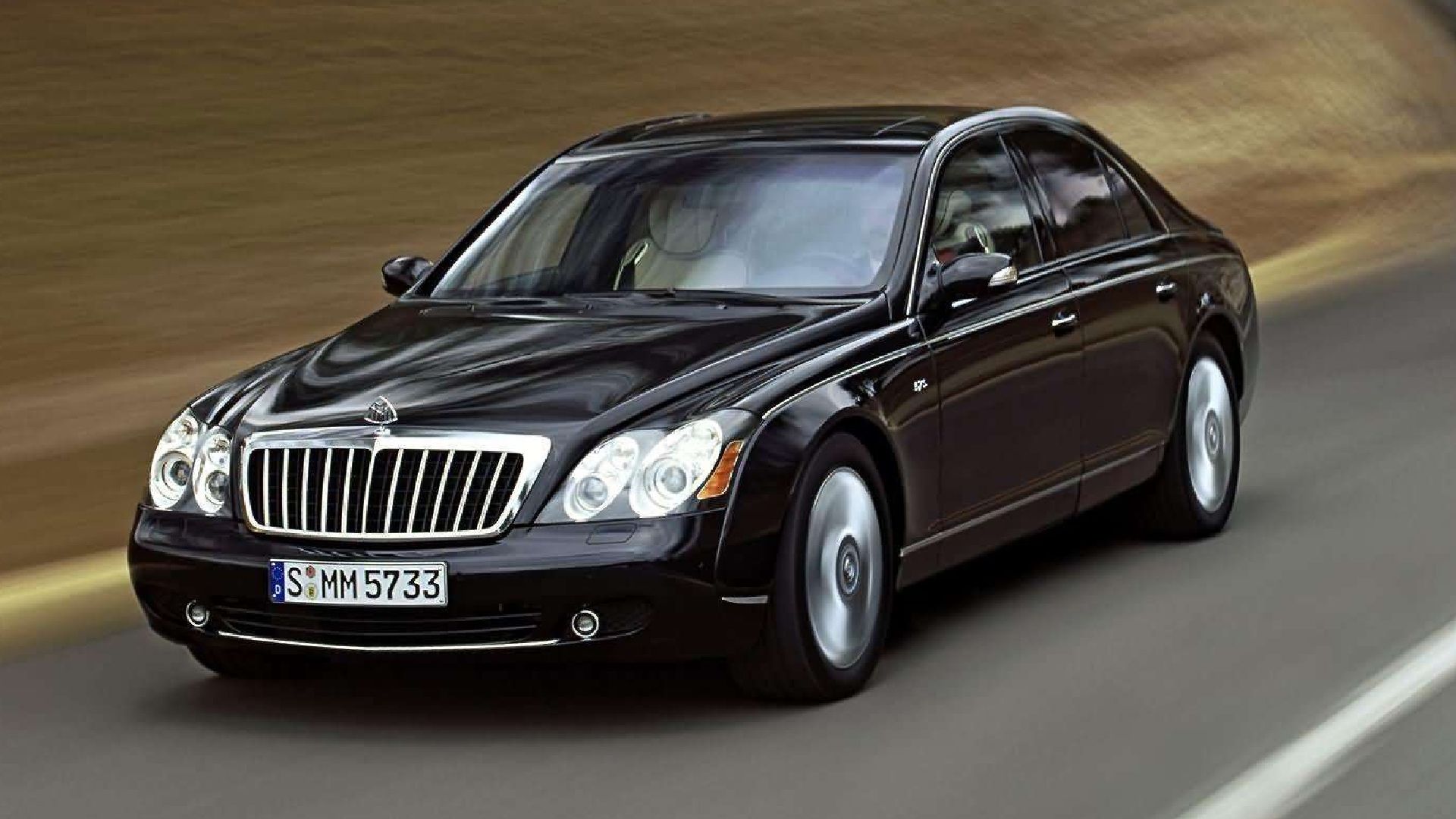
Maybach dates back to 1909, first building aircraft engines, then expanding to everything from Zeppelins to rail cars. In 1960, they were bought by Daimler-Benz, and in 2002, still under Daimler-Benz ownership, they were established as a standalone company looking to compete in the ultra-luxury market. The Maybach 57 and 62 were the flagships for this new iteration of the brand, a pair of cutting-edge twin-turbo V12s packed with state-of-the-art creature comforts. DVD systems in the back, leather and wood interior trim, and iPod adapters. If you could pack it into the cabin of a luxury sedan, Maybach had it.

10 Of The Most Comfortable Cars: Exploring The Peaks Of Automotive Luxury And Comfort
Discover which cars offer the most pleasant road trip experience, running the gamut of affordable to eye-watering
The 57 and 62 combined produced around 3,000 units in total. The 57 sold for around $350,000, and the 62 in the area of $430,000. Adjusted for inflation, that puts a Maybach 62 around $760,000 in 2024 dollars. A steep price tag in any era, but remember that there was a global recession going on in the early 2000s, too. Another financial crisis would hit in the late 2000s, so Maybach, with their insistence that automotive journalists ride in the back rather than test-drive the car themselves, couldn’t have picked a worse time to release a car exclusively for people who can afford to keep a chauffeur on staff.
By 2013, the standalone Maybach brand would be shuttered. In 2015, they were brought out of retirement as a sub-brand for Mercedes-Benz S-Class. This turned out to be a winning move for the company. Mercedes reported a 19% year-after-year increase in demand for their Maybach line in 2023, with the S-Class and Mercedes-Maybach GLS leading sales. Positioning Maybach as a sub-brand allows Mercedes to offer another level of luxury without anyone having to sink or swim on how well they can compete with the titans of the segment.

Add CarBuzz to your Google News feed.
Daimler: The Super Eight Swan Song
Mercedes-Daimler now does business as Mercedes-Benz Group AG. The other Daimler, known as Daimler Company or simply Daimler, wound up under the ownership of Indian auto giant Tata in 2007. In 2009, an application to register the Daimler name in the US in hopes of tapping into the super-luxury market was rejected. Today, the Daimler name essentially exists only on paper as a property in the Tata portfolio.
Prior to that, Daimler had been struggling to stay relevant in the automotive market under Ford ownership, with the X308 selling fewer than 5,000 units total from 1997 to 2003, leading to the company taking a three-year break before delivering their swan song, the 2005 Super Eight. The Super Eight was essentially a supercharged Jaguar XJ with a high-end cabin selling in the low six-figure range. Daimler only made around 850 before they met the same fate as Maybach, trying to break into a crowded and expensive micro-niche market during a recession.
In 2007, Ford sold the company to India. Daimler and Jaguar never turned a profit under Ford.
Sterling: Rover’s Short-Lived Ultra-Luxury Line

The short-lived Sterling brand ran from 1987 to 1991 as a North American division of the Rover Group. Sterling essentially rebranded the Rover 800 series cars as the 825 and 827, and the ultra-luxury 827 SL sedan Oxford Edition. Sales started strong, with American drivers being charmed by the very British vibes of the lineup, and in the first year, Sterling sold 14,171 units. The Oxford Edition included a built-in cell phone (back when we used to call them car phones), electric seats, and high-end trim. Sterling’s vision of ultra-luxury may seem almost quaint in 2024, but in 1987, this was state of the art, justifying its $19,000 (around $53,000, adjusting for inflation) starting price tag.

The Good And Bad Of Platform Sharing And Badge Engineering
It does have its merits.
The shine of the British luxury car wore off quickly. The Acura Legend was pretty much the exact same car with most of the same features (adding car phones with the second generation in 1991), and it cost about the same. But, being Japanese-made, it was built to a higher standard. Early model Sterlings were infamous for corrosion, faulty electronics, chipped paint, and poorly constructed interior trim. By the time Sterling got around to improving the overall build quality, it was too late. In 1991, the brand only sold 2,745 units.
Merkur: Ford’s Failed Sub-Brand

Remember Merkur? If you’re under forty, the answer is probably “nope.” Merkur was Ford’s response to the public’s demand for increasingly European luxury cars. The brand was registered in late 1983, and the first model hit the market in 1985. Finally, the line was discontinued in 1989.
With Merkur, Ford was attempting to do what Toyota had done in bringing the Lexus to America, rebranding imports for the local market. The XR4Ti, a rebranded Ford Sierra, was the first to hit American dealers, with the Merkur Scorpio being the brand’s attempt at taking a bite out of Bentley’s apple.

Ford Merkur RS4Ti Is A Modern Cosworth RS500 For SEMA
The interior is an especially noteworthy highlight.
The flagship car, the Scorpio, was a five-door hatchback launched for the 1988 model year. The Scorpio was basically a rebranded Ford Granada Mk III (UK)/Scorpio Mk I (Germany), packing a 2.9-liter Cologne V6 delivering 144 hp.
Power seats, mirrors, and windows were standard, as was cruise control, and the car was available with a high-end leather interior. Rather than competing on the sheer volume of gadgets, Merkur sought to attract buyers with the space and quality of the cabin.
Ford aimed for 15,000 sales a year. In 1987, they sold just over 5,000, and between 1989 and 1990, they sold just over 7,000. Given these numbers and exchange rates favoring the German mark, it wasn’t worth the expense of updating the car’s safety features for 1990, and the whole brand was scrapped.
DS: Citroën’s Luxury Arm Withdraws From The International Market, Again

Named for the classic Citroën DS executive car and said to be an abbreviation of Different Spirit, or Distinctive Series, DS was founded as a Citroën sub-brand in 2009 and eventually sold to Stellantis in 2021. You may notice we’re not talking about these guys in the past tense. DS is still around to this day. In fact, the company’s flagship car, the DS3, launched in 2010, is still sold today, and commanded 40% of the premium subcompact European market in 2013. The newer DS 3 is a front-engine, front-wheel drive subcompact packing a 1.2-liter turbo i3, delivering 99 hp. The DS 3 offers high-end luxury features like heated massage seats, with classy trim level names, like the Opera.
Sales have been slowly trickling downward across the board since the brand’s foundation, from over 120,000 units moved in 2012 to just over 53,000 in 2018, but the brand is still going strong despite a little downsizing. DS’s only real failure has been in the brand’s inability to firmly establish a presence overseas. The DS 3 had a strong run in China from 2014, before ultimately announcing that it would be withdrawing from the Asian market in 2023. You could say that this is history repeating itself, as mediocre sales for the original Citroën DS, combined with tightening US regulations, saw the brand withdrawing from the American market back in 1974.