
Awesome Concepts That Never Made It To Production

For motor manufacturers, concept cars can mean a great deal, or they can mean nothing at all. Often, they’re a way of gauging public interest before committing to production. But all too often, they’re celebratory models or indications of future design intent. In some cases, some manufacturers seemingly build concepts merely to disappoint us by never actually producing anything vaguely reminiscent. So with that said, here are ten concept cars we thought should’ve reached production, but never did, and likely never will.
This article was originally published in 2018. It has been updated with new information, imagery, and formatting in February 2025.
1
2006 Lamborghini Miura Concept
Designer: Walter de Silva
- Debuted at: 2006 North American International Auto Show (Detroit)
- Reason for concept: Celebrating 40 years of Miura
- Engine: Unconfirmed V12
The Lamborghini Miura is widely regarded as one of the most beautiful supercars ever, and the first to be labeled a supercar. In 2006, Lamborghini celebrated the 40th anniversary of the original Miura concept with the gorgeous green concept you see here, penned by then-chief of design, Walter de Silva – the first car he designed for Lamborghini. Technical details were kept a secret, but there was never even a hope of it reaching production. Lamborghini’s CEO, Stephan Winkelmann said:
“The Miura was a celebration of our history, but Lamborghini is about the future. Retro design is not what we are here for. So we won’t do the Miura.”
Those words may have been uttered prematurely, as 16 years later, with Winkelmann at the helm, Lamborghini built a retro supercar in the form of the new Countach. I’m still mad Lamborghini built the Countach and not this Miura.
Related
Lamborghini Won’t Build You A Classic Miura Or Countach
It’s restoration shop is for restoration, only, no mods or continuations.
2
2010 Audi Quattro Concept
Designer: Audi Design Team
- Debuted at: 2010 Paris Motor Show
- Reason for concept: Celebrating 30 years of quattro all-wheel drive
- Engine: 2.5-liter turbo inline-5
What better way for Audi to capitalize on its rich heritage in motorsport, and particularly in the World Rally Championship, than to build a modern version of the infamous Quattro rally car? Well in 2010 Audi teased us with just that. To celebrate 30 years of quattro all-wheel drive, Audi unveiled the sleek two-door Quattro Concept in Paris. It was based on a shortened RS5 platform, weighed in at a measly 2,866 pounds, and kept to the Ur Quattro’s ethos by packing the same 2.5-liter unit from the RS3, but dialed up to 403 horsepower. It would’ve been an exceptional celebration of Audi’s AWD-prowess, but it never reached production.
3
2009 Bugatti 16C Galibier
Designer: Achim Anscheidt
- Public debut: 2009 Frankfurt Auto Show
- Reason for concept: Intended for production
- Engine: 8.0-liter twin-supercharged W16
After the Bugatti nameplate was revived by Volkswagen, resulting in the rulebook-rewriting Veyron, everybody wondered “What next?” for Bugatti. The 16C Galibier was a hint at what could’ve been. It was characterized by a central rib that ran the length of the body – a throwback to the Bugatti Type 57SC Atlantic – and was met with great interest when it debuted in Frankfurt in 2009. Powered by an 8.0-liter twin-supercharged W16 engine – derived from, but not the same as, the unit in the Veyron – it produced in excess of 1000 hp and could manage a top speed of more than 235 mph. But it never went to production, despite comments from several insiders stating it was intended for production. It’s believed Ferdinand Piech’s disdain for its design was what killed it.
4
2014 Infiniti Q50 Eau Rouge
Designer: Alfonso Albaisa
- Public debut: 2014 Detroit Motor Show
- Reason for concept: Gauge public interest
- Engine: 3.8-liter twin-turbo V6
When Johan de Nysschen was at the helm of Infiniti, he envisioned a rival to the BMW M3 and Mercedes-Benz C63 AMG. In 2014, Infiniti revealed the Q50 Eau Rouge concept. The super-sedan was named after the sweeping left-hander at the Spa-Francorchamps circuit in Belgium and was much more than just a static design concept. No, the Q50 Eau Rouge packed the Nissan GT-R’s 3.8-liter twin-turbo V6 under the hood, developing 560 hp and 443 lb-ft of torque. It was mated to an all-wheel drive system – though not the same one as the GT-R – and looked to be the M3’s worst nightmare.
A true case of ‘what if’ the Eau Rouge could’ve been many things, including a true Japanese M3 rival and the closest thing we’d get to a modern Nissan Skyline GT-R – the Q50 is sold in Japan as a Nissan Skyline.
5
2008 BMW M1 Homage Concept
Designer: Chris Bangle
- Public debut: 2008 Concorso d’Eleganza Villa d’Este
- Reason for concept: Celebrating BMW M1’s 30th anniversary
- Engine: Unconfirmed
BMW has a rich history, filled with great racers and segment-defining street cars. But among generations of series models, the original BMW M1 supercar is still a holy machine among enthusiasts. In 2008, BMW honored the original with a truly fitting concept – commemorating 30 years since the release of the original. It was also a rear-mid engined supercar, with a design overseen by Chris Bangle – often accused of designing the ugliest Bimmers – and it wore a similarly striking orange color and the dual BMW logos on the rear.
But BMW never intended for it to enter production. The closest thing we got was the hybrid i8 sports car, and then a few years later, BMW forewent the possibility of building a successor and instead delivered us the XM, a slap in the face of the original M1’s memory.
6
2014 Hyundai PassoCorto
Designer: Istituto Europeo di Design students
- Public debut: 2014 Geneva Motor Show
- Reason for concept: Student-led design study
- Engine: 1.6-liter turbocharged inline-4
In 2018 when I first wrote this article, I was still getting to grips with the idea of Hyundai as a performance brand with the launch of the then-new Veloster N hot hatch. Since then, we’ve had a variety of N models, including the Ioniq 5 N, which has become a gold standard not just for EVs but for performance cars as a whole.
But back in 2014, Hyundai showed strong intent when it released the PassoCorto concept. The striking sports car was a compact two-seater – its name translating literally as ‘short wheelbase’ – that was the product of a design competition hosted in partnership with Hyundai and the Istituto Europeo di Design of Turin. The PassoCorto proposed using a mid-mounted 1.6-liter turbocharged inline-four to drive the rear wheels of what could’ve been an Alfa Romeo 4C-fighter.
7
2014 Mini Superleggera Vision Concept
Designer: Anders Warming
- Public debut: 2014 Concorso d’Eleganza Villa d’Este
- Reason for concept: Coachbuilt showcase
- Engine: Electric motor
In 2014 at the Concorso d’Eleganza Villa d’Este, the open-top collaboration between Mini and Touring Superleggera – called the Mini Superleggera – was revealed. It melded contemporary design elements with traditional Mini ‘Britishness’ in a striking package that would’ve been incredible in production guise. The Mini Superleggera had an eye on the future though, as it was powered by an electric motor. It never made it to production – but just imagine what Mini could’ve become if it had made it.
8
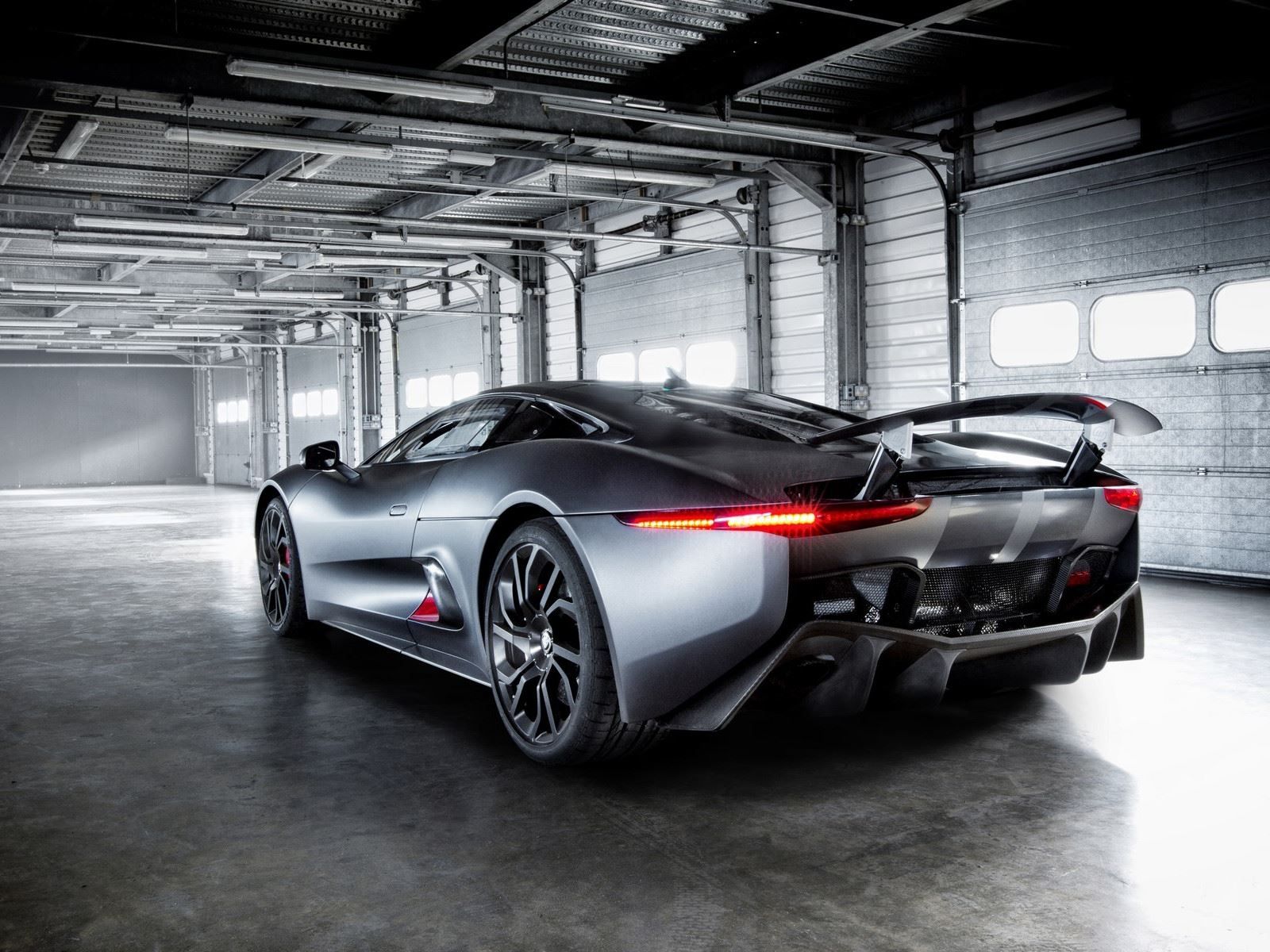
2010 Jaguar C-X75
Designer: Ian Callum
- Public debut: 2010 Paris Motor Show
- Reason for concept: Production-intent supercar
- Engine: Diesel turbine-fed electric motors
Long before Jaguar’s androgenous and controversial rebrand late last year, the British marque was on track to build one of the most anticipated supercars of the time, inspired by the XJ220. In 2010, Jaguar unveiled the stunning C-X75 as a forward-looking supercar concept that was arguably well ahead of its time. An archaic combustion engine would be out of the question, so the all-electric C-X75 was born. Its four electric motors produced 778 hp, and the batteries were to be charged on the go by two diesel-fed micro-gas turbines. There were plans to produce the C-X75, albeit as a hybrid with a turbo-gasoline motor, but they never materialized due to the ongoing global economic crisis getting in the way. A few prototypes were built and starred in the James Bond film Spectre, but that was as far as production went… at least as far as Jaguar was concerned.
Famed designed, and the penman behind the C-X75, Ian Callum, refused to let one of his most beautiful creations end up in the scrapheap, so last year, his company found a way to put the C-X75 into production, sort of. Using one of the stunt cars built for Spectre, Callum turned it into a road-legal supercar with a supercharged V8.

Related
The Jaguar Supercar You Thought Was Dead Is Back With A Supercharged V8
Callum reveals its first full C-X75 supercar creation.
9
2013 Nissan IDx Nismo
Designer: David Beasley
- Public debut: 2013 Tokyo Motor Show
- Reason for concept: To gauge public interest in small, retro performance cars
- Engine: 1.6-liter turbocharged inline-4
Small cars are fun – add in rear-wheel drive and retro styling, and you’ve got a winning formula. In 2013, Nissan unveiled twin IDx concept cars to the world – styled to be reminiscent of the old Datsun SSS. The IDx Nismo was the one that caught everybody’s attention though – with a racy livery, boxy flared styling, and the promise of a compact, lightweight rival to the Toyota 86, with a boosted 1.6-liter engine at its heart. The attention garnered by the IDx Nismo concept was massive – and Nissan constantly flirted with the idea of production, refusing to rule it out. A dozen years down the line, however, and the IDx Nismo never materialized. Nissan may have the Z around as a sports car, but the Japanese automaker is ailing, and after a failed merger with Honda (if you can even call it a merger, it was called off before it started), things are looking dire for the brand.
10
2015 Mazda RX-Vision Concept
Designer: Ikuo Maeda
- Public debut: 2015 Tokyo Motor Show
- Reason for concept: To gauge public interest in new rotary sports car
- Engine: 2.6-liter quad-rotor rotary
This entry was originally the 2015 BMW 3.0 CSL Homage R concept, but as this feature is on concepts that never went to production, we had to replace it. That’s because BMW did build a limited 3.0 CSL which was close enough to the concept for us to consider it a success. The replacement? The Mazda rotary sports car with a quad-rotor engine every Mazda fan has been dying to see on the road; the Mazda RX-Vision. Mazda unveiled it ahead of the Tokyo Motor Show in 2015, reaffirming its commitment to keeping the rotary engine alive after the RX-8 had gone out of production three years prior. But despite a huge push from higher-ups within the organization, Mazda could never get the RX-Vision out the door.
There’s now new hope for a rotary sports car, with the Iconic SP concept touted for production. Mazda has even relaunched a division to develop a new generation of rotary engines. As good-looking as the Iconic SP is, it’ll never be the RX-Vision.

Related
What’s Happening With Mazda’s Rotary Sports Car Revival?
Mazda has continually teased the revival of a rotary sports car, but it still hasn’t happened yet. Where does the project stand?

