
Every Automakers’ Most Iconic V8 Engine: Mainstream Edition

Aside from the luxury and performance-crazed segments, V8 engines have also been at the core of the standard mainstream segment. Unlike their counterparts found in the supercar and sports car arena, these engines, which often featured the same dimensions, cylinders, and displacement, weren’t as powerful and power-dense. When compared to the luxury segment, many of these engines weren’t intended to propel sultry and affluent monikers.
For the most part, these mainstream V8 offerings were simply bred and workhorses. These are the mainstream brands available in the US that have offered V8 engines in the past and the most iconic and prominent versions.
Related
Every Automakers’ Most Iconic V8 Engine: Supercar And Sports Car Edition
These are every supercar and sports car brand’s iconic V8 engines
This article is part of a three-part series of articles discussing the most iconic V8 engines offered by mainstream, supercar, and luxury brands.
10 Buick Fireball V8
|
Engine |
3.5-liter V8 |
|---|---|
|
Engine block |
Cast iron |
|
Cylinder heads |
Cast iron |
|
Aspiration |
Naturally aspirated |
Commonly known as the “Nailhead” because of the intake and exhaust valve configuration, which were vertically installed and looked like nails. Because of the restrictive port dimensions that didn’t accommodate higher airflow, the Buck V8 featured a camshaft that offered more lift and longer duration. The “Nailhead” V8 line spanned two generations before being replaced by Buick’s Big Block V8s. The Fireball V8 engines were used to power models like the Buick Roadmaster, Buick Century, and Buick Super.
9 Cadillac L-Head V8
|
Engine |
5.1-liter, V8 |
|---|---|
|
Engine block |
Cast iron/ aluminum |
|
Cylinder heads |
Cast iron/ aluminum |
|
Aspiration |
Naturally aspirated |
The L-head V8 engine was the core of Cadillac’s first V8-powered vehicle, the Type 51. It was introduced alongside this model in 1914 and was used in several early Cadillac models, like the Series 341 and the Cadillac V-63. In 1923, Cadillac revised the L-head engine, which gained a cross-plane crankshaft and featured a 90-degree offset for each pair of cylinders. There were new engines introduced after the initial 5.1-liter V8, including the 341, which was a 5.6L V8 variant, and the 5.8L version that debuted in 1935.

Add CarBuzz to your Google News feed.
8 Chrysler 5.7L V8
|
Engine |
5.7-liter, V8 |
|---|---|
|
Engine block |
Cast iron |
|
Cylinder heads |
Aluminum |
|
Aspiration |
Naturally aspirated |
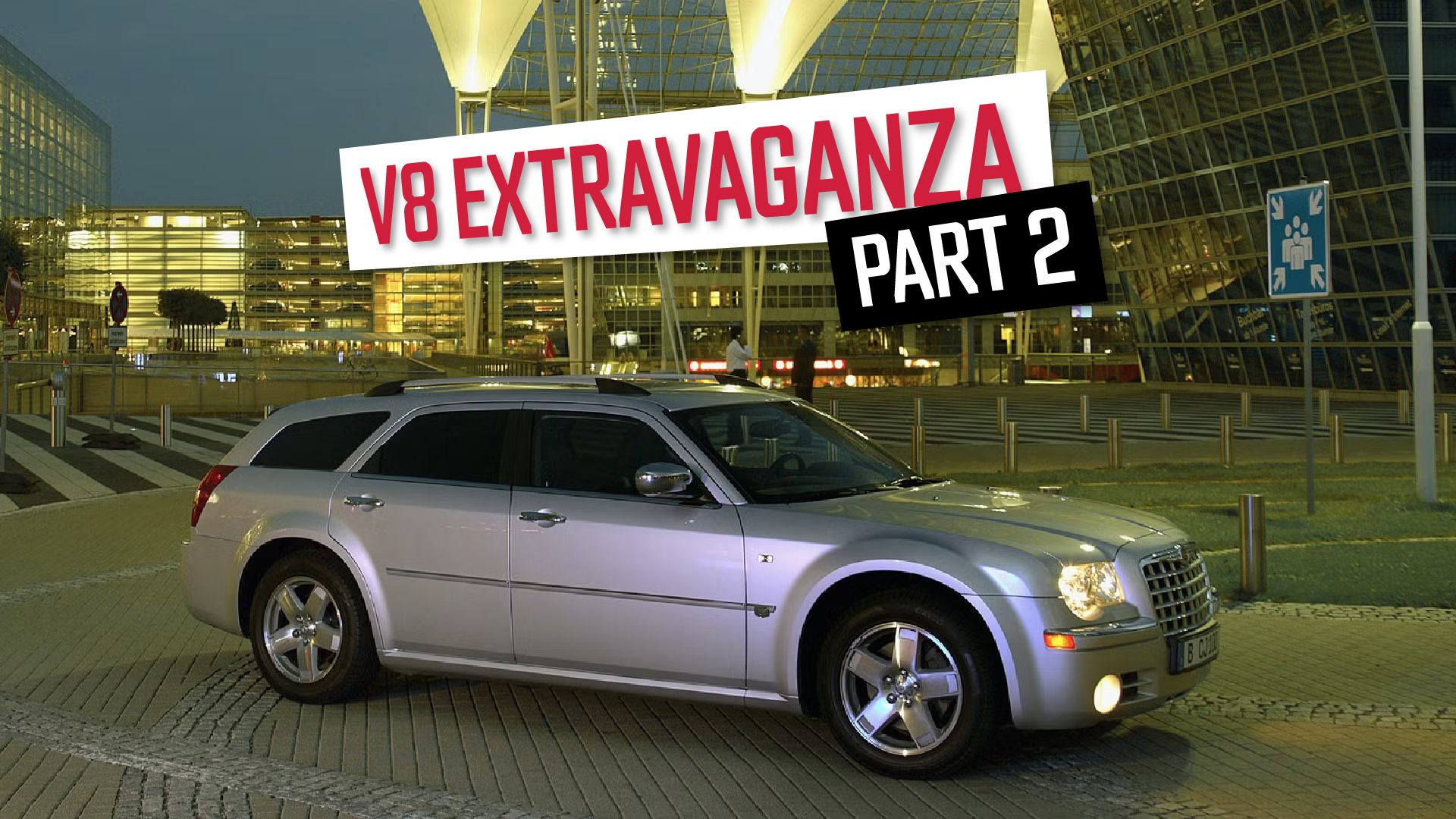
The HEMI engine line is an iconic series of V8 engines that powered some of the most powerful muscle cars in the history of the US automotive market. In 2003, the third-generation HEMI engine was introduced, characterized by its 5.7-liter displacement, and was initially used to power Dodge’s Ram pickup trucks. However, Chrysler did make the engine available for other models, like the Durango, Chrysler 300C, Magnum R/T, and Challenger. When it was time to bow down, the 5.7L HEMI engine was succeeded by Stellantis’ Hurricane straight-six. It was revised in 2009, gaining certain characteristics like variable camshaft timing, the cylinder head was revised to accommodate for better airflow, and the intake manifold changed.

Related
America’s Cheapest V8 Cars Ranked By Reliability
While V8s are disappearing, these 10 cars still offer the fabled engine, along with some much-needed reliability.
7 Fiat 8V Tipo 104 V8
|
Engine |
2.0-liter, V8 |
|---|---|
|
Engine block |
Aluminum alloy |
|
Cylinder heads |
Aluminum alloy |
|
Aspiration |
Naturally aspirated |
The 8V was a short-lived sports car that Fiat produced in the 1950s. Only 114 examples of the 8V were built and each featured the Tipo 104 V8 engine, which consisted of aluminum alloy and was designed by Dante Giacosa. Some of these engines were equipped with twin Weber carburetors that mustered 115 bhp. Some configurations of the engine had more Weber carburetors and a higher output. Aside from the 8V, the Tipo 104 engine wasn’t used in any other Alfa Romeo.
6 Genesis/Hyundai/Kia Tau T V8
|
Engine |
4.6-liter and 5.0-liter, V8 |
|---|---|
|
Engine block |
Aluminum |
|
Cylinder heads |
Aluminum |
|
Aspiration |
Naturally aspirated |
The Tau T V8 engine family began in 2008 and lasted until 2021. It was developed by Hyundai and purposed to replace the Omega V8 engine. There were two variations of the V8, distinguished by their displacement, with one being a 4.6-liter V8 and the other being a 5.0-liter V8 variant. The smaller displacement engine was replaced by the 5.0-liter V8 in 2015. These engines powered several models, like the Genesis G80, Kia Mohave, and Hyundai Genesis.

Related
Here’s How Much You Can Spend On 8 Popular Mainstream Cars
We did the math so you don’t have to.
5 Lexus/Toyota UZ-FE V8
|
Engine |
4.0-liter, V8 |
|---|---|
|
Engine block |
Aluminum |
|
Cylinder heads |
Aluminum |
|
Aspiration |
Naturally aspirated |
The UZ-FE V8 engine line is a cult classic and a favorite within the tuner car culture, revered for “Toyota reliability”. There were three variations of the UZ-FE engine line easily distinguished by their differing displacements, which, if we arranged them in chronological order, would be 4.0L, 4.7L, and 4.3L. The engine series began with the 1UZ-FE, which was an oversquare engine with dual overhead camshafts and variable valve timing. Applications for these V8s were split between several Lexus and Toyota models, including the Lexus LS400, Toyota Crown, Lexus SC 400, and the Toyota 4Runner.

Related
Ford’s Highest Revving Naturally-Aspirated V8
Ford’s penchant for V8 power usually extends to grumbling, low-end torque. This motor, however, is quite different.
4 Lincoln MEL V8

|
Engine |
6.3-liter, V8 |
|---|---|
|
Engine block |
|
|
Cylinder heads |
|
|
Aspiration |
Lincoln’s MEL V8 engine series was the successor of its earlier Y-Block V8 line and was somewhat similar to the Chevy Big Block 348 and featured similar components to the Ford FE model engines. There were four distinct variations of the MEL V8 ranging from 6.3 liters to a 7.6-liter derivative. All versions were water-cooled and featured a Holley or Carter AFB carburetor. Some of the applications of this engine include the 1961 Lincoln Continental and all Lincoln models from 1958 to 1960.
3 Mitsubishi 8A8 V8

|
Engine |
4.5-liter, V8 |
|---|---|
|
Engine block |
Aluminum |
|
Cylinder head |
Aluminum alloy |
|
Aspiration |
Naturally aspirated |
This was the only V8 engine Mitsubishi ever used. It was intended to power the Proudia and Dignity models, but that tenure lasted only fifteen months before financial restrictions forced the discontinuation of the models’ sales. The Dignity, was a shorter relative of the Mitusibishi Proudia. Both models were exclusive to Japan but were powered by the only V8 engine from Mitsubishi. It featured a bore x stroke of 95 mm x 96.8 mm and an output of 276 hp and 304 lb-ft. This engine was succeeded by the Tau T V8 engine developed by Hyundai.
2 Volkswagen EA898 V8
|
Engine |
4.0-liter, V8 |
|---|---|
|
Engine block |
Cast iron |
|
Cylinder head |
Aluminum alloy |
|
Aspiration |
Turbocharged |
The EA898 is one of the more powerful diesel engines to spawn from the Ingolstadt production plant and has been at the core of multiple high-ranking monikers in Volkswagen’s expansive fleet. The twin-turbocharged V8 has powered models like the Audi SQ7, Audi A8, Bentley Bentayga, Porsche Panamera, and the Volkswagen Touareg. It was the successor to the 4.2 TDI diesel engine that underpinned the Audi Q7, Porsche Cayenne, and previous iterations of the Volkswagen Touareg.

Related
The 10 Most Powerful Versions Of Ford’s Modular V8 Engine
Ford’s modular V8 engine is omnipresent within its ranks and has been for years. Here are the most powerful models to ever used the modular V8 enigne.
1 Volvo B8444S V8
|
Engine |
4.4-liter to 5.0-liter, V8 |
|---|---|
|
Engine block |
Aluminum |
|
Cylinder heads |
Aluminum |
|
Aspiration |
Naturally aspirated |
The B8444S V8 engine debuted in 2005 for use on Volvo’s P2 platform and was first offered in the Volvo XC90. It was designed by Volvo and manufactured by Yamaha. The engine would soon be used in the S80 model and characterized by its transverse configuration and open-deck engine block. It was the first V8 engine to adhere to the ULEV II emissions standards but was also used as the sole motivator of the Noble M600. However, in that configuration, the B8444S gained two turbochargers and featured a much higher output.

