How Do Quick Turn Circuit Boards Compare to Ceramic Substrates?

Quick Turn Circuit Boards Compare to Ceramic Substrates
Quick turn circuit boards are critical to ensuring that prototypes can be fabricated and tested in a timely manner. This ensures that engineers are able to detect and correct any potential errors in the design before production begins, which can save on time and money. It also allows the product to get into market faster and can make a huge difference in whether the final product is successful or not.
The process of getting a quick turn circuit boards is straightforward and begins with the customer sending the manufacturer their PCB design. This will typically be sent in a Gerber file format, which is the standard file format for PCB data transfer. The manufacturer will then perform a review of the PCB design and verify that it meets all the necessary requirements. This is called a DFM (Design for Manufacturability) review and the manufacturer will then send a quote for the order.
Once the customer has accepted the quote, the manufacturer will begin the production process. This starts with preparing the ceramic substrate to the desired dimensions and surface finish. Conductor materials, usually metal pastes containing silver or gold particles, are then applied to the substrate using techniques such as screen printing and inkjet printing. These conductive traces will carry electrical signals between components and will connect to the rest of the circuit board via holes, known as vias. Insulating layers, also made of materials such as glass and epoxy, are then applied to the substrate. Finally, the entire structure is fired in a high-temperature furnace to sinter and fuse the individual layers of the multilayer ceramic PCB together.
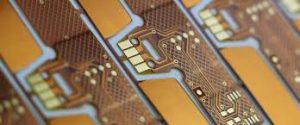
How Do Quick Turn Circuit Boards Compare to Ceramic Substrates?
Ceramic multilayer PCBs are highly versatile, and they offer several advantages over other types of printed circuit boards. They can withstand extreme temperatures and are excellent for applications that require high-frequency transmission of data and signals. However, they do have one drawback: Their inherent brittleness makes them prone to cracks when they are assembled, handled or shipped. Therefore, manufacturers must use special methods and tools to reduce this risk.
Despite this brittleness, a ceramic multilayer PCB is still a cost-efficient alternative to other types of PCBs. This is mainly because it can be produced with lower costs than other fabrication processes. In addition, it can withstand harsh environments and offers superior electrical insulation.
When choosing a ceramic PCB, there are two primary types to consider – aluminum oxide and aluminum nitride. Both offer excellent thermal and electrical conductivity, but the latter offers smarter higher frequency performance than the former. The choice depends largely on your application needs and the overall budget. A reliable ceramic pcb manufacturer will be able to help you decide which type of ceramic to choose for your project.