How Flexible Printed Circuit Manufacturers Maintain Consistency

Flexible Printed Circuit Manufacturers Maintain Consistency
The production of flex PCBs requires specialized machinery and highly trained personnel to maintain quality standards. The thin materials require careful handling, and any kinks or creases can reduce the effectiveness of the finished circuit boards. The most reputable manufacturers ensure that each prototype is fully tested and functional before committing to mass-production. They also provide customers with a detailed bill of materials (BOM) before starting production, making it easier for the client to review and make changes if necessary.
The BOM is a list of components required to complete a circuit board. This includes the copper, solder mask, and other necessary components for each layer of the board. The BOM also provides a clear view of the manufacturing process and timeline for each project, making it easy for clients to track progress throughout the production cycle. The BOM is especially important for a flex printed circuit because it can be difficult to identify defects or errors once the circuits are in use.
Rigid flexible printed circuit manufacturers are typically built from FR4 glass-epoxy compounds, while flexible circuits are typically made of polyimide. Both types of boards have advantages, but the choice of material can depend on a number of factors. For example, polyester circuits are often used to connect rigid components to flexible circuits, while polymer thick film (PTF) circuits are suited for low-power applications at high voltage levels.
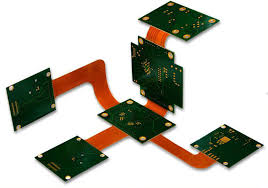
How Flexible Printed Circuit Manufacturers Maintain Consistency
For flex circuits, there are two basic styles of construction: laminated and unlaminate. Both types have their advantages and disadvantages, but the key to a good design is finding the best balance between cost and flexibility. Laminates are generally less expensive than unlaminate circuits, but they cannot be curved or twisted as easily. Unlaminate circuits, on the other hand, can be shaped to fit a given space and are more flexible than rigid boards.
One of the most common issues for flex circuits is delamination, which occurs when layers of the circuit separate from each other during use or transport. This can cause the circuit to break, leaving bare copper behind. To prevent this issue, it is essential that the neutral bend axis is centered in the middle of the stack, reducing the forces exerted on the layers and minimizing the distances between them.
Other issues that can affect flex circuits include misalignment of layers during lamination, which can result in skews that lead to impedance mismatches and signal reflections. To prevent this, strict alignment tolerances should be maintained for all processes, including imaging, etching, and lamination. For optimum performance, trace widths and spacing should also be kept within tight tolerances to achieve controlled impedance and minimize signal reflections.