How These European Sedans Stole the Spotlight from German Performance Icons

If someone were to ask you to name a handful of performance sedans you would recommend, the first brands you would think of are the German trio of Audi, BMW and Mercedes-Benz. Sporty, powerful and well-built, the German crop of luxury sedans, like the BMW M3 or Mercedes C63 AMG, has always been the benchmark in style, build quality, and dynamic performance.
But things aren’t that straightforward. While the German brands may have had a good run regarding putting quality models on the market over the years, other European automakers have also come forward with some sublime sedans for us to enjoy, like the Maserati Ghibli Trofeo. Here, then, is a list of alternatives that gave the German brands something to think about.
This list includes European models that arguably outperformed their German counterparts in some way or another, whether that was road handling, outright speed or sheer desirability.
10
Jaguar XJR
Production Years: 2013–2019
|
Engine |
5.0-liter Supercharged V8 |
|---|---|
|
Horsepower |
542 hp |
|
Torque |
502 lb-ft |
|
0-60 |
4.7 seconds |
Recently, British automaker Jaguar may have stumbled on its course, but not so long ago, the luxury brand renowned for sedans with “grace, space and pace” delivered a luxury sedan worthy of upstaging anything the Germans could offer. The XJR was Jaguar’s flagship limousine – a big four-door sedan with a commanding presence and exquisite finishes. Powered by a supercharged V8, the light (4,332 pounds) super-sedan clocked the standard sprint in under five seconds and was governed at 155 mph. Air suspension and an active differential on the rear axle also helped the big Jag to not only be fast in a straight line, but nimble through the twisties as well. A real counterpunch to the mid-2010’s Mercedes S-Class, BMW 7-Series and Audi A8.

Related
A Used Jaguar XJR Is The Ultimate Supercharged Luxury Missile
Here’s why it’s time to buy one.
9
Volvo S60 Polestar
Production Years: 2014–2016
|
Engine |
3.0-liter Turbocharged Inline-six |
|---|---|
|
Horsepower |
345 hp |
|
Torque |
369 lb-ft |
|
0-60 |
4.7 seconds |
You’d be forgiven for thinking that Volvo stands more for safety and responsible family living than hair-raising antics and outright performance. But the quiet Swedes do have a bit of petrol-head in them. Take the S60 Polestar, from just a decade ago. The Polestar performance division took the standard S60 T6, and dropped a couple of extra elks into the car’s nose to swell engine size to three liters, and boost power to make Abba hit higher notes. The S60 Polestar came with sporty seats, adorned with blue stitching, and faux carbon-fiber trim. Most importantly, the stiffer bushings, braces, and mounts helped the Swede to sharpen its reflexes. The Polestar’s party trick? Specially developed Öhlins shocks, to make the Volvo more fleet-footed than Björn Borg at Wimbledon.

Related
AWD Showdown: Audi S4 vs. Volvo S60 T6
Volvo is working to change its yuppie image as it enters the world of performance luxury sedans.
8
Saab 9-5 Aero
Production Years: 2006–2009
|
Engine |
2.3-liter Turbocharged Inline-four |
|---|---|
|
Horsepower |
256 hp |
|
Torque |
273 lb-ft |
|
0-62 |
6.9 seconds |
Staying in Sweden, General Motors’ Scandinavian pet, Saab, continued to stick its tongue out at the establishment with its quirky hatchbacks and convertibles. Remember the ignition positioned next to the gear shift, or the blacked-out instrument panel? In the early 2000s, Saab gave its midsize sedan, the 9-5, a proper crack of the whip by stroking some extra life out of the sedan’s 2.3-liter turbocharged engine. Labeling it the 9-5 Aero, the sedan benefited from a lower chassis, firmer springs and more aggressive shock absorbers. Thanks to its compact size and light weight, the Aero showed a surprisingly gluey grip and a wispy, tossable nature that eluded most of its German compatriots.

Related
This Underrated Swedish Sports Sedan Will Get Your Pulse Racing
In the market for a classic sports sedan? This Swedish weapon will turn heads as well as it does corners, and at a bargain price to boot.
7
Maserati Ghibli
Production Years: 2020–2024
|
Engine |
3.8-liter Twin-turbocharged V8 |
|---|---|
|
Horsepower |
572 hp |
|
Torque |
538 lb-ft |
|
0-60 |
4 seconds |
Just as BMW uses M to designate its performance models, and Mercedes has the AMG brand, Maserati opted for Trofeo (Italian for trophy) to showcase to the world what it is capable of in terms of outright performance. In the midsize Ghibli, the Trofeo gets a Ferrari-sourced V8 hotter than a discounted Superbowl ticket. That said, even with its double turbos, the Ghibli is not as fast out of the blocks as an E63 AMG. This is probably due to its RWD-only setup. But keep your foot planted, and the Italian stallion will only run out of puff at the 203 mph mark. That’s some going for a pizza, if you’re in a hurry.

Related
2021 Maserati Ghibli Trofeo First Look Review: Ferrari Power To The Rescue
A powerful V8 engine makes everything better.
6
MG ZT 260
Production Years: 2003–2005
|
Engine |
4.6-liter V8 |
|---|---|
|
Horsepower |
256 hp |
|
Torque |
302 lb-ft |
|
0-60 |
6.2 seconds |
British automaker MG has had its ups and downs throughout its history. But right before it went bankrupt in 2005, and was eventually sold to Chinese firm Nanjing Automotive (presently owned by Shanghai Automotive), the factory managed to eke out a handful of special models, notably the Ford Mustang V8-powered ZT-sedan. In modern terms, the naturally aspirated V8 didn’t produce that much power, but thanks to a raucous engine sound and some superb handling (no doubt due to the reworked suspension), the powerful Brit was a real antidote to the era’s performance sedans from Stuttgart and Munich.
5
Renault Safrane Biturbo
Production Years: 1994–1996
|
Engine |
3.0-liter Twin-turbocharged V6 |
|---|---|
|
Horsepower |
258 hp |
|
Torque |
268 lb-ft |
|
0-60 |
7.2 seconds |
In the early 1990s, French firm Renault tried its serious best to outgun the Germans on their autobahns when it introduced the Safrane Biturbo. Especially with the BMW 540i ruling the roost, Renault had a tough task ahead. Its big sedan at the time was the Safrane, but with the car’s 3.0-liter V6 pumping out an asthmatic 167 horsepower, it was no match to the Bimmer’s V8. But up stepped two tuning houses, Irmscher and Hartge, who were at the time more renowned for tuning Opels and BMWs than making French cars fast. Irmscher suped up the French V6 with two turbochargers, while Hartge helped with a sportier suspension setup. Finally, to remove the possibility of torque-steer, the base car’s front-wheel drive was replaced by four-wheel drive, plus a new adaptive air suspension. While straight-line acceleration wasn’t in the class of the Germans (by a second, for the Bimmer), the French sedan did come into its own thanks to its mid-range punch (those turbos doing their magic) and nimble handling. Thise made the Safrane Biturbo an intriguing alternative to the classy Germans, albeit only for a short period of time.
4
Peugeot 405 Mi16
Production Years: 1987–1995
|
Engine |
1.9-liter Inline-four |
|---|---|
|
Horsepower |
160 hp |
|
Torque |
133 lb-ft |
|
0-60 |
7.8 seconds |
Peugeot’s 405 may not have been that well-known stateside, but in Europe it was an immediate success – that proverbial right car at the right time. In fact, the 405 was awarded the coveted European Car of the Year title in 1988. Using a compact 1.9-liter inline-four, the French sedan was exactly what Jean-Pierre, Horst, and Luigi wanted over in Europe. When it came time to enhance the range with a performance version, Peugeot didn’t bother with adding turbos or enlarging the engine size. It simply reworked the internals of its all-aluminum, naturally aspirated DOHC 16-valve engine to increase power and make it much more sporty.
The new Mee-Sez (if you’re French, otherwise simply Mi16, for the number of valves in the four-pot) produced 160 horsepower and happily revved all the way to its 7,200 red line. Other goodies included a magnesium cam cover, lightweight flywheel and big, competition-specification cylinder head and valve gear. It couldn’t compete with the BMW 325i in traffic-light to traffic-light acceleration. But it did outrun the Germans when it came to dynamic handling, thanks to a well-geared and nicely weighted steering, full of feel.
3
Fiat 131 Abarth Rally
Production Years: 1976
|
Engine |
2.0-liter Inline-four |
|---|---|
|
Horsepower |
138 hp |
|
Torque |
127 lb-ft |
|
0-60 |
7.4 seconds |
In 1976, Fiat had to build 400 examples of its 131 model for homologation purposes, in order to compete in the FIA’s World Rally Championship. The 131 Rally was based on Fiat’s 131 sedan, but in the homologation special, it was sent to Bertone to replace the hood and trunklid with plastic parts, and modify the rear end of the car to fit the new independent suspension setup. Back at the Fiat factory in Turin, the car received a reworked version of the engine, now producing 138 hp. While the Italian was a menace on the rally circuit, winning three world titles in 1977, 1978 and 1980, the compact road-going version was extremely comfortable on any twisty piece of road, capable of outrunning its famed German competitors of the time whenever the road asked for dynamic handling.
2
Alfa-Romeo Giulia Quadrifoglio
Production Years: 2015 – Present
|
Engine |
2.9-liter Twin-turbocharged V6 |
|---|---|
|
Horsepower |
503 hp |
|
Torque |
443 lb-ft |
|
0-60 |
3.6 seconds |
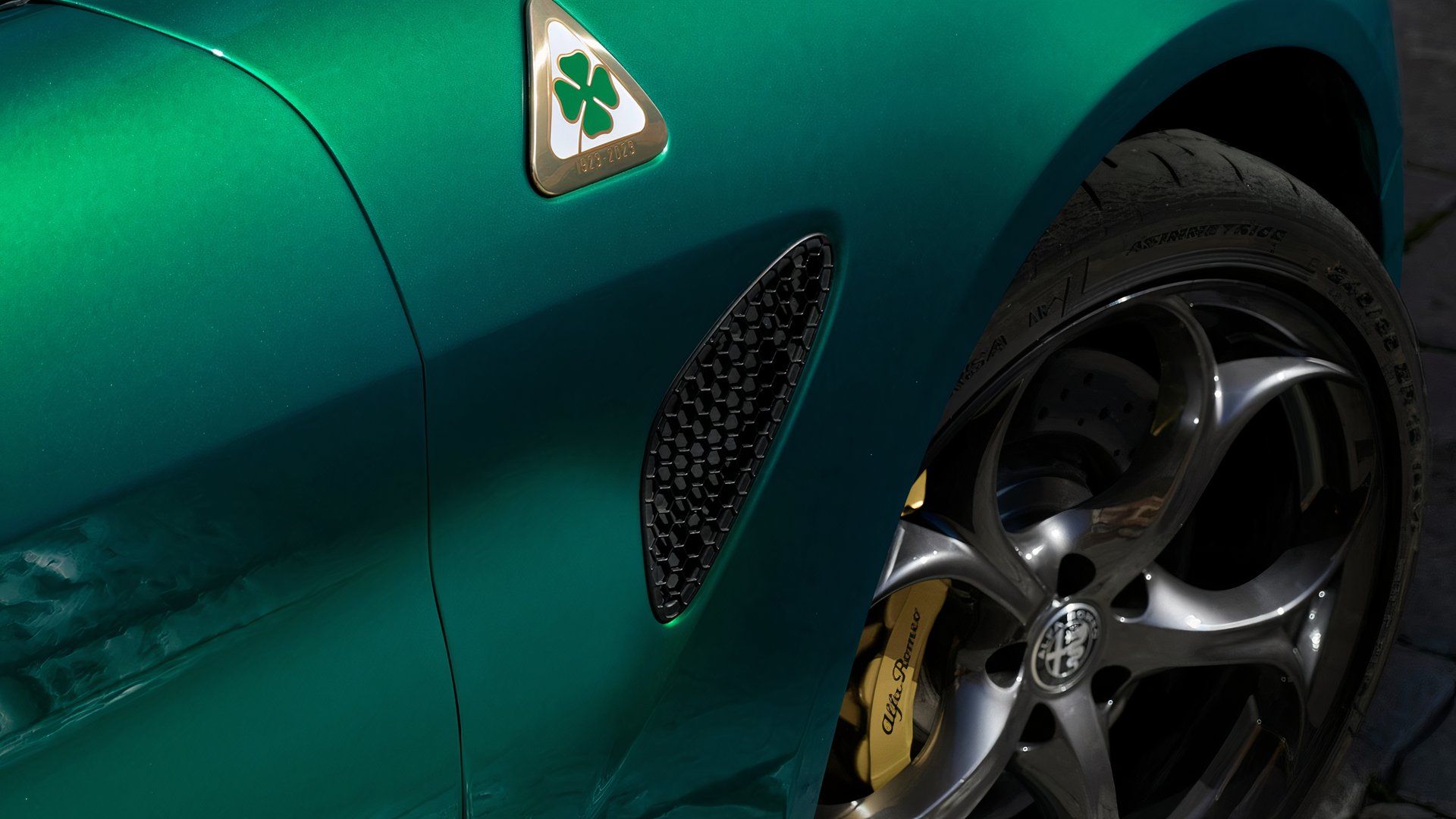
Having the mighty BMW M3 and Mercedes C63 AMG firmly in its sights, Alfa answered Italy’s call with the Giulia Quadrifoglio super sedan, usuing an all-aluminum, twin-turbocharged 2.9-liter V6, powering all four wheels. The light Italian (3,822 pounds) is not just lightning quick off the mark, its four-wheel drivetrain also helps it to gain traction early on when exiting a corner, making for the ideal track day car for any Alfisti out there. Apart from carbon fiber for weight-saving, other tricks up the Alfa’s sleeve include an active splitter at the front (it drops by half an inch when hitting speeds above 62 mph), and an active exhaust system. Astonishingly for a sedan, Alfa claims a top speed of 191 mph. It, therefore, can as no surprise that a manual Quadrifoglio lapped the Nürburgring in 7 minutes and 39 seconds, a record for a sedan.
1
Lancia Thema 8.32
Production Years: 1986–1994
|
Engine |
2.9-liter V8 |
|---|---|
|
Horsepower |
215 hp |
|
Torque |
210 lb-ft |
|
0-60 |
6.9 seconds |
Unassuming to the naked eye, Lancia’s Thema 8.32 was a proper sleeper in the modern sense of the word. The Thema got its name from its Ferrari-sourced 2.9-liter V8, where the “8” indicates the number of cylinders, and the “32” stands for the number of valves. Wanting to compete against the BMW’s E28 5-Series, Lancia turned to Ferrari for help – and received it in the form of the 308 GTB’s V8 engine. Using a five-speed manual and larger brakes, the go-faster Thema had some real straight line pace and dynamic agility to match. Sadly, as nimble as the Ferrari-esque Thema was, it showed the first signs of parent company Fiat’s desire to turn Lancia into a luxury brand, and not a maker of boisterously fun cars. Lancia underplayed the Thema’s Ferrari roots under the hood, and the car received notably few garnishes and side skirts, hiding the fact that it was actually a red-hot model. It was the last of the all-conquering, performance-orientated Lancias we would see.

Related
The Last Lancia To Feature A V8 Had A Strange Name And Ferrari Influence
Can you call it a sleeper? Some think so, but others call it nothing but a flop. regardless, this Lancia had an interesting birth.
Sources: Jaguar, Volvo, Stellantis