How to Transcribe Music For Piano

Transcribe Music For Piano
When learning to play piano, transcribing is an essential skill. Transcription is the process of listening to a song and writing down what notes or chords are being played. This can be done by hand on a piece of paper or using transcription software. Whatever method you use, it’s important to practice transcribing often to develop your ear and learn how to read music. It is also an excellent way to work on your technique, as you’ll be listening closely and playing the notes by ear while you’re doing it.
The best approach to transcribing is to listen to the song a few times and then start with the easiest bits. This will usually be the melody, or any prominent single-note instrument (like a vocal). It’s like doing a jigsaw; you have to start with the easy bits and then build up to the harder parts. If you’re trying to transcribe a full song, divide it into sections like the intro, first verse, bridge and chorus. This will make it much easier to get through the whole song.
After you’ve listened to the piece a few times and have a good idea of what is being played, you’ll need to find out the key signature. This will usually be indicated by a bass or treble clef symbol on the left of the music staff. The bass clef is used for instruments that have low notes, such as bass guitars and pianos, while the treble clef is used for higher-sounding instruments, such as flutes, violins and trumpets. You will then need to identify which flats and sharps are needed for that key signature, and mark them on the music staff.
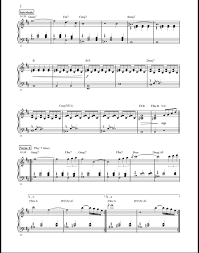
How to Transcribe Music For Piano
Next, it’s time to tackle the chords. This can be tricky as you’ll need to work out what voicings are being used and the underlying root notes. The best way to do this is to listen to the bass part closely, concentrating on the lowest frequencies and hearing which notes are being played. This can be difficult, especially if the chords are moving around quickly, so you may need to slow down the recording or loop certain sections.
Once you’ve worked out the chords, listen back to the original recording to check that you’ve got it right. If it doesn’t sound right, repeat the process until it does. You can also try playing your own version of the chords and seeing if it sounds similar to the recording.
You should also spend some time practicing intervals. This will help you to recognise what you’re hearing when transcribing as it will be easier to see whether a note is high or low, or ascending or descending. A great place to start is with the major thirds and perfect fifths, as these are the most common intervals in popular music. Learning solfege is also a good idea, as this will help you to hear these intervals in the context of a scale.
Once you’ve transcribed the chords, you can move on to transcribing the melody and any other supporting instrument parts. This can be a bit tricky as the lead instruments might be played on different instruments but you can usually work out what they’re playing by listening carefully and trying to match it up with the chords you’ve just transcribed.