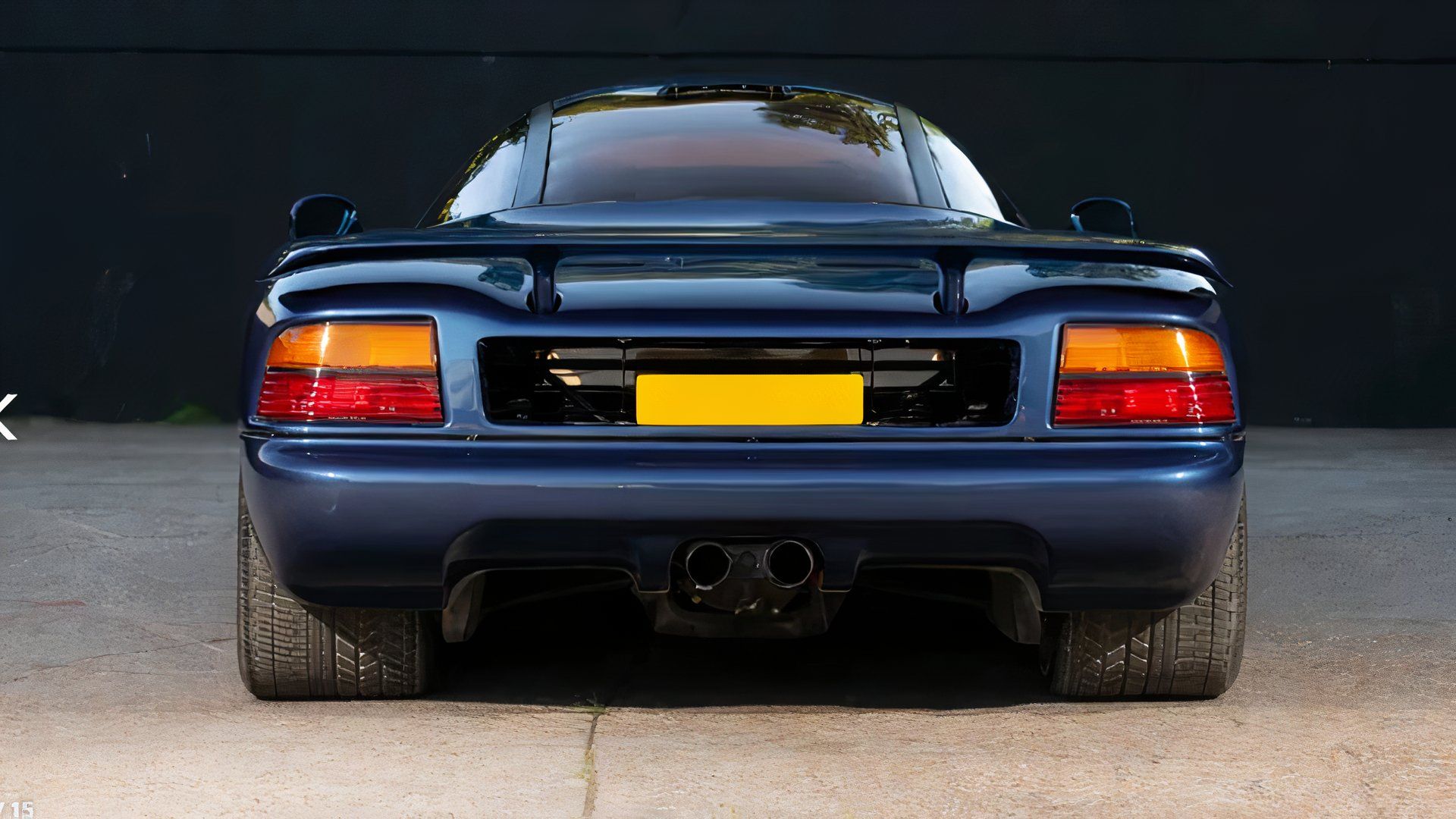
Jaguar’s Forgotten 1990s V12-Powered Supercar

The 1990s were a great decade for sports cars and supercars. We were treated to gems like the E36 BMW M3, Acura NSX, Ferrari F355, and of course, the incomparable McLaren F1. Jaguar was also in far better shape than it is these days, and it launched not one, but two supercars.
Jaguar
Jaguar is a premium car manufacturer from the UK, currently owned by the broader Jaguar Land Rover (JLR) group. Originally a producer of motorcycle sidecars from 1922 (under the name Swallow Sidecar Company), the manufacturer later moved to the production of passenger car bodies under the ownership of SS Cars from 1935. In 1945, SS Cars was renamed to Jaguar Cars. The manufacturer has a historic back catalog of vehicles, notably the XK, E-Type, and XJ220, with modern hits including the F-Type and F-Pace. Jaguar has pledged to become an all-electric automaker starting in 2025, with production of all combustion cars ceasing early in 2024. The brand has launched an all-new identity for its future as an electric luxury automaker.
- Founded
-
September 1935
- Founder
-
Sir William Lyons, SS Cars
- Headquarters
-
Coventry, United Kingdom
- Owned By
-
Jaguar Land Rover (JLR)
- Current CEO
-
Adrian Mardell
The stunning XJ220 is the one most people are familiar with. But despite promises to fit production versions with a V12, it never happened. The second, lesser-known Jaguar supercar was fitted with a V12. It was even rarer, and we look into the history of this fascinating car.
The Jaguar XJR-15
|
Jaguar XJR-15 |
|
|---|---|
|
Engine |
6.0-liter V12 |
|
Power |
450 hp |
|
Torque |
450 lb-ft |
|
0-62 mph |
3.2 seconds (claimed) |
An Epic History
The Jaguar brand may be floundering these days, but it has a chequered history of racing successes and a back catalog of some very fine road cars, too. Having dominated endurance racing in the late 1950s, Jaguar returned in 1986 to challenge once again for the biggest endurance prize of all: the 24 Hours of Le Mans.
Pairing with Tom Walkinshaw Racing (TWR) to form JaguarSport, the partnership soon resulted in some impressive victories. A highlight was overall victory for the Group C XJR-9 at Le Mans in 1988. This prompted TWR to develop a road-going version of this race car, using much of its technology and mechanical components.
The Jaguar XJR-15 Is Born
TWR came good on its promise of building its road-going race car, and the Jaguar XJR-15 was released in 1990. Despite it being called a Jaguar, the company had no input in the design of the road car. It featured a carbon fiber composite bodyshell – a production car first – and a road-friendly version of the same V12 that powered the XJR-9 to its various race victories. In this application, it produced 450 hp from 6.0 liters, quite a bit less than the 700-hp 7.0-liter version used in the race car, but it was still one of the most powerful road cars ever produced.
Other highlights included a suspension heavily based on the race car’s setup, race-spec braking system, and a curb weight of a little over 2,300 lbs. 53 cars were built, 35 in road trim, and the remainder set up for racing.
Similarities with the McLaren F1
Any discussion of 1990s supercars will inevitably end up mentioning the McLaren F1. While the F1’s central driving position was certainly unique, the XJR-15 shared many other traits with this car, not least the fact that Peter Stevens, the man who co-designed the F1 with Gordon Murray, also designed the XJR-15.
Both supercars were also mid-engined, rear-wheel drive, and had manual transmissions. The revolutionary carbon composite construction method they shared made both of them extremely light, but the XJR-15 weighed close to 200 lbs less than the F1, thanks in part to it having virtually no luxuries. Where the McLaren completely eclipsed the XJR-15 was in its masterpiece of an engine. The 618-hp 6.1-liter BMW-developed V12 remains one of the most impressive engines ever designed, and this is what gave the F1 its unbelievable pace.
Power Struggle
That said, once the 53 XJR-15s were completed, it is estimated that a further 5 XJR-15 LM models were built at the request of a Japanese customer. These cars were fitted with the 7.0-liter V12 from the race car, and power outputs were rumored to be between 700 and 760 hp.
The ‘standard’ XJR-15 was indecently rapid by any other standards. JaguarSport claimed a 0-62 mph time of 3.2 seconds, while other sources state it did 0-60 mph in 3.9 seconds. Without any verifiable instrument testing to rely on, we can only assume that it was searingly quick. It certainly had one of the best power-to-weight ratios of any road car on sale at the time.
The Jag Supercar That Was Supposed To Get A V12
|
1992 Jaguar XJ220 |
|
|---|---|
|
Engine |
3.5-liter twin-turbo V6 |
|
Power |
542 hp |
|
Torque |
475 lb-ft |
|
0-60 mph |
3.6 seconds est |
Jaguar was also hard at work developing its own in-house supercar, the XJ220. TWR was also involved in its development, and while a 6.2-liter V12 based on the Le Mans-winning XJR-9 was fitted to some of the concept cars, various complications and a change in racing regulations meant that the race cars and the XJ220 needed a new, more fuel-efficient engine.
Group B-Derived Engine
The engine chosen was a heavily revised version of the 3.0-liter V6 used in the Group B MG Metro 6R4 rally car. Overall capacity was increased by 0.5 liters, and it was fitted with two turbos, which helped it produce a lot of power and torque. But customers who had placed their deposits down for a V12 were not amused. The concept also had all-wheel drive, another feature that was dropped early on.
Heavy But Fast
Weighing in at a portly 3,240 lbs, the XJ220 was probably better off with a torquey turbocharged engine, and it certainly delivered record-breaking performance figures when it was launched. It also held the production car top speed record for a short time, although it never quite managed to match the 220 mph figure it had been named after. Jaguar planned on producing a small batch of 350 cars, but specification changes, pricing hikes, and a recession meant that just 282 were eventually produced, and some remained unsold for years.

Related
Here’s Your Chance To Drive The Legendary Jaguar XJ220
For a period of time, the XJ220 was the fastest car in the world, and now it’s coming to Gran Turismo 7.
Jag Versus Jag
|
Model |
XJ220 |
XJR-15 |
|---|---|---|
|
Engine |
3.5-liter twin-turbo V6 |
6.0-liter V12 |
|
Power |
542 hp |
450 hp |
|
Torque |
475 lb-ft |
420 lb-ft |
|
0-60 mph |
3.6 seconds est |
3.2 seconds (claimed) |
|
Top Speed |
220 mph (claimed) 212 mph (tested) |
191 mph (gearing limited) |
|
Production Numbers |
282 |
35 road-spec 18 race-spec |
|
Average Current Values |
$544,878 |
$1.3 million |
|
Original Asking Price |
$500,000-$800,000 est |
$960,000 est |
|
Model Years |
1992-1994 |
1990-1992 |
|
Curb Weight |
3,240 est |
2,315 lbs est |
Comparing these two 1990s Jaguar supercars makes for some interesting reading. On the face of it, the XJ220 should be the far quicker car, but the lighter XJR-15 is quicker off the mark, and according to JaguarSport, with the right gearing, it should be good for 210 mph. The XJ220 is no slouch, though, and it is very fast once up and going.
The XJ220 is also clearly designed to be used on the road, with a leather-clad interior, sound system, and actual sound deadening. The XJR-15, meanwhile, is more like the Ferrari F40, a completely stripped-out racer that happens to be road legal.
According to Classic.com, average values for the XJ220 over the past five years have been holding relatively steady at around $500,000. The rarer XJR-15, meanwhile, peaked at $1.9 million four years ago, but most have sold for closer to $1.2 million. With so few changing hands, this data is based on just six cars, and mileages and vehicle history can significantly impact values.
For those lucky enough to be able to consider owning one of these cars, we suggest buying both. The XJ220 for the road, and the XJR-15 for track weekends. For everyone else, a decent scale model should do.
A Race Car For The Road
The Jaguar XJR-15 was yet another awesome road car that owed its existence to the racing world. Designed to be a road-legal version of the Le Mans-winning XJR-9 race car, it was – and remains – a high note in Jaguar’s history. Even if it didn’t actually have a hand in its actual design.
The XJ220 is indecently quick, achingly beautiful, and the better-known of the two, but only one 1990s Jaguar supercar has a V12 engine, and that makes the XJR-15 even more special in our books.
Sources: Jaguar, classic.com, RM Sotheby’s, TomWalkinshawRacing