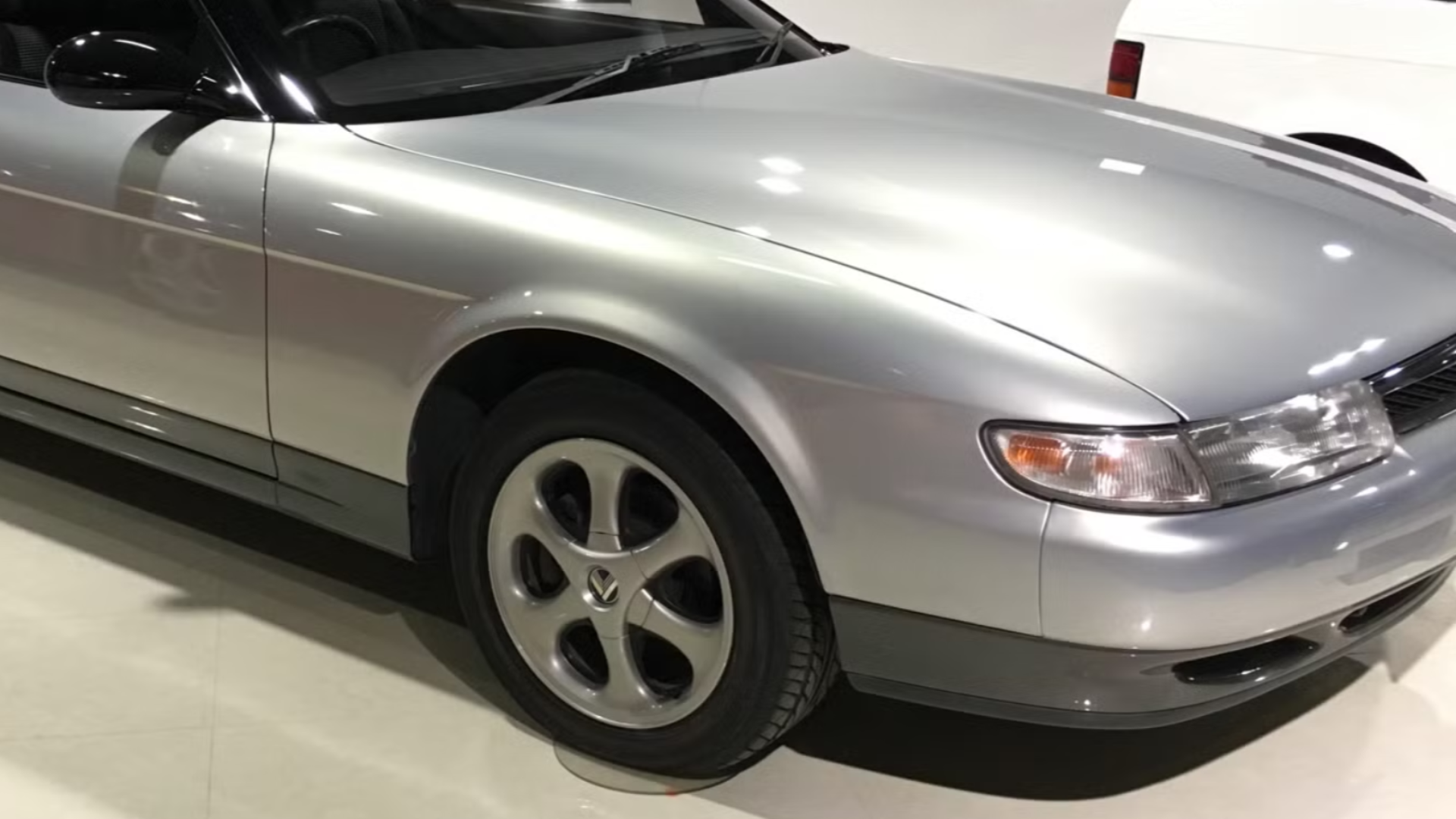
Mazda’s Coolest Rotary Sports Coupe That’s Not An RX-7

Mazda holds a special place in the hearts of car enthusiasts all over the world, mainly because of the range of successful sports cars it has made over the years. The MX-5 is one of the most revered and influential two-seater sports cars ever produced, while the various generations of the RX-7 were some of the most exciting sports cars on the market from before 1980 to the early 2000s, with over 800,000 made, followed by the RX-8.
Mazda
Mazda is a Japanese automaker founded in 1920 as the Toyo Cork Kogyo Co and only started producing vehicles in 1931 when it made the Mazda-Go auto rickshaw. The Japanese automaker’s first official car arrived in May 1960 when the Mazda R360 launched, starting Mazda as we know it today, although the Mazda name was only adopted in 1984. Mazda has a rich history in motorsport, including the honor of being the only manufacturer to win the 24 Hours of Le Mans with a car not powered by a reciprocating engine.
The unique Wankel rotary engine that featured in these models further boosted its legendary status, though it first made its debut well before the 1978 RX-7 was a twinkle in Mazda’s eye. Instead, the brand’s long-term halo sports car was the vehicle that first birthed the engine in the ’60s, and the last evolution of that car can now be imported into the US.
The Cosmo Kicked Off The Wankel’s Story
The Wankel engine is one of the most unusual engine designs in the automotive ether, mainly because it doesn’t use valves or traditional pistons. Instead, a number of triangular rotors spin around in a large combustion chamber and compress the fuel/air mixture as it is forced inside. The resulting exhaust gasses are then squeezed out of the exhaust port, with three combustion events taking place for each full revolution of the rotor, giving it a high power density.
Due to having so few moving parts, the Wankel engines can rev higher than piston engines, and the power delivery is very smooth too. Mazda first utilized the engine design in the first generation Cosmo, a two-door sports car that hit the market in 1967. Due to the small size and high-revving nature of the Wankel, they can produce similar power to traditional engines while having a significantly smaller displacement.
The original Cosmo had a 1.0-liter twin-rotor engine, which was good for 110 hp. Mazda continued to develop the Wankel engine and the Cosmo in unison over the next several decades, with the CD and HB generations of the model coming out in 1975 and 1981 respectively. Having been axed in 1987, the Cosmo went on an enforced three-year hiatus before the fourth-generation version, the JC, dropped in 1990.
|
1990 Eunos Cosmo JC Specifications |
|
|---|---|
|
Engine |
Twin-turbo 1.3L rotary, twin-turbo 2.0L rotary |
|
Power |
230-300 hp |
|
Torque |
217-280 lb-ft |
|
0-60 mph |
6.0-6.8 seconds |
Unlike its forerunners though, it wasn’t actually known as a Mazda. Mazda wanted to push its new luxury brand, Eunos, which was established as competition to similar Japanese premium brands like Honda’s Acura, Nissan’s Infiniti, and Toyota’s Lexus. The Eunos Cosmo was positioned as the manufacturer’s range-topping luxury sports car, and like its predecessors, was available with a range of the latest and greatest Wankel rotary powerplants that Mazda’s engineers had cooked up.

Discussion
Discussion: Is a Mazda Miata from 1995 the best Miata to own?
Think about it. It’s the first generation of the Miata, meaning it’s the purist embodiment of the lightweight sportscar without weight or too many electronics getting in the way. It’s close to the end of the first generation, so most of the kinks have been worked out, and most importantly, it has pop-up headlights. Sure, it’s slow, but people are too obsessed with power as it is. I guess the question isn’t “Is a Mazda Miata from 1995 the best Miata?” as much as it’s “why Is a Mazda Miata from 1995 the best Miata?”
The Cosmo JC Was A Twin-Turbocharged Weapon
Mazda was clear in that it intended the last Cosmo to be the best rotary-engined car in the world, so it got to work developing the best rotary engines it had ever produced. Two different ones were available for the JC, which was only ever sold in its home market of Japan. The first was a 1.3L twin-turbocharged twin-rotor unit called the 13RB-RE, which brought a handy 235 hp to the party.

Add CarBuzz to your Google News feed.
The ‘halo’ engine for the JC was the 2.0L 20B-REW though, as it proved a big step forward for the Wankel concept. It was the first triple-rotor rotary engine to ever be featured in a road car, and also had a pair of turbos. The benefits of using three rotors instead of two like previous designs were multi-faceted, with one of the main ones being extra power. Adding an extra rotor is essentially like increasing the number of pistons and the displacement of a traditional engine, allowing this version of the Cosmo to hit 300 hp.

Related
The Mazda Performance Car That Couldn’t Escape Its Younger Brother’s Shadow
Most people know about the MX-5, but fewer know there was also an MX-6. Let’s dive into the history of this forgotten coupe
A three-rotor design also provides an even smoother flow of power than a twin-rotor. Given the Cosmo JC was designed primarily to be a luxury sports car, these two elements proved to be an attractive mix for Mazda’s engineers to take advantage of. There were a couple of drawbacks though, as the extra rotor added extra weight when compared to the two-rotor engines.
Wankel engines are also renowned for burning oil, and the addition of an extra rotor to the mix only exacerbated this issue. These drawbacks ultimately outweighed the positives, so the JC is currently the only production car to ever feature a tri-rotor engine. The Cosmo’s positioning as more of a luxury car than an apex-attacking sports car was illustrated by the decision to only offer it with a four-speed automatic gearbox, with no manual in sight. Still, this didn’t detract from the Wankel’s impressive power and smoothness.
The Eunos Cosmo JC Was One Of The Most Technologically Advanced Cars Of Its Time
Aside from developing the best rotary engines, Mazda also wanted to provide buyers with the most advanced interior of any other car on sale. Figure-hugging and electrically adjustable leather bucket front seats were the main attraction, the seats separated by a large leather-trimmed center console that ran uninterrupted from the front to the rear of the interior.
The Cosmo JC is also notable for being the first production car to be shipped with a built-in GPS system, which could be accessed via a touchscreen LCD display mounted in the dash. The screen could also be used to control the air-conditioning, radio, and CD player, much like an infotainment system in modern vehicles. The Cosmo JC also came with an in-car telephone, as well as a television.

Related
6 Sports Cars That Outsold The Mazda MX-5 Miata So Far In 2024
The Miata might be the best-selling roadster of all time, but it’s not the best-selling sports car.
The best thing about the JC is that, due to the 25-year rule of importing cars into the US, you can have one shipped over yourself now. Should you opt for one that hasn’t been exposed to excessive moisture, you should be able to secure one with very little corrosion damage, too. According to Classic.com, which has kept an eye on JC auction sales worldwide, the current average price for them is only $19,180, making it surprisingly affordable too. Just remember to stock up on oil.
The Mazda Furai Is One Of The Most Extreme Rotary-Powered Cars
While the Cosmo JC was a stand-out car, it has nothing on the Furai concept. Designed to be a race car for the road, the Furai was given an aggressive body that was characterized by a huge front splitter and rear wing. Like the JC, the Furai came with a three-rotor Wankel powerplant, though it ran on pure ethanol. As a result, 450 hp was dispatched to this mental concept’s rear wheels. This made it one of, if not the craziest, concept car made by Mazda, of which there have been many.
|
2008 Mazda Furai Concept Specifications |
|
|---|---|
|
Engine |
Twin-turbo 2.0-liter tri-rotor |
|
Power |
450 hp |
|
Torque |
278 lb-ft |
|
0-60 mph |
3.2 seconds |
The Furai Actually Worked, For A Little While
While Mazda made it clear from the outset when showing it at the 2008 Detroit Motor Show that it would never be released as a road car or be entered in any racing series, the Furai was fully functional. Under the striking body was the chassis from a Courage LMP2 prototype racer, so it was essentially a non-road-legal track-day car.

Related
Mazda’s Secret W12 And V12 Engines Of The 1990s
Two incredible powerplants that were never meant to be.
Mazda managed to run it at the Goodwood Festival of Speed and other events, though sadly the one-of-one Furai met its end in August 2008. While being tested by Top Gear in the United Kingdom, the car caught fire. With fire services unable to get the blaze under control, nothing could be done as the Furai was burned to ash. The remnants of the car were shipped back to Mazda USA shortly afterward, and it hasn’t been seen since.
For gearheads desperate to experience a trimotor rotary car, you’ll have to make do with the Cosmo JC.
Sources:
Mazda
, Classic.com.