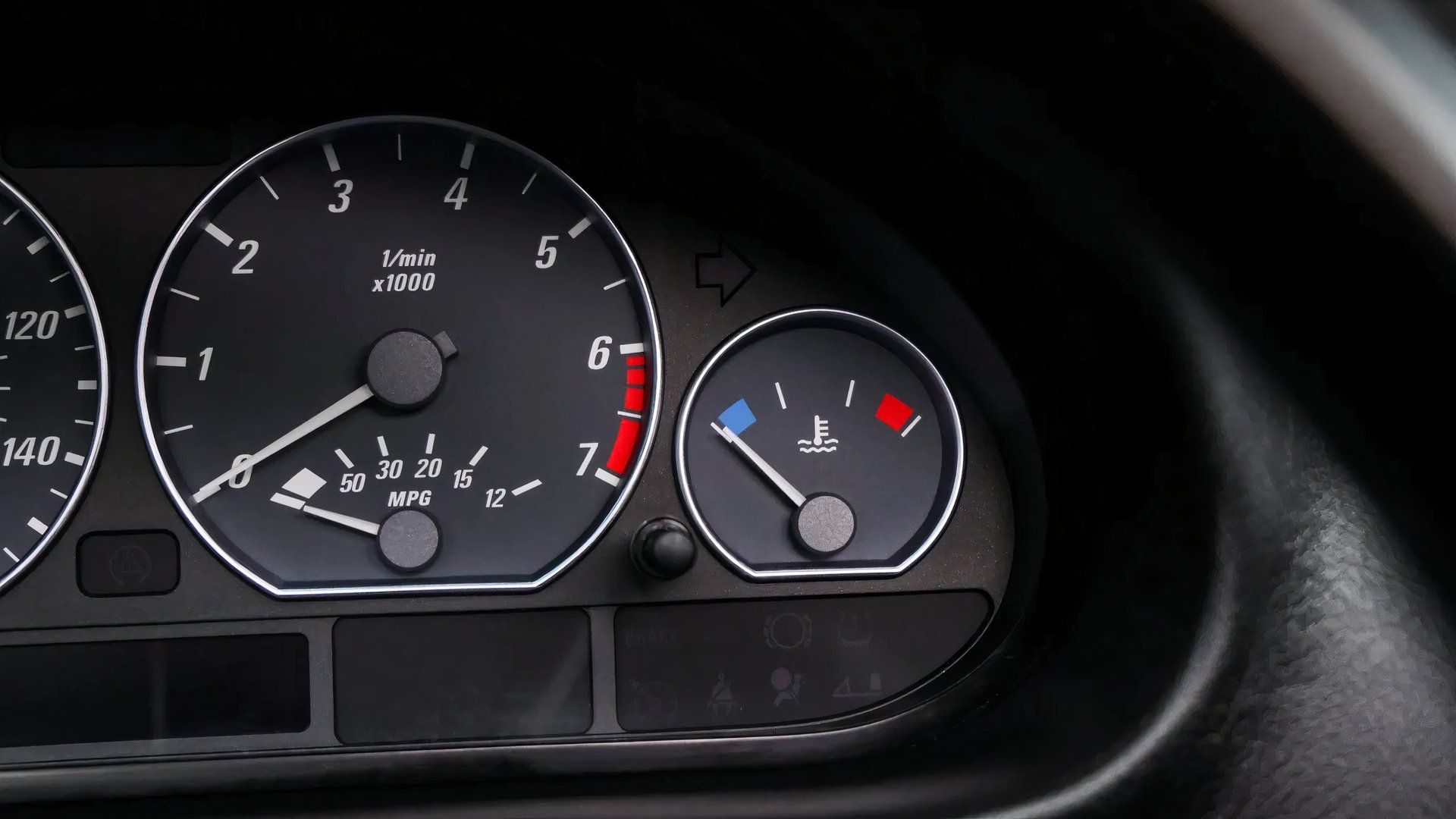
MPG Meaning: Understanding Gas Mileage Ratings

The most fuel-efficient cars of 2025 are almost always guaranteed to be good sellers, as everyone likes getting the most for their money, especially when it comes to stretching a few extra miles out of your gas gallon. However, there’s a lot more to miles-per-gallon ratings than first meets the eye. To understand the ins and outs, this article first explores the meaning of mpg, before looking at alternatives to the metric – especially where electric cars and plug-in hybrids are concerned – and variables which influence how economical your car is in the real world.
This article looks at all things mpg-related, including the different variations of fuel economy ratings, the comparable rating for electrified vehicles, and why your real-world mpg likely isn’t matching up with EPA-quoated figures.
Related
America’s Least Efficient SUV In 2025 Runs At 12 mpg
No one said driving an ultra-luxury SUV would be easy on your wallet.
Understanding MPG

What does mpg mean? The term mpg, which stands for miles per gallon, is the standardized measurement used to calculate and demonstrate the efficiency of a car. Simply put, mpg tells us how many miles a particular car can cover by using a single gallon of fuel, be that gas or diesel, primarily. In the USA, the mpg of new cars is calculated by the Environmental Protection Agency (EPA), which carries out a series of tests and then average out the results for an accurate figure. This is because a car’s mpg can vary drastically depending on a variety of conditions.
While the concept of measuring a car’s efficiency using miles per gallon existed long before, the standardization and industry-wide adoption of the term arose in the early 1970s, in response to the oil crisis which saw gas prices soaring. For that reason, buyers were more interested than ever before in fuel economy, and they needed a trusted body to test and state the ratings.
It’s worth noting that not everyone uses the system recognized and implemented by the EPA. For example, in the UK, mpg is measured using imperial gallons, which size up to 4.546 liters, rather than a US gallon’s capacity of 3.785 liters. For this reason, mpg figures quoted for both UK and US markets will be different by roughly 20%, even when for the same vehicle. For example:
- 2024 Ford Mustang GT combined mpg rating (USA): 17 mpg
- 2024 Ford Mustang GT combined mpg rating (UK): 23.5 mpg
Despite both cars being powered by the same 5.0-liter V8, the mpg readings are different – this is purely down to the difference in capacities between a US and imperial gallon. Readings will also differ dependent upon a vehicle’s specification. As an example, the Mustang GT’s combined figure rises from 17 to 18 mpg when equipped with an automatic transmission, rather than a manual. All- or four-wheel-drive models will almost always sport lower mpg figures than their two-wheel-drive counterparts too.
Efficiency Ratings Comparison: MPG vs Liters Per 100 Km

Elsewhere in the world, mpg is not so commonly used. The majority of Europe, for example, will measure a car’s fuel efficiency by liters per 100 kilometers – or l/100km. It is possible to convert either mpg to l/100km, or l/100km to mpg, by dividing the efficiency in liters per 100 km by 235.2. As the name implies, this measurement is a calculation of how many liters of gas a car uses for every 100 km (62 miles). Here’s how:
- To convert mpg into l/100km, divide 235.2 by a model’s mpg rating, and that will provide you with the l/100km figure.
- Converting l/100km into mpg is done with the same method, but in reverse: divide the car’s l/100km figure by 235.2 to find the mpg rating.
Confused? Here’s an example: if a car achieves 35 mpg, and you’d like to know the liters per 100 kilometers rating, simply divide 235.2 by 35. This gives us 6.72, which is therefore the l/100km rating. Conversely, dividing 235.2 by 6.72 provides us back with 35, the mpg rating. There are no real pros or cons of using one metric over the other. They are simply different ways of measuring a car’s efficiency, and one will usually be adopted in favor of the other, rather than both being used interchangeably.
MPGe: Here’s How To Measure Your PHEV/EV’s Efficiency
MPGe, which stands for miles per gallon of gas equivalent, is where things get a little more confusing. The idea of MPGe is to provide shoppers with a standardized way of measuring the efficiency of alternatively fueled vehicles, be they hydrogen, plug-in hybrid (PHEV), or electric-powered. MPGe ratings are relatively new, with the term coined only in 2010, when electric and plug-in vehicles were still very much in their infancy.
The way MPGe works is by portraying the energy use of one fuel as another. For instance, portraying electric power as gas. According to the EPA, a single gallon of gas provides the same amount of energy as 33.7 kWh. Conversions are also available for more specialized alternate fuels, such as natural gas and hydrogen, although electricity is the most common. Some vehicles, such as plug-in hybrids, which use a combination of fuels, will have their efficiencies separated, as this example shows:
- 2023 Toyota RAV4 Prime EPA-estimated combined gas and electric rating: 94 MPGe
- 2023 Toyota RAV4 Prime EPA-estimated combined gas-only rating: 38 mpg
By displaying both readings, the EPA and automakers can be as accurate and transparent as possible when depicting the efficiency of a new model. The MPGe figure tells customers what they can expect when driving using both gas and electric power, while the traditional mpg figure details the fuel economy when powered solely by gas.
An example of MPGe being used to describe the efficiency of an electric car can be seen here, with the 2024 Toyota bZ4X, which achieves a combined rating of 119 MPGe when specified in XLE front-wheel-drive trim. As is the case with gas-powered models, all-wheel drive will sap away at efficiency: an AWD bZ4X from the same model year manages to achieve 104 MPGe to the FWD’s 119.
Despite MPGe ratings being commonplace, we’ve previously explained why miles per kilowatt hour (mi/kwh) is a more valuable metric.

Related
America’s Most Efficient EV For 2025
With so many EVs now on the market, it can be tricky to find the most efficient. This is the most frugal EV currently on sale in the US.
What Is Considered A Good MPG Rating?

Defining what makes an mpg rating inherently good or bad is not so simple – context is always required. For example, if your 1.2-liter city run-around is returning 20 mpg, then the chances are something’s wrong, and you need to reconsider your choice of car, or get it into the workshop. Conversely, if your hard-working full-size pickup truck is averaging 20 mpg when towing trailers up and down the highway, then that’s an incredible achievement.
So, whether an mpg rating is good or not depends on the vehicle’s segment, and what it’s used for – here are a few examples of cars and trucks which boast impressive mpg ratings for their respective segments:
|
MPG Segment Comparison Table |
||
|---|---|---|
|
Segment |
Vehicle |
MPG Ratings* |
|
Subcompact crossover |
2025 Toyota Corolla Cross Hybrid |
45/38/42 mpg |
|
Mid-size sedan |
2025 Honda Accord |
29/37/32 mpg |
|
Full-size pickup truck |
2025 Ram 1500 |
20/26/23 mpg |
*city/highway/combined

Related
The Volkswagen Coupe That Achieved 313 MPG
The story of the little-known, hyper-efficient XL1 concept car.
EPA ratings Vs. Real-World Consumption
Although the EPA does provide mpg ratings for all new cars, and these ratings are a great way of gauging how efficient your next purchase will be, it’s best to take the ratings with a pinch of salt. This is because the EPA obtain its results by testing vehicles indoors, using dynamometers, which means the vehicles aren’t affected by many real-world scenarios – like traffic, bad weather, or driver input, such as using air-conditioning.
In truth, there are a huge range of variables that can affect your vehicle’s fuel efficiency, including but not limited to:
- Engine health: when was your car last serviced?
- Tire condition: are they inflated correctly, and is your alignment set up as it should be?
- Load: how many passengers are onboard, and are you carrying excess luggage around with you?
- Road condition: poor surfaces will result in poorer mpg.
- Driving style: leaning on the brakes excessively is just as bad for mpg as stamping on the loud pedal too hard and often.
Source: EPA