Not A Single Porsche 356 Would Exist Without This Old Piece Of Wood

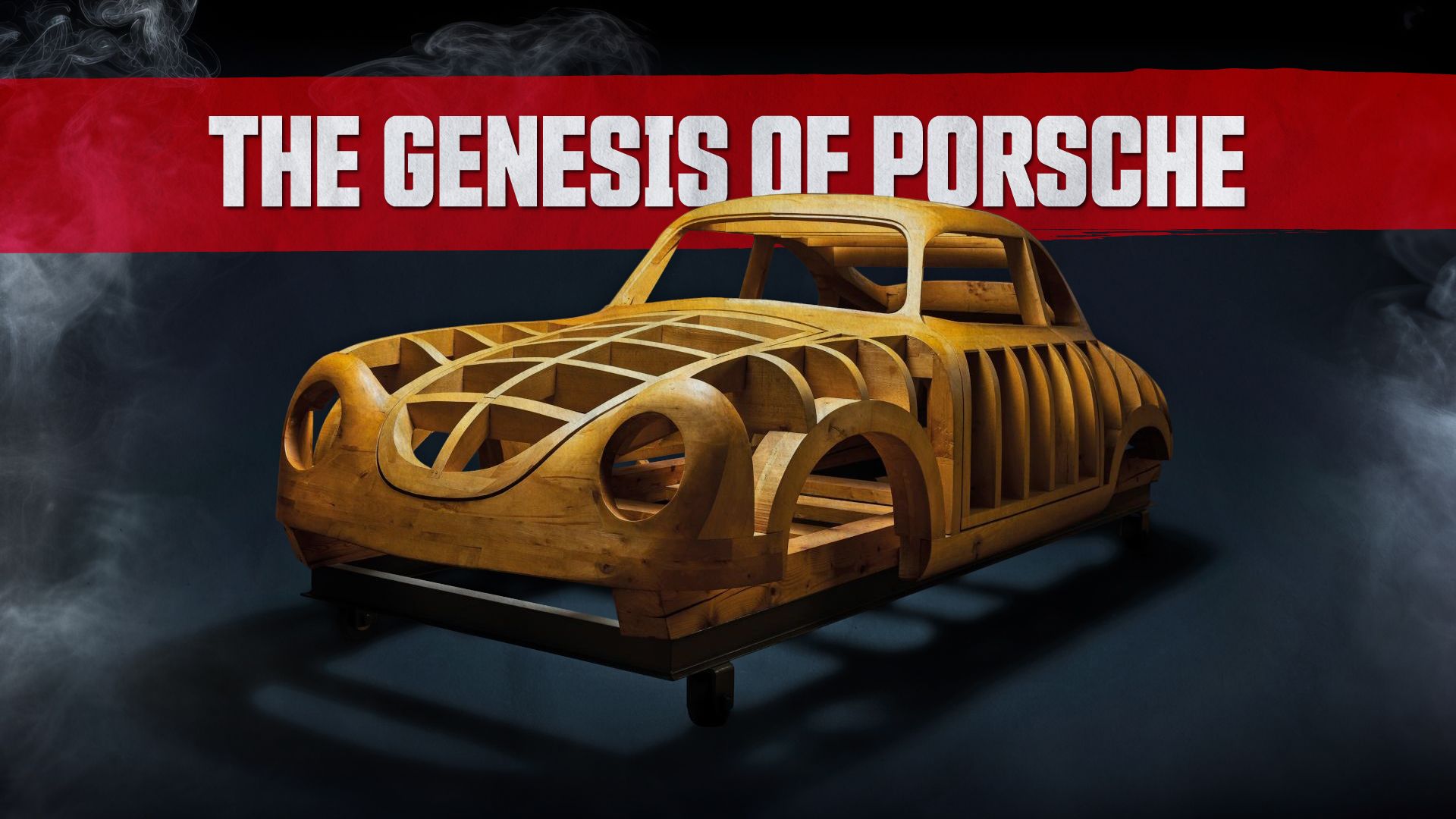
The Porsche 356 is considered a work of art, and all art has to start somewhere. This wooden frame, currently located at the Porsche Automuseum in Gmund, Austria, is what started it all.
During the 356’s first year of production, each hand-made body panel was compared and fit to this perfect shape before ever touching an actual frame. This first year of production, in 1948, which also occurred in Gmund, Austria, served as the prototype year for the model and was one of the only times aluminum was used for the panels. A total of 52 Type 356/2 vehicles (44 Coupe and 8 Cabriolet) were produced using this “first” 356 wooden model, and eight to 10 superlight models were finished a few years later.
These days, the famous Porsche badge is highly coveted, and this wooden skeleton is Genesis.
Porsche
Porsche is a German sports car manufacturer and part of the broader Volkswagen Group since August 2012. Founded in 1931 by Ferdinand Porsche, the brand is most famous for the 911 line of sports cars, which first launched in September 1963. But it was the Porsche 356 that came first, and subsequently, Porsche has expanded its model lineup to include a variety of sports cars, supercars, SUVs, sedans, and even EVs. Porsche has a rich history in motorsport, with 19 outright Le Mans victories to its name, among various other titles.
- Founded
-
1948
- Founder
-
Ferdinand Porsche
- Headquarters
-
Stuttgart, Germany
- Owned By
-
Volkswagen
- Current CEO
-
Oliver Blume
How The 356 Was Built

Thanks to the process, these first models took an arduous amount of skill and time to finish. Each panel was shaped using hammers and compared to the structure until they fit perfectly. This meant it took a specialist around 90 hours to craft the 356’s outer skin perfectly, and thus Porsche needed to employ the help of many specialists around Europe to accomplish the task.
Fortunately (or unfortunately, depending on who you ask), this process ended in 1949 when production was moved from Gmund to Karosseriewerk Reutter in Stuttgart. The process was used in small batches, but technological advancements allowed precision pressing tools and an upgrade to studier steel sheet metal. A second wooden frame 356 was produced, but that was more a tribute to the model than anything else.
Today, the 356 is legendary; even the Porsche 911 has to give credit where credit is due. It’s remarkable how well the 356 shape has held up through the decades, with the curves and headlight design still recognizable on all Porsche models today.
Dumping The Hand-Built Process
The 356 enjoyed racing success from the start, and people outside the borders of Austria and Germany started to take notice. This meant Porsche had to ramp up production, and that’s why the entire operation moved to Zuffenhousen in 1950. Hammering body panels by hand was simply not viable anymore, so Porsche contracted a company called Reutter to do it for them. Porsche eventually purchased a large portion of Reutter, but chose not to invest in the seat manufacturing part of the business. Today, what was left of Reutter is known as Recaro…
But back to the 356 and its newfound success. At most, 62 cars were built using the wooden frame, but a total of 7,627 356s were built between 1948 and 1955. The most pivotal moment in the early 356’s lifespan was a class win at Le Mans in 1951. This really ramped up production, and Americans started taking notice. The only issue was the original 1,100 cc engine, which was offered until 1953. Porsche needed more powerful flat-four options, so 1.3-liter and 1.5-liter four-cylinder options were made available. Porsche updated both larger four-cylinder units for every model year, until a much larger change was required in 1955.
The 356 A, B, And C
The facelifted 356 was called the 356 A, which is perhaps the least imaginative model name ever. There is a good reason for that, however. The importers of the 356 wanted a name rather than a number, and settled on Continental. Unfortunately, that upset Lincoln and it sued. So 356A it was.
Porsche made small changes, but all were meant to make the 356 easier to live with. The 1.1-liter engine was finally dumped, and 1.3, 1.5, and 1.6-liter engines were made available. The most popular was the 1.6-liter flat-four with dual carburetors and two valves per cylinder. It produced 59 hp and 81 lb-ft of torque.
Sales reached an all-time high in 1957, but started tapering off soon after. Another upgrade was required, and so the B came along. Porsche introduced another round of design and technical upgrades. It kept the successful 1.6-liter engine from the A, and added a more powerful 2.0-liter option, too. The car received a bigger rear window for better visibility, and an external fuel filler was added. We’d argue the most important update was the disc brakes.

Related
The Car That Changed Automotive Braking Forever
If it weren’t for this iconic Jag, our modern cars could very well be quite different.
The Type C is perhaps the most interesting because it was produced at the same time as the 911. You’d think demand for the 356 would have died out with the introduction of the 911 in September 1964, but somehow Porsche still managed to sell more than 16,000 units. The general consensus was that the 911 was a more user-friendly car with all sorts of unnecessary features that added weight. For that reason, the 356 remained the more hardcore choice for driving enthusiasts.
Also, keep in mind that the 356 had a well-established racing pedigree, which the 911 didn’t have at the time. It didn’t take the world long to catch on, however. By 1966, production of the 356 stopped, after selling a total of 76,313 units.
At the time of writing, the average price of a 356 was $175,918. The highest recorded price for a drop-top Speedster is $590,000, while the most spent on a 356 overall is $1.76 million for one that was owned by Janis Joplin. Isn’t that just the perfect mix of an epic car with the best kind of provenance?
The 356 Legacy
There are three things the 356 gave the Porsche brand. The first is the use of the trim “Carrera.” In the context of Porsche, it simply means “race.” It ties in neatly with our next thing, which is racing pedigree. By now the 911 has been around long enough to have to most impressive wins behind its name, but the 356 can boast about a Le Mans win. In addition to that, the 356 was sold to many enthusiasts who adapted it for road and rally races. And finally, the 356 set the design language Porsche has stuck to for its entire existence. Even if you look at the most modern Porsche models, you can see hints of the 356 all over the place.