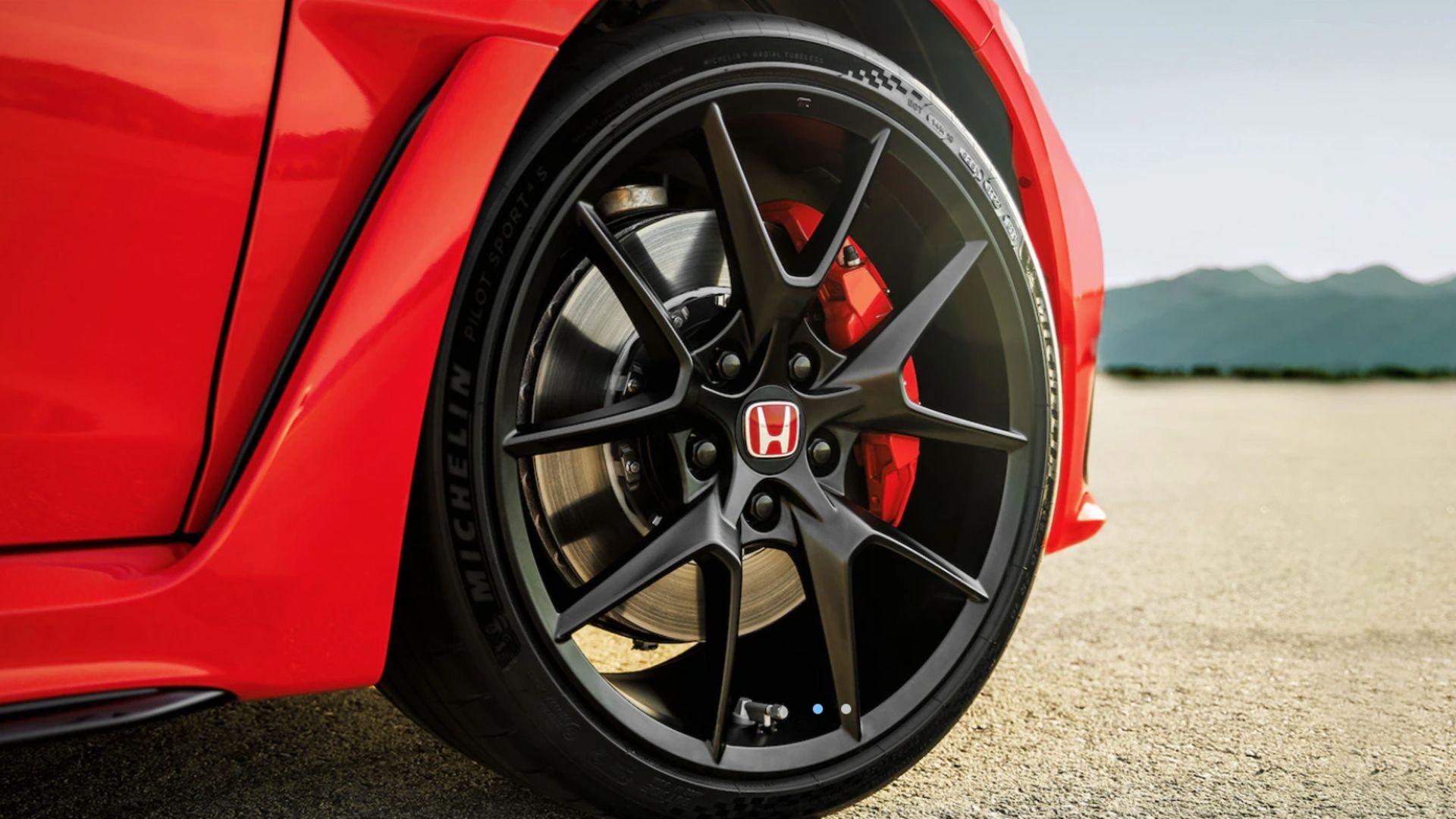
Revisiting Torque Steer And How Manufacturers Eliminated It

We don’t read much about torque steer in modern cars, because manufacturers have all but engineered the phenomenon out of their latest offerings. It’s more of a problem on really powerful front-wheel-drive cars that put plenty of torque through their front wheels, and cars like the Mazdaspeed 3 were well-known for the steering jumping around, pulling to one side, and tugging while applying the power, requiring the driver to be wide awake. So why does the Honda Civic Type R, with way more power than the Mazdaspeed 3, not have this problem?
-
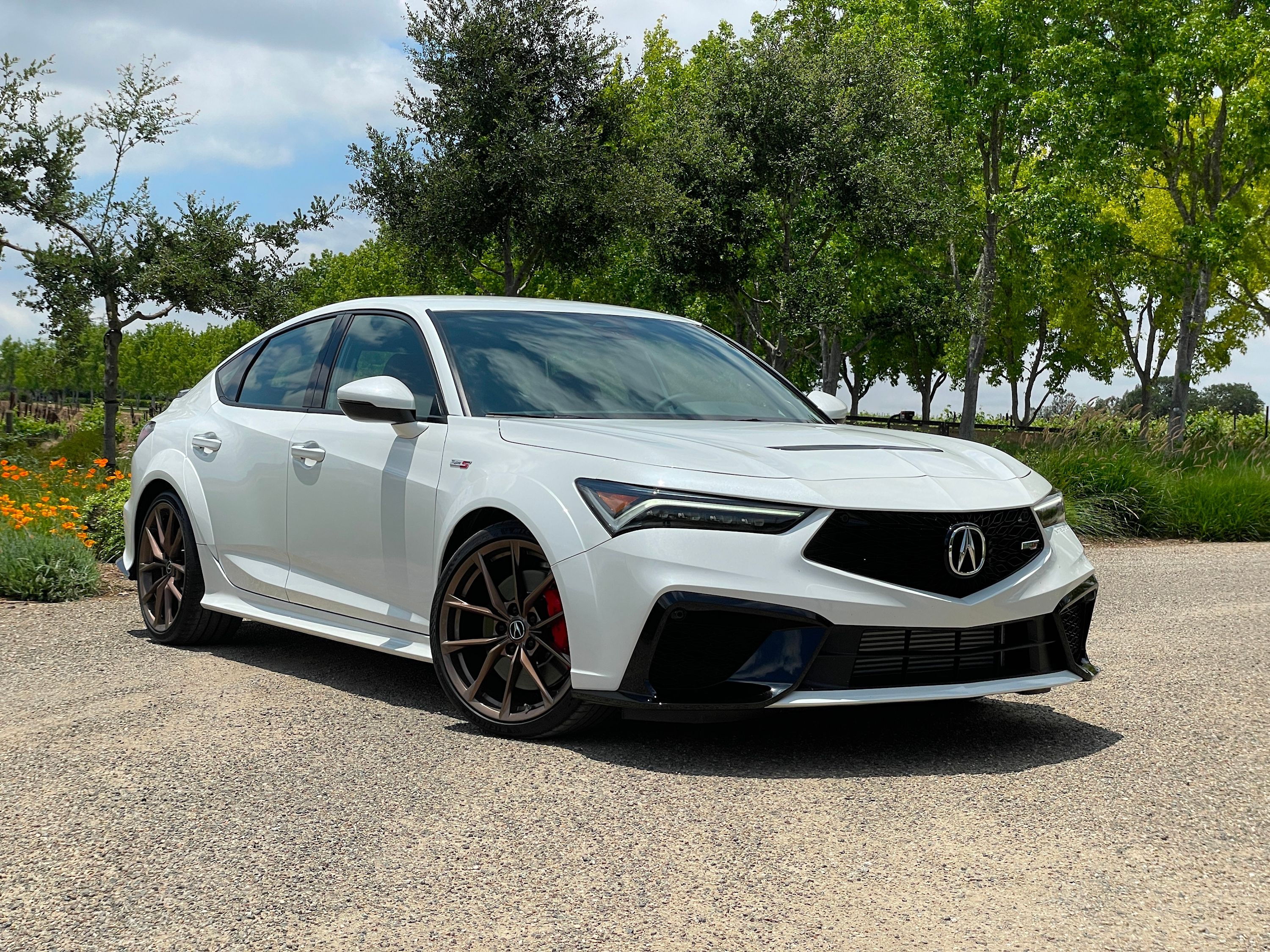
2024 Acura Integra Type S
- Engine
-
2.0L Turbo Inline-4 Gas
- Horsepower
-
320 hp
- Torque
-
310 lb-ft
- Transmission
-
6-speed manual
- Drivetrain
-
Front-wheel drive
- 0-60 MPH
-
5.3 seconds
- Top Speed
-
167 mph
- Fuel Economy
-
21/28 MPG
- Curb Weight
-
3,084-3,219 lbs

Whereas most manufacturers avoid torque steer by giving cars with 300 hp or more all-wheel drive to distribute the torque over four wheels, the Civic Type R has 315 hp and is front-wheel drive, yet it’s extremely well-behaved, with virtually no torque steer. What makes it different and how did Honda quell torque steer in the Type R and the mechanically identical Acura Integra Type S? Let’s have a look at the automakers that addressed the problem head-on in the past, and where we are today.
The specifications and MSRPs of the Honda Civic Type R and Acura Integra Type S are for the current 2025 models.
Causes And Traditional Solutions
Causes
Torque steer can be caused by any of the following conditions:
- Asymmetric front driveshafts that differ in length, torsional stiffness, or diameter
- Excessive application of front-wheel torque
- Worn suspension parts such as control-arm bushings
- Engine movement or worn engine mounts
- Asymmetric grip conditions at the front tires
- Sidewall deformation of the front tires
- A significant scrub radius
Traditional Fixes
The scrub radius is especially important, and a large scrub radius will always cause torque steer. When the car is viewed from the front, the scrub radius is the difference between the steering axis (the axis about which the wheel pivots when the steering is turned) and the centerline of the tire, if both were extended to the point where they touch the road. If there is a big difference, i.e. a big scrub radius, then the toque will try to swivel the wheel when a lot of power is applied to it, and it encounters an uneven surface or grip levels, tugging the wheel around in the driver’s hands. Reducing the scrub radius to a minimum almost eliminates torque steer.

Related
Mazdaspeed Is Becoming Mazda Spirit Racing: Here’s What To Expect
Mazda is serious about taking the fight to Toyota Gazoo Racing.
In a FWD car with a transverse engine, the transmission is mounted on the end of the engine and the differential is, therefore, offset, resulting in driveshafts of different lengths, which exacerbates torque steer. Over the years, some of the ways in which manufacturers have tried to reduce torque steer include:
- Making the torsional stiffness of the driveshafts equal by, for example, making the shorter one hollow and the longer one solid
- Fitting an intermediate bearing in a body-mounted bushing on the long driveshaft so that the shaft from the intermediate bearing to the wheel is equal to the length of the shorter shaft
- Placing the engine longitudinally ahead of the front axle, with the transmission and differential behind it, so it’s in the middle of the car and the shafts are the same length. This solution has been used by Audi and Subaru for many years
- Placing the engine longitudinally behind the front axle and the transmission in front, like Fiat 127 and 128, as well as the original Renault 5
- Using tires with stiffer sidewalls to mitigate sidewall distortion

Related
Renault 5 EV Debuts As A Funky $27,000 Mini Cooper Rival
Known as Le Car in the US before its retirement, the nameplate returns with battery power.
Cars with the engine behind the transmission aren’t seen anymore, because it wastes a lot of space, requiring a longer nose, with the engine butting right up against the firewall. The front-overhung engine is bad for weight distribution, as it places too much weight outside the wheelbase, but Audi has minimized the problem by moving the engine as far back as possible and using shorter V engines, unlike Audis of old that had iron-block inline five-cylinders mounted out from. Subaru’s short and lightweight aluminum boxer engines also minimize the problem.
Modern-Day Solutions
Most current FWD cars have transversely mounted engines with end-on transmissions, and already employ equal-length driveshafts by way of an intermediate bearing on the long shaft. Modern tire design, stiff suspension and steering mounts, and power steering have filtered out torque steer to the point where it’s no longer a problem, and cars with a lot of power are usually either RWD or AWD. Ingenious modern-day wizardry to eliminate torque steer is, therefore, only required for very powerful FWD cars, of which there aren’t many. These cars require some expensive re-engineering of the front struts, and they all approach the problem the same way – by adding a mechanism that allows the wheel to swivel around an axis that is much closer to the centerline of the wheel, resulting in a very small scrub radius.
Honda Civic Type R and Acura Integra Type S
|
2025 Honda Civic Type R |
2025 Acura Integra Type S |
|
|---|---|---|
|
MSRP |
$45,895 |
$52,900 |
|
Engine |
2.0L turbo K20C1 I4 |
2.0L turbo K20C8 I4 |
|
Drivetrain |
6-speed manual, FWD |
6-speed manual, FWD |
|
Horsepower |
315 hp |
320 hp |
|
Torque |
310 lb-ft |
310 lb-ft |
|
0-60 mph |
5.3 seconds |
5.3 seconds |
|
Top Speed |
170 mph |
167 mph |
Honda’s strut design used on the current FL5 Civic Type R and Acura Integra Type S first debuted on the FK8 Civic Type R in 2017, and doesn’t have a catchy name attached to it. It’s a new strut design that moves the pivot point to within the wheel to reduce the spindle length, while reducing the scrub radius to almost zero. On the diagrams above, you can clearly see where the new pivot has been added within the wheel, and how short it is, as well as in Jason Fenske’s video below, which was made when the system debuted on the FK8 Type R.
The Ones That Came Before
Toyota Super Strut (1991)
Back in 1991, Toyota brought a solution to reduce the scrub radius and to minimize camber and castor changes during cornering. The system completely replaced the front MacPherson struts, but was designed to attach to the same pickup points to keep costs under control. The system was an earlier attempt to address some of the traditional MacPherson strut drawbacks. It’s a combination of a MacPherson strut and a multi-link setup. The lower wishbone is replaced with front and rear control arms connected by a connector plate.

Related
The Mechanics Of MacPherson Struts: From Design Principles To Driving Comfort
Find out why so many mainstream automakers have turned to this simple suspension design.
The front arm has a ball joint and the rear arm a rubber bushing, so the system allows the arms to pivot as the assembly turns. The steering knuckle attaches to the connector plate at its lower end and partway up the strut with a ball joint at its upper end. The top part of the strut attaches to the body in the normal way, but its lower end attaches to the front lower arm by way of a pivoting arm. The strut barely rotates when the steering is turned, but moves a little rearward when turning, while the hub moves a little forward, canceling each other out.

Related
10 Of The Best Toyota Sports Cars Ever Made
These are the most legendary sports cars to come out of Toyota.
It was fitted to the JDM S205 Toyota GT-Four, the Carina GTi, and some high-performance JDM Corollas and SSII/SSIII Celicas, and could be retrofitted to lower-line cars of the same models. Due to all the joints and parts, it had to be meticulously maintained to work its best, and the rally cars didn’t use the system.
Ford RevoKnuckle (2009)
Ford’s RevoKnuckle front suspension designed for the 300-hp FWD Focus RS and 350-hp RS500 – both of which weren’t sold in the US – is more similar to Honda’s system, separating the front struts into two parts – the strut supplying the suspension, and the separate offset steering knuckle. Just like Honda, the far shorter spindle and much-reduced scrub radius all but eliminates torque steer. Ford’s system is said to weigh about 26 pounds more than regular struts, however.
GM HiPer Strut (2011)
GM developed its similar HiPer Strut for powerful FWD cars such as the 2011 Buick LaCrosse CSS and 2012 Regal GS. It goes about its job similarly to RevoKnuckle, but weighs a little less and gives the added benefit of camber adjustment, which RevoKnuckle doesn’t feature.
Summary
Most manufacturers have refined their FWD chassis to the point that torque steer isn’t an issue with moderate power on tap. The more powerful cars either have AWD or RWD, so torque steer is hardly a thing we think about nowadays, unless you harshly pull away and spin the wheels on a bumpy surface with a cheap entry-level car, in which case you’ll notice the steering trying to wrestle with you. But Honda is committed to providing lightweight and fun FWD performance cars, and its expensive front-suspension geometry on the Civic Type R and Integra Type S reminds us that the company is still serious about driving fun, and is willing to spend money on engineering solutions to make its most powerful FWD cars easy to drive, even with more than 300 hp.
Sources: Car and Driver, Honda-Tech.com, Engineering Explained, Road & Track, GTFour.Supras.org.nz.