The 10 Highest Revving Four-Cylinders Ever Made

All four-cylinder engines are equal. Some are just a bit more equal than others. Yep, the average four-cylinder engine is renowned for its practical, sensible and efficient applications. Often found in middle-of-the-road cars, for middle-of-the-road applications, and with not a great deal of excitement in the deal, the four-cylinder engine traditionally offers a reliable and efficient alternative to big-capacity engines with drinking issues.
BMW
BMW is a German luxury car and motorbike manufacturer and current owner of Mini, Rolls-Royce, and Alpina. With roots dating back to 1913 as Rapp Motorenwerke, it officially became Bayerische Motoren Werke in 1922 as a manufacturer of aircraft engines. BMW’s first car was built in 1928 when it built the Austin 7 under license from Dixi, which was called the BMW 3/15. BMW grew into a manufacturer of premium and luxury automobiles, launching iconic nameplates like the 3 Series, 5 Series, and 7 Series, and is today known as one of the leading luxury automakers in the world, while the BMW M division is hailed as a leading manufacturer of performance cars.
- Founded
-
1916
- Founder
-
Karl Rapp
- Headquarters
-
Munich, Germany
- Owned By
-
Publicly Traded
- Current CEO
-
Oliver Zipse
But, there are some four-cylinder engines that buck the middle-of-the-road trend. Instead, they offer mega revolutions, mega feel and, most often, mega speed. Engines like the original BMW M3’s S14 engine, the Cosworth-tuned 2.5-liter 16-valve engine in the Mercedes-Benz 190E Evo II, and the Honda S600, spinning to 9,500 rpm.
These are the engines that not only stir the soul and provide a fair turn of speed, but also offer a visceral symphony that is magnificently pleasing to the ear. This is the exclusive domain of the rev-high club.
This feature focuses on four-cylinder engines used in production cars that come with a rev-high membership card, straight from the box. Most of these engines are popular options in motorsport applications too, where they are tuned to rev even higher, and deliver a lot more horsepower.
5
BMW M3
Rev limit: 7,300 rpm
| Engine | 2.3-liter Inline-4 |
|---|---|
| Power | 200 hp |
| Torque | 170 lb-ft |
| 0-60 mph | 6.7 seconds |
| Top speed | 145 mph |
BMW’s Motorsport division revealed the first-generation M3 in 1986. At the time, BMW’s straight-six engines had achieved legendary on-track status. And with high-end 3-Series models powered by six-pot engines, it seemed perfectly logical that the first M3 would be powered by a six-cylinder engine. BMW Motorsport wanted to save weight for motorsport applications, and to achieve higher engine revolutions, and opted for a four-cylinder engine. The S14 engine started off as a 2.0-liter, was enlarged to 2.3-liter, and eventually ended up with a 2.5-liter, 235 hp version.
The engine was based on the BMW M10 four-cylinder block and a shortened BMW S38 six-cylinder head. Two separate throttle bodies were used. The BMW M3 and the bullet-proof, high-revving S14 engine soon started winning on tracks around Europe, firmly establishing the M3 legend. For the record, motorsport versions of the S14 happily revved to 8,000 rpm.
Mazda Miata 2.0
Rev limit: 7,500 rpm
| Engine | 2.0-liter, Inline-4 |
|---|---|
| Power | 155 hp |
| Torque | 148 lb-ft |
| 0-60 mph | 6.3 seconds |
| Top speed | 135 mph |
The Mazda Miata, the world’s favorite four-cylinder sports car, is powered by the company’s rev-happy SkyActive 2.0-liter engine. The engine, especially in partnership with the six-speed manual gearbox, offers the same kind of driving pleasure the original Miata 1.6 did, back in the Nineties.
In 2016, the engine delivered 155 hp, but since then the power has been upped to more than 180 hp, peaking at around 200 hp in some limited-edition versions. The engine stays true to the original Miata ethos of being lightweight, playing a pivotal role in the Mazda’s excellent handling, the rear wheels providing the propulsion. The engine is naturally aspirated, has direct injection and a high compression ratio, and it is renowned for its responsiveness. The Mazda Miata won’t break any land speed records, but as a driver’s car, with an engine revving reliably to 7,500 rpm all day long, it is hard to fault.
Porsche Cayman 718 T
Rev limit: 7,500 rpm
| Engine | 2.0-liter, turbocharged flat-4 |
|---|---|
| Power | 300 hp |
| Torque | 280 lb-ft |
| 0-60 mph | 4.5 seconds |
| Top speed | 170 mph |
Porsche, purveyor of exquisite flat-six engines, introduced a new range of four-cylinder turbocharged engines for its entry-level Cayman and Boxster ranges in 2016. Porsche said the four-pot option was introduced to offer a more fuel-efficient engine option, but with enough horses to still keep a smile on traditional Porsche fans’ faces.
The base four-cylinder engine produces a real handy 300 hp, good for a top speed of 170 mph and a 0-60 mph sprint time of 4.5 seconds. The engine offers the best of many worlds… not only is it more fuel-efficient than the larger six-pot engines, the 2.0-liter engine’s 280-lb-ft of torque peaks from around 2,000 to 4,500 rpm. Yet it also revs all the way to 7,500 rpm. Interestingly, despite all the impressive numbers and fuel efficiency, the four-cylinder Cayman has been criticized for its uninspiring engine sound.
Mercedes-Benz 190E 2.5-16 Evolution II
Rev limit: 7,600 rpm
| Engine | 2.5-liter Inline-4 |
|---|---|
| Power | 232 hp |
| Torque | 181 lb-ft |
| 0-60 mph | 7.0 seconds |
| Top speed | 155 mph |
When the Mercedes-Benz 190E 2.3-16 lined up for DTM races in 1986, the high-performance version of the W201 was a revelation. It soon started winning saloon car races against bigger, heavier sedans, boasting more power. Agile and fast, the high-revving, 16-valve four-cylinder engine was worked over by famed British company Cosworth. The 2.3-16 finished second in the 1986 championship. But the arrival of the new BMW M3 in the DTM required a major overhaul of the 190E… and so the 2.5-16 Evolution II was born.
Cosworth worked its magic on the four-pot engine, raising power to 232 hp. A tuning company called AMG installed its PowerPack, including a fully adjustable racing-style suspension. The Evo II also spent some quality time in a wind tunnel, where its aerodynamics were fine-tuned with wings and skirts and spoilers. The result? A dominant force in the DTM, and a road car that happily revved to 7,600 rpm.
Toyota MR2
Rev limit: 7,800 rpm
| Engine | 1.6-liter, supercharged, Inline-4 |
|---|---|
| Power | 145 hp |
| Torque | 140 lb-ft |
| 0-60 mph | 6.5 seconds |
| Top speed | 130 mph |
They call it the 4A-GE. It is one of the most legendary small-capacity engines ever created, and since 1983 it has served in a variety of Toyota performance cars, including Celica, Corolla and MR2. The 1.6-liter twin-cam engine was developed in partnership with Japanese motorcycle juggernaut Yamaha, and besides having an ironclad reputation for reliability, it is best known for its penchant for high revolutions. In stock trim the 4A-GE will spin to nearly 8,000 rpm, all day long. Modified versions are known to reach closer to 10,000 rpm.
For its role in the 1988 Toyota MR2 Supercharged, the mid-mounted 4A-GE was fitted with a belt-driven, Roots-type supercharger. The high-revving engine only made 145 hp, but thanks to the MR2’s low weight and excellent handling, the little MR2 offered excellent performance, only running out of steam at around 130 mph.
Subaru Impreza 22B
Rev limit: 7,900 rpm
| Engine | 2.2-liter, turbocharged, boxer-4 |
|---|---|
| Power | 276 hp |
| Torque | 268 lb-ft |
| 0-60 mph | 4.8 seconds |
| Top speed | 155 mph |
Subaru revealed the limited-edition Impreza 22B in 1998 as a celebration of the Impreza WRC’s three consecutive championship wins from 1995 to 1997. With just over 400 units ever made, this is the most desirable Subaru in the game. But there is much more to the 22B than just a wing and some WRC inspiration. For this role, Subaru stretched the EJ20 2.0-liter four-cylinder boxer engine to 2.2 liters and upped the power to 276 hp. The “276 hp” relates to an informal agreement between Japanese automakers to limit the power of their performance cars to that number… most punters believe the 22B actually delivered considerably more power than the quoted number.
The 22B engine features a very flat torque curve, with 268 lb-ft peaking from 2,800 to 5,200 rpm. But thanks to some modifications, the 2.2-liter boxer engine can spin all the way to 7,900 rpm. The 22B also has a special center differential, an upgraded gearbox, a twin-plate clutch, special Bilstein dampers and Eibach springs, and special forged alloy wheels.
4
Lotus Exige 260
Rev limit: 8,500 rpm
|
Engine |
1.8-liter, supercharged, Inline-4 |
|---|---|
|
Power |
256 hp |
|
Torque |
174 lb-ft |
|
0-60 mph |
4.0 seconds |
|
Top speed |
152 mph |
Lotus figurehead Colin Chapman famously stated that, to make a car go faster, you need to add ‘lightness.’ And that’s always been the case with the original Elise, and later, the Exige high-performance derivative. Lotus could have lumped a 1,000-hp V8 engine into the back of the Exige, but instead, following Chapman’s doctrine, the engineers fitted Toyota’s 2ZZ-GE 1.8-liter four-cylinder engine with a supercharger. The result is lots of lightness, combined with 256 hp of power.

Related
10 Cars Built Around Toyota’s Most Reliable Four-Cylinder
The ZZ engine was reliable, adaptable, and also powerful, thanks to the impressive 2ZZ which was designed in collaboration with Yamaha.
The 2ZZ-GE was also developed in partnership with Yamaha, and it loves to rev… it will scream all the way to 8,500 rpm. Along with a brilliant Toyota six-speed manual gearbox with short ratios, rear-wheel drive, excellent weight distribution, and brilliant handling, the engine is the cherry on top on one of the greatest driver’s cars ever created.
3
Honda Civic Type R
Rev limit: 8,600 rpm
|
Engine |
1.6-liter, VTEC, Inline-4 |
|---|---|
|
Power |
182 hp |
|
Torque |
118 lb-ft |
|
0-60 mph |
6.5 seconds (estimated) |
|
Top speed |
140 mph |
The 1.6-liter engine had a marked effect on the performance car genre, boasting a power-to-liter ratio that was, for instance, more than double that of a Chevrolet Corvette 5.7-liter V8. Honda’s VTEC was a vital ingredient. The variable valve timing and lift electronic control system optimizes the timing, duration, and lift of the intake and exhaust valves. The VTEC system kicks in at higher revs, and adds a notable performance boost, with sound effects to match. In stock trim the B16B happily revs to 8,600 rpm. The B16B is a performance icon, and considered by many as one of the greatest engines ever made.
2
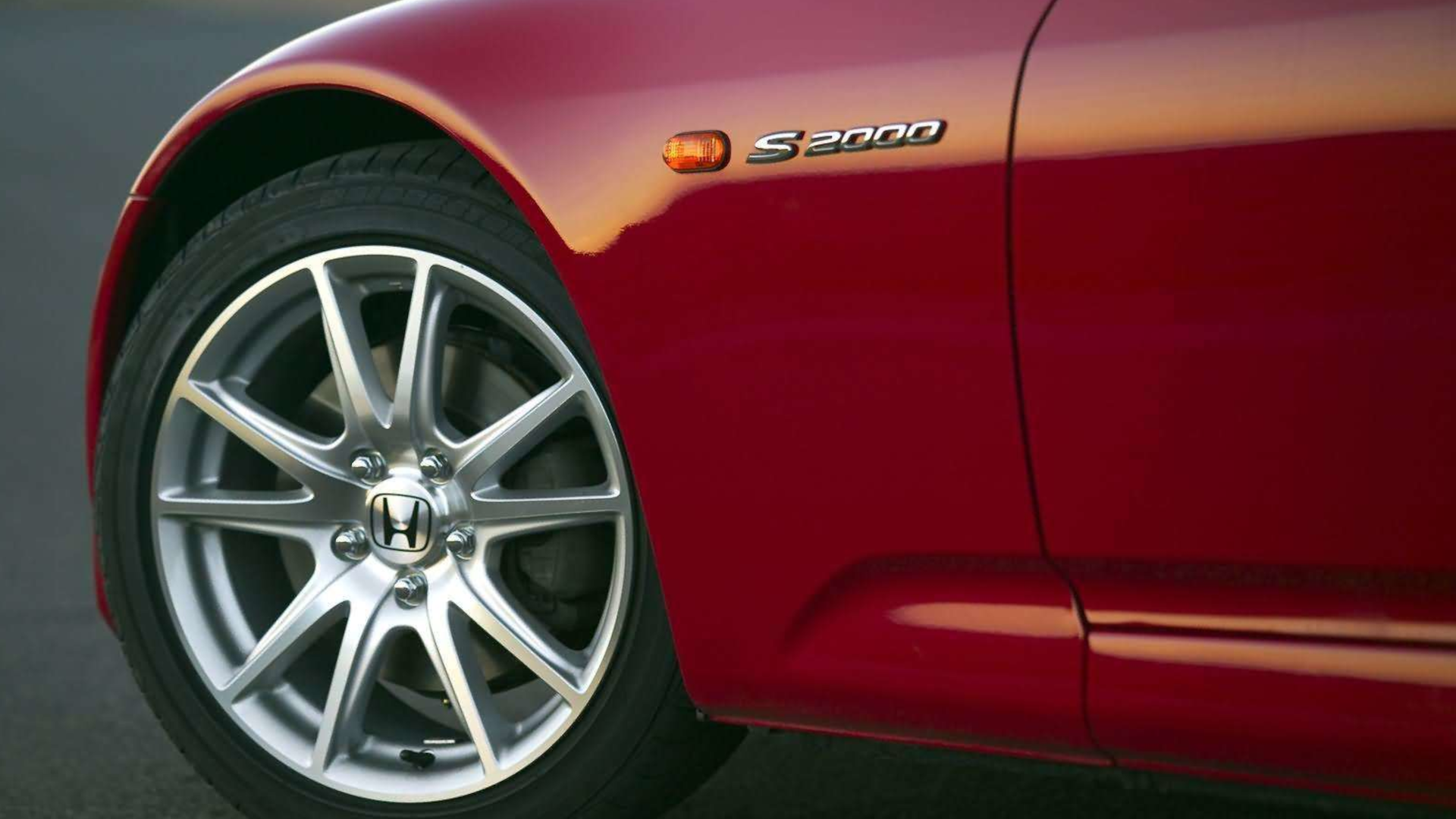
Honda S2000
Rev limit: 9,000 rpm
| Engine | 2.0-liter, VTEC, Inline-4 |
|---|---|
| Power | 240 hp |
| Torque | 153 lb-ft |
| 0-60 mph | 6.0 seconds (estimated) |
| Top speed | 150 mph |
Here is another Honda screamer, revving to a heady 9,000 rpm. The two-seat S2000 is a rear-wheel-drive convertible, combining one of the slickest six-speed manual transmissions in the motoring game with excellent handling and a screaming VTEC engine.
The Honda F20C engine is essentially based on racing technology used in the brand’s racing cars. With two overhead cams with roller followers, a VTEC system for the intake and exhaust camshafts, forged aluminum piston skirts, and an engine block forged from aluminum with fiber-reinforced metal sleeves, the engine spins reliably to 9,000 r/min. The VTEC system activates at around 6,000 r/min. The F20C has won a string of awards, and held the record for producing the highest specific power output for any mass-produced, naturally aspirated piston engine for more than a decade. The Ferrari 458 Italia eventually pipped the Honda in 2010, producing a single horsepower more per liter than the F20C.
1
Honda S600
Rev limit: 9,500 rpm
|
Engine |
0.6-liter, Inline-4 |
|---|---|
|
Power |
57 hp |
|
Torque |
174 lb-ft |
|
0-60 mph |
seconds |
|
Top speed |
90 mph |
It is fitting that the highest-revving, four-cylinder production engine also hails from the Honda shed. The tiny Honda S600 sports car was on sale from 1964 to 1966, and its 0.6-liter engine revs all the way to a staggering 9,500 rpm, straight out of the box. You may dismiss the 57-hp, double-overhead cam engine as a waste of space, but in the 1,570-lb Honda it provided a very respectable 90 mph top speed.
A four-speed manual transmission sends the power to the rear wheels, and the little Honda rides on a fully independent suspension. The Honda S600 was the company’s first mass-marketed car, exported all over the world. It was the car that initially put the brand on the map. And the punchy little engine revving to 9,500 rpm played its part in cementing Honda’s place in the car market too.