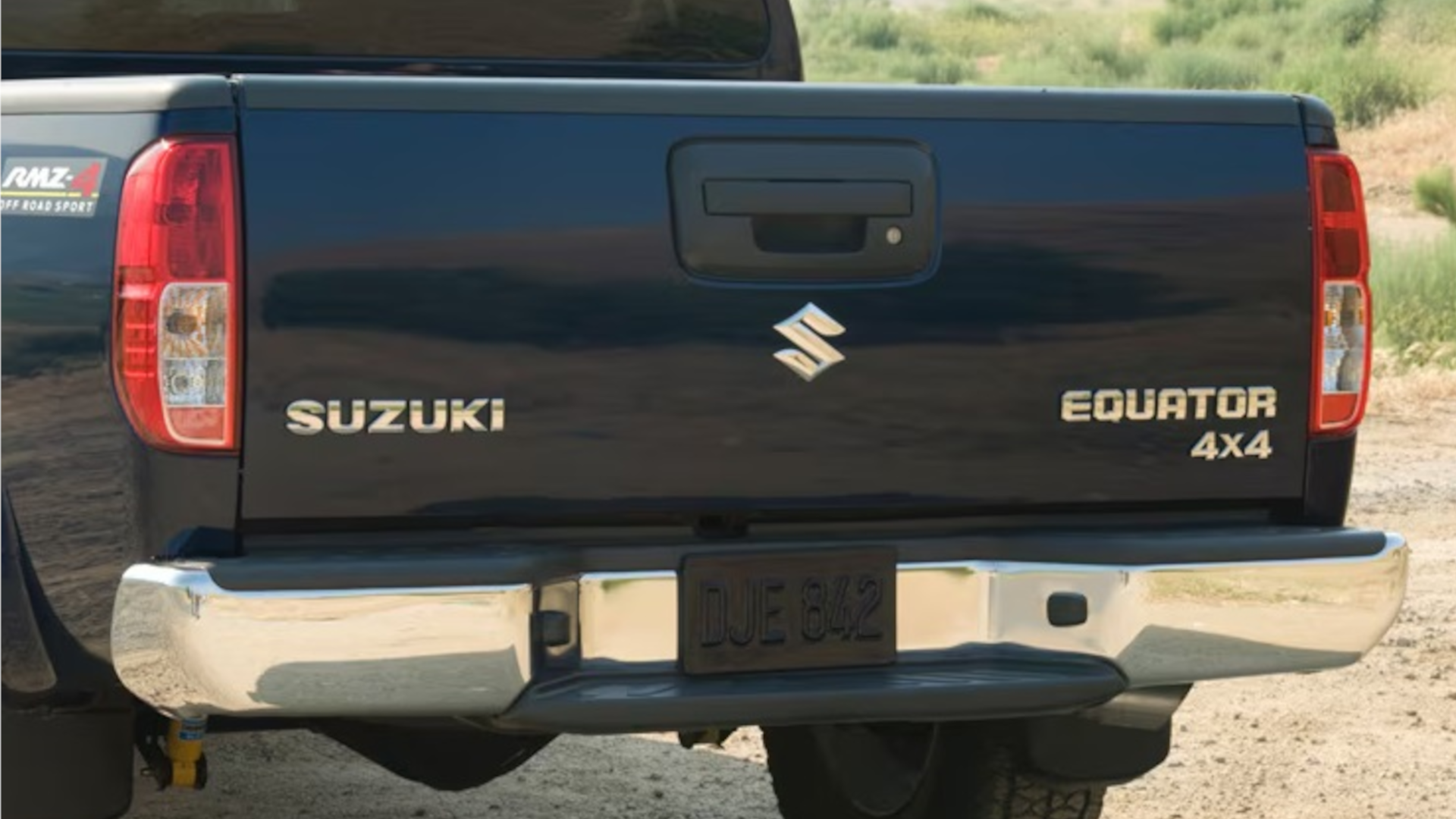
The American-Made Suzuki Pickup Truck Everyone Forgot About

Okay, don’t tell us you’ve heard of this truck. Who has? Suzuki never sold more than 200 of them in a single month, and overall sales never topped 6,000 from the time it was launched for the 2009 model year to the time it was retired after the 2012 model year. We’re talking about the Suzuki Equator, a mid-size pickup that had a brief, unremarkable stay on the market before being silently shooed away.
The Equator was a pretty solid pickup, capable of towing up to three and a half tons, and starting at an MSRP of just $17,220 for the 2009 model. But the market never quite fell in love with it, and its place in automotive history would wind up being more of a footnote than anything. Here’s everything worth knowing about this obscure pickup.
This is the story of the Suzuki Equator, of the truck it’s based on, and of its brief four-year stay in the US.
A Look At The Suzuki Equator
|
2009 Suzuki Equator Specifications |
||
|---|---|---|
|
Engine |
2.5L NA I4 |
4.0L NA V6 |
|
Power |
152 hp |
261 hp |
|
Torque |
171 lb-ft |
281 lb-ft |
|
Transmission |
5-speed manual |
|
|
Drivetrain |
RWD |
RWD/AWD |
|
Towing Capacity |
3,500 lb. |
6,500 lb. |
If those specs look familiar, there’s a reason for it. When you learn that the Equator was a rebadged D40-generation Nissan Frontier, the whole story clicks, doesn’t it? Since 2009, the Nissan Frontier has been selling around 27,000 to 80,700 units each year. Solid numbers for a mid-size pickup, but maybe not enough to support a redundant lookalike that only offers a few small tweaks over the model it’s based on.

Related
All The Cars, Trucks, and SUVs Assembled In The USA
As tariff charges bite, some OEMs will be better off than others. Which companies do final assembly here, and which models will avoid the tariffs?
What Set The Equator Apart From The Frontier?
The Equator was a badge-engineered truck, and essentially a 95% a copy-and-paste take on the Frontier. It drove, handled, towed, and felt like a Nissan Frontier, but it looked a little different, and there were just enough key differences that we feel comfortable saying it wasn’t just a Frontier by a different name, just mostly a Frontier by a different name:
- The Equator debuted with standard side curtain airbags, which were only offered as an option on the Frontier around that time.
- The front end of the Equator is noticeably different, with a more open grille design and different headlights compared to the Nissan with its boxed-in V-Motion grille.
- A closer look sees small differences in the hood, front bumpers, and a handful of new interior and exterior features, including the Suzuki “S” logo in lieu of all the Nissan logos.
- A new Nissan Frontier typically sold for a couple hundred dollars more than a comparable Equator, give or take, trim by trim.

Related
This Forgotten 90s SUV Was The Most Rebadged Car In History
Sometimes when you fail to succeed, you need to try again, and again, and again…
If these differences sound like we’re splitting hairs, well, guilty as charged. If you swapped the badges on these trucks, many drivers wouldn’t know the difference unless they viewed the trucks head-on, where most of the changes were made. This isn’t a knock on the Equator. We’ve always liked Nissan’s, and the Equator is basically a Nissan Frontier. If you like the Frontier, you’ll like the Equator.
What Would One Of These Cost You Today?
One of the main reasons rebadged vehicles are worth knowing about: it can help you find great deals on the used market, or at least give you more options to choose from. So if you’re a Nissan fan, now you know you still get a Nissan, but with a different badge, when you buy a used Equator. Suddenly, the Suzuki is no longer an unknown quantity.
So, how do used Frontier and Equator prices compare? Let’s start with a look at each truck’s respective Kelley Blue Book fair purchase estimates for the 2009 to 2012 model years.
|
Nissan Frontier |
Suzuki Equator |
|
|
2009 |
$6,161 – $9,433 |
$6,436 – $11,231 |
|
2010 |
$6,911 – $10,828 |
$6,582 – $11,576 |
|
2011 |
$7,314 – $12,312 |
$6,982 – $12,175 |
|
2012 |
$7,985 – $13,263 |
$8,628 – $14,245 |
According to the Blue Book, the Equator actually tends to run a bit pricier than the Frontier, perhaps owing to its relative scarcity. Let’s see how that plays out in practice and look at some of sales listings first-hand.
Mileage Means More Than Nameplate, This Time
Checking out what’s available through AutoTempest, we found a 2012 Equator with around 150,000 miles on the odometer for $12,694, one with just over 100,000 miles for $11,450, and a 2009 with around 150,000 miles for just $5,995. We also managed to dig up a 2012 Frontier with around 160,000 miles on it for $13,747, and a 2010 with around 150,000 miles for $10,995.

Related
Ten Pickup Trucks To Buy If Holding Value Matters To You
There are some surprises on this list – here are 10 trucks ranked by how much they depreciate.
What these numbers tell us, first and foremost, is that condition, age, and mileage will go a lot further towards determining price differences between these two trucks than nameplate will. Our advice: if you’re shopping for one, keep the other in mind, and go wherever the best deal takes you.
Equators Might Be A Little Cheaper To Maintain Than Frontiers
One area where the Equator does show a clear advantage over the Frontier, in terms of what you can expect to spend on the truck, is in estimated maintenance costs. Comparing the Equator’s overall annual maintenance estimate (courtesy of RepairPal) to the Frontier’s average annual costs from 2009 to 2012, we get the following numbers:
|
Nissan Frontier |
Suzuki Equator |
|
|
Annual Maintenance Estimate |
$505 |
$444 |
That might not be a big difference, but sixty-one bucks a year is enough to hit up the drive-thru on the way to work a few times, so we can’t complain about a penny saved. It’s worth noting that, regardless of which one you go for, it will be a very reliable truck capable of huge mileages if properly maintained. In fact, the second-generation Frontier on which the Equator is based made our list of ten most reliable pickups.
Is It About Time To Bring The Suzuki Equator Back?
Small and mid-size pickups are hot right now. Trucks like the Maverick and the Santa Cruz have been cleaning up on the sales charts, the mid-size Tacoma had a strong year in 2024, selling around a quarter million units, and it seems like everyone wants to throw their hat in the ring and grab a piece of that pie. Suzuki has no presence in the American pickup segment right now, which begs the question of whether this could be the perfect time for it to take another shot at something like the Equator. As Nissan is reinventing itself amid the automaker’s biggest crisis in decades, it’s said that it’s open to cooperation with other automakers.

Related
Cheapest Trucks For 2025
These are the most affordable new pickup trucks you can buy in 2025.
Then again, the market wasn’t interested in this truck the first time around, and, while small and mid-size pickups may be in vogue right now, the market is starting to get a bit crowded all of a sudden, so maybe it’s not a great idea to try and re-establish Suzuki is the collective consciousness if it means it’s up against high-profile market leaders like the Tacoma, Ranger, and Colorado/Canyon. A new Suzuki Equator would simply get lost in the mix, again. Suzuki no longer has an official presence in the US, and making a comeback with a badge-engineered lookalike would probably be a mistake if it wants to stand on its own feet, so we can comfortably rule out the possibility of an Equator Mk2.
Sources: Kelley Blue Book, AutoTempest.