The Automotive Brand Named After A Unicorn

It goes without saying that when it comes to automotive brands, the way their names sound partially dictates how the marque is perceived by the general public. Think of brands like Ferrari or Lamborghini. The way those two sound conveys a sense of class and sophistication, and would do so even if you had no idea what sort of cars they made. Other brands like Aston Martin or Mercedes-Benz convey a sense of luxury when thought of, which is exactly the sort of models they produce. However, there are outliers to this principle.
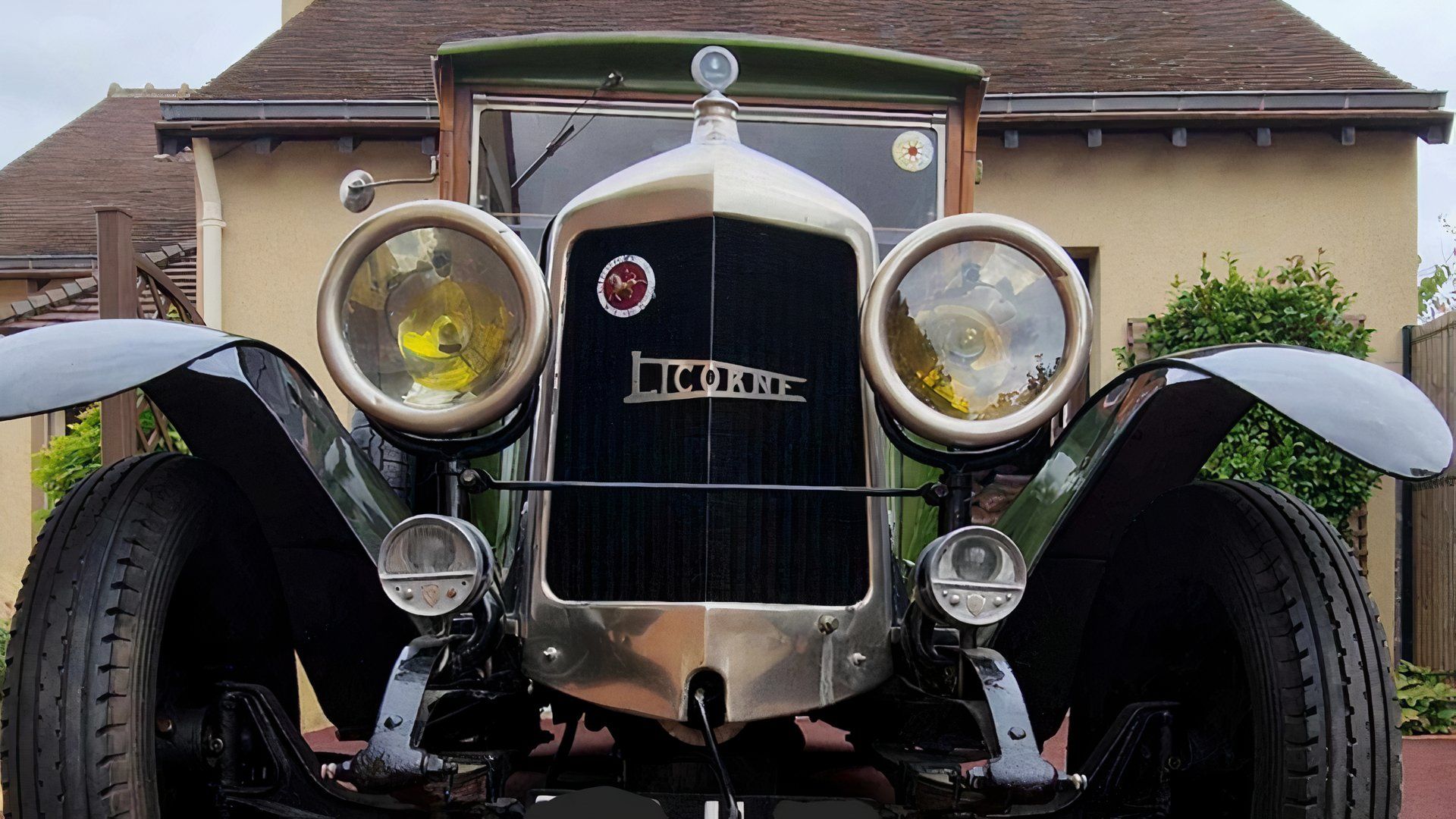
One such outlier was in business just shy of 80 years ago and hailed from France. It was called Corre La Licorne, which translates roughly to “The Unicorn”. The oddly named brand got its start right at the turn of the 20th century, and remained in business for the better part of four decades. While most of us have never heard of Corre La Licorne, the French marque actually had a period of time when it did quite well. Until, of course, it didn’t.
Available Models

Related
The 10 Strangest Production Cars Ever Made
Many cars look odd, but these 10 cars are the next-level strange.
Humble Beginnings: Pre-World War I
Corre La Licorne Key Points
- Founded in 1901
- Originally referred to as “Corre”
- Produced tricycles, quadricycles, racing cars, and an electric car
- Defunct by 1949
Just before the turn of the 20th century, a Frenchman called Jean-Pierre Corre began building small tricycles to use around rural and urban areas. A couple of years later, he made the decision to start his own company, which he simply called “Corre”, after his surname. He set up shop in Levallois-Perret, a commune situated in the northwestern portion of Paris, France. Shortly after founding the company, Corre’s repertoire expanded to include quadricycles.

In order to differentiate his company from the several other early French automakers, Corre began entering his simple, single-cylinder quadricycles in auto races. Corre’s chief driver, a man called Waldemar Lestienne, brought Corre a modest amount of racing success. In turn, Corre’s sales increased thanks to the widespread recognition his cars were getting thanks to his decision to begin racing his vehicles.
However, in 1907, Jean-Pierre Corre found himself in dire financial straits. Things were so bad that he was forced to sell his company to a financial firm by the name of Lestienne Firmin. Once the sale of the Corre company was final, its name was changed to “Corre La Licorne”. Shortly before World War I began, the Corre La Licorne lineup consisted of one single-cylinder, one twin-pot, and one four-cylinder model.
Inter-War Years
Corre La Licorne emerged from World War I in good financial standing. Their model lineup expanded to include a 1.2-liter model, and Corre La Licorne models were beginning to gain popularity with the rural French community, particularly among farmers. According to rural accounts, the Corre La Licorne cars were exceptionally durable without being overly uncomfortable. They were also coveted by business owners due to their ease of repair and low-cost parts.
1924 Corre La Licorne Model Lineup Pricing
- 8CV: 20,500 Francs
- 9CV: 21,400 Francs
- 10CV: 26,500 Francs
- 12CV: 38,000 Francs
By 1927, the Corre La Licorne factory had moved to a new location in Courbevoie, a suburb of Paris, France. Also at this time, Corre La Licorne began a lucrative collaboration with Citroën, in which Corre La Licorne would source sub-assemblies, or partially-assembled components, from Citroën. This allowed the new factory to run smoother and produce cars in less time. However, when Western Europe switched to all-steel automobile bodies, Corre La Licorne was now paying Citroën for pre-stamped shells, as well, due to the huge cost of the stamping presses required for such an endeavor. This proved to be financially detrimental to the still-small Corre La Licorne company.
Adding to the pain was the extremely slow recovery experienced by France following the 1929 stock market crash and the resulting economic depression. Other European countries, such as Germany, bounced back much quicker, and this began to show in Europe’s car market. French manufacturers were beginning to struggle, particularly the smaller ones. As of 1938, Corre La Licorne had only managed to shift 688 cars, which amounted to a microscopic 0.31% of the French market total.
During And After World War II

When war broke out following Germany’s invasion of Poland in September 1939, the rest of Western Europe was quickly pulled into the fight, as Germany was quickly gaining ground on both its eastern and western fronts. As for Corre La Licorne, its model lineup was shrunk to include just a single nameplate: a Licorne 6/8 CV-derived electric car, using electric technology developed prior to World War I. Even though it was extremely heavy, the electric Corre La Licorne reportedly managed a cruising speed of 25 mph and a maximum driving range of about 60 miles.
While Corre La Licorne emerged from the First World War with a can-do attitude and the funds to back it up, post-World War II was a very different story. During the post-War French economic restructuring, coined the Pons Plan, Corre La Licorne was not deemed worthy of governmental assistance, which, in essence, left it to fend for itself in a financially ruined post-War France. Its last hurrah happened at the 1947 Paris Motor Show, where they showed their Licorne Typ 164 LR model. The new model never saw production.
The company virtually shuttered its factory in 1947, limited its production considerably, and was declared defunct two years later. According to historical records, a small number of Corre La Licornes were sold in 1950 as new models, although these were most likely leftovers from the extremely limited production seen after 1947. If handwritten records are to be believed, Corre and Corre La Licorne produced an approximate total of 33,962 models during its 48-year tenure, a small number compared to other French automakers. The magic of the unicorn was, apparently, not enough to save Corre La Licorne from financial ruin.
Sources: PreWarCars.com, Corre-LaLicorne.com, DidierTougard.BlogSpot.com