The Average American Has Finally Started Trusting Advanced Driver Assistance Systems

New technology is always met with some resistance. Honda could release a flying car that’s impossible to crash and many would still be saying it’s a waste of research and development dollars. But, the technology that’s worth adopting usually reaches a tipping point where it’s no longer novel, no longer off-putting, and instead, is simply taken for granted. Anti-lock brakes, stability control, rearview cameras – they were all brand-new safety features at one point, and now they’re expected.
Advanced driver assistance systems are just the latest safety tech to reach that tipping point. Not that long ago, if you asked most drivers, they’d tell you that these systems were obtrusive, distracting, and ultimately not very helpful. Now, the vast majority of drivers will choose to keep their alert systems engaged when given the option, and there are numbers to prove it.
The
IIHS
has been used as a primary source for this article.
Data Shows Drivers Are Finally Warming Up To Advanced Driver Assistance Systems
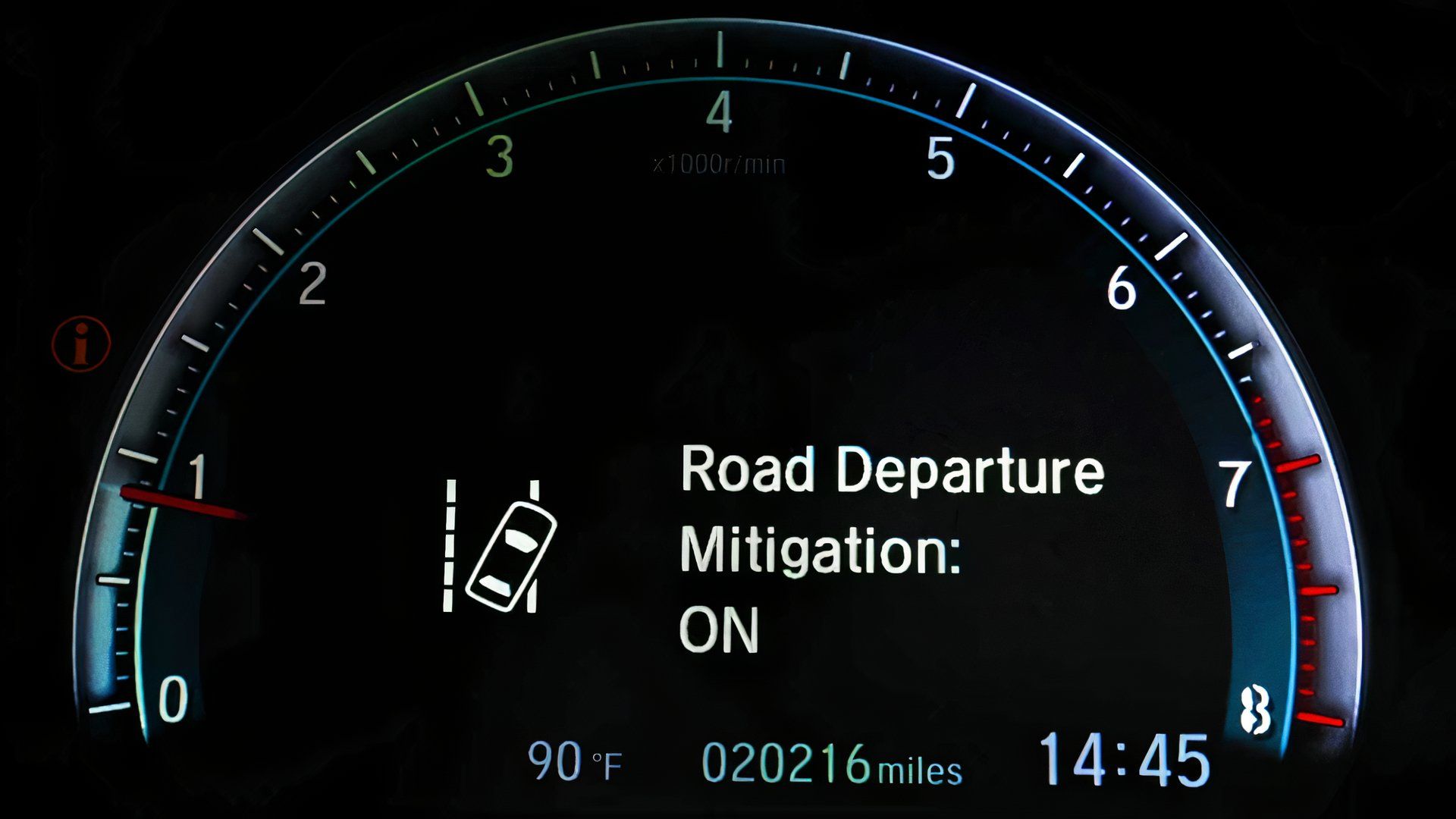
A recent report released by the IIHS shows a major difference in driver attitudes towards ADAS (Advanced Driver-Assistance System) technology over the last seven years. Specifically, lane departure warnings were only kept active in 51% of 983 vehicles sampled back in 2017. In 2023, around 2,300 vehicles sampled in the Washington, D.C., area saw an activation rate of 87%.
Taking a look at the studies currently available, there are some key takeaways:
- 46% of drivers kept auditory lane departure warnings activated in 2017
- 54% of drivers kept tactile lane departure warnings activated in 2017
- 70% of drivers kept visual speed alert warnings engaged in 2023
- 14% of drivers kept auditory speed alert warnings engaged in 2023
- Front collision alert activation remains stable at around 93% from 2017 to 2023
- Lane departure warning is 15% more likely to be activated if it is disengaged through a menu, rather than a button
- Haptic lane departure systems were 16% more likely to be engaged than auditory systems as of 2018
- 76% of drivers in 2023 chose to keep lane departure prevention engaged, while only 11% kept the warnings engaged
The general trend is toward broader adoption and fewer drivers turning the systems off. In the earlier study and the more recent one, drivers tended to dislike auditory warnings, and are more comfortable with visual and haptic, or tactile warnings. Unsurprisingly, drivers who don’t like the warning systems at all are far more likely to turn the system off if they can do it with one press of a button.
Perhaps the most surprising point here: drivers hate auditory warnings more than they hate automatic lane departure prevention. They’d rather sacrifice a bit of driver control than have to put up with chimes, beeps, and robot voices telling them to look out. Many of the Mazdas and Volvos involved in the study allowed drivers to keep lane prevention engaged while disabling the alerts, and, by and large, drivers took them up on the offer.
Alert Systems Are Getting Less Annoying (And Harder To Disengage)
There are several factors at play when it comes to the adoption of new technology. A big part of it is that drivers are simply getting used to it. The first time you get a lane departure warning you might think “I don’t know if I like that!” In fact, when CarBuzz covered the topic back in 2016, that was the consensus. By the hundredth time, you just stop complaining about it and learn to accept it.
The biggest driver in the adoption of ADAS technology may be the simple fact that automakers are getting better at designing them with the driver in mind. The earlier study showed a significant difference in activation depending on how the alerts are issued to the driver, with auditory warning systems engaged at 46% and visual systems at 54%. A recent study shows an even more dramatic engagement difference for speed alert warnings, at 70% for visual warnings, and a meager 14% for audible warnings. Automakers seem to have taken note, as more systems allow drivers to customize alerts to their liking now, and cars that allow drivers to select haptic alerts show much higher activation rates.
Add CarBuzz to your Google News feed.
The Deactivation Factor
One other factor worth noting: it’s actually harder to turn these systems off now. When the 2017 study was conducted, only one of the models included in the study required users to go through a menu to turn the alerts off, while the rest allowed deactivation of the alert system with the press of a button. In the more recent study, more than half of the included models required drivers to go through a menu. So, one key to keeping ADAS technology engaged may simply be getting drivers to say “Ah to hell with it!” when they try to opt out.
Still, front collision alerts reign supreme at 93% simply because most cars don’t allow you to turn them off in the first place. An automaker with all alert systems mandatory would no doubt improve their IIHS ratings and reduce the likelihood of seeing their cars involved in accidents, but the backlash from the market would be pretty severe. American drivers like choice, and we hate being told what to do, regardless of whether it’s for our own good.
Drivers Love Speeding Alerts?
Love might be too strong a word, but one of the more interesting discoveries in the latest study is that drivers don’t seem to mind speeding alerts. In fact, the IIHS ran a poll in June 2024 that saw 60% of drivers responding that they would be happy with speeding alert warnings, even if they were audiovisual, and not necessarily haptic. 80% want a feature that displays the current speed limit, and 70% agreed with the idea of “an unobtrusive tone” sounding when the speed limit changes.
These numbers more or less line up with the 70% of drivers who kept visual speed alert warnings engaged in the 2023 IIHS study on ADAS adoption. The fact that only 14% of drivers choose to keep auditory speed alerts engaged suggests that those polled may have responded a little too optimistically on the subject of those “unobtrusive tones,” but the fact remains that American drivers are more comfortable with speeding alerts than one might assume.
Avoiding Costly Tickets
As of 2022, speeding was a factor in 8% of property-damage-only crashes, and 12% of crashes with injuries or fatalities according to the IIHS. Yahoo Finance estimates a national average speeding ticket cost of around $413 as of 2023, and your insurance rates can increase by twenty percent or more after the ticket goes on your record. Where lane-keep warnings initially invoked a “Leave me alone, I know what I’m doing!” response from many drivers, speed limit warnings have taken far less time to be embraced, perhaps owing to the simple fact that a little buzz in the steering wheel or a light on the instrument cluster can save you hundreds of dollars in the short-term, and thousands in the long run. In any event, it’s a more popular solution than the speed-limiting devices being proposed by the National Transportation Safety Board.