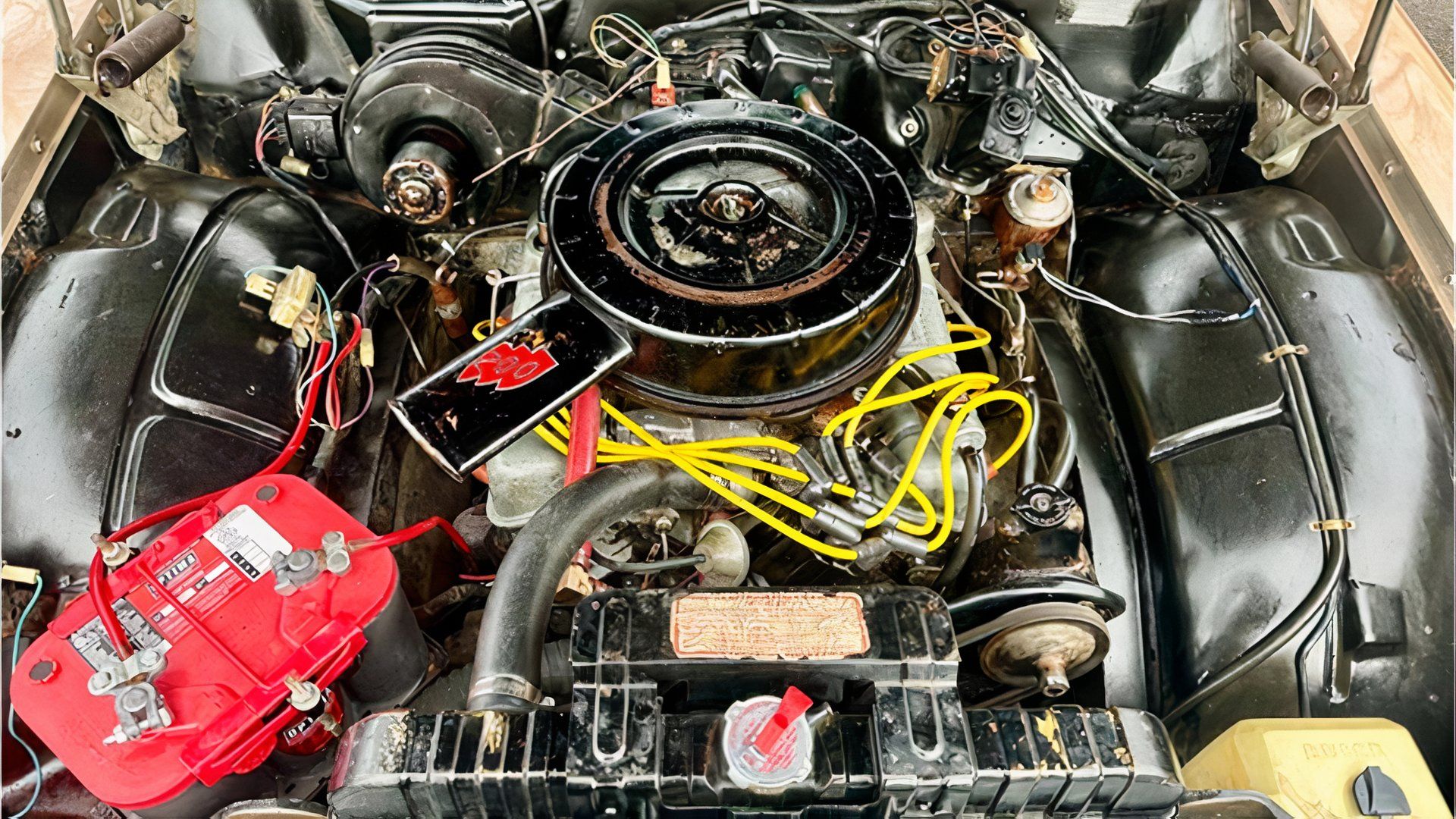
The Buick V8 That Got A New Lease On Life In England

Quick Links
Throughout most of automotive history, there have been several examples of engines that have seen use by several automakers. It’s a common occurrence, as some automakers may not have the capital nor the manpower to design their own engine, so they turn to a brand with one already pre-designed and produced. Then, all they have to do is sign an agreement, and that engine is cleared for use in their own models.
However, while this is a common aspect of the market, an old Buick V8 has a unique version of this story. In the early 60s, Buick created one of the first all-aluminum V8s for the mass-market but after just a couple of years, decided to scrap the mill. British automaker Rover then approached Buick with an offer to buy the rights to the motor, which Buick accepted. The motor then went on to become one of the most iconic Rover engines ever produced.
Available Models

Related
Classic Audi Quattro Rally Car Has A Range Rover Chassis And A Buick V8
This peculiar build was designed to tackle the arduous Dakar rally.
Humble, Rocky Beginnings
Buick-Rover V8 Key Points
- Introduced in 1961
- Boasted an all-aluminum construction in its original form
- Axed by Buick in 1963
- Rights purchased by Rover in 1967
- Built by Rover until 2004
General Motors was hard at work creating revolutionary powerplants during the late 1940s, 1950s, and 1960s. The Oldsmobile Rocket V8 was the first high-compression V8 ever produced on a mass-market scale. The first American fuel-injected motor debuted in 1957 as an option on the Chevrolet Corvette, and the world’s first turbocharged passenger car, the Oldsmobile Jetfire, debuted in 1962. As a matter of fact, the Jetfire used an Oldsmobile-modified version of Buick’s all-aluminum 215 CID V8.
With all that experience under its belt, you’d expect General Motors to be the kings of engine production and, in a way, it was. However, when it came to the all-aluminum 215 CID V8, things weren’t all that rosy. Despite boasting an extremely lightweight engine block and cylinder heads, the actual casting process was extremely complicated and expensive. Not to mention, the 215 CID V8’s block also had a tendency to fail due to impurities in the actual casting material. This led to myriad premature engine failures, harming Buick’s reputation considerably at the time.
Enter Rover
So, after just two years, Buick dropped the all-aluminum 215 VID V8 from their offering list, hoping to put that relatively bad idea behind them. This meant that when Rover approached them to buy the rights to the 215 CID mill in 1967, GM execs were a bit surprised. They were also delighted, being given a golden opportunity to offload one of their more low-quality engine designs and profit off it.
The deal was struck, and Rover became the new owners of the 215 CID V8. Over in England, the engine took on the name “3 1/2 liter”, as the cubic inch was not a popular means of engine measurement. The new powerplant was destined to replace Rover’s then-aging 3.0-liter straight-six, which had been in production since 1958 and used within the Rover P5/P5B sedan. In short, the new American powertrain was quite a breath of fresh air over the old straight-six.
The newly coined Rover 3 1/2-liter V8’s first assignment was to provide power to the Rover P5B, Rover’s flagship sedan at the time. Before the introduction of the Buick V8, the Rover P5B was known simply as the Rover P5, the “B” being added to show its use of the Buick mill. The new engine gave the Rover P5B a considerable power boost, upping its horsepower output from 134 to 158.
Through The Years
Throughout its entire life, the Rover 3.5-liter V8 maintained its all-aluminum construction. In fact, it remained relatively similar to the original, Buick-designed version. Once the new motor hit the shores over in Endland, they ditched the American carburetor setup and replaced it with a twin-SU carburetor configuration. Parts were already plentiful in Britain due to the Buick 215 CID V8 being a popular motor for English kit car builders.
The Rover V8 saw extensive use throughout Rover, Land Rover, and other British Leyland-bred models. After the Rover P5B and Rover P6B began using the Buick mill in 1967 and 1968, respectively, Land Rover adopted it in 1970 for use in the Range Rover. MG adopted it in 1976 for use in the MGB GT V8, and Triumph joined up two years later with their Rover V8-powered TR8 sports car.
The final Rover to use the 3 1/2 liter engine was the 1986 Rover SD1 3500, a strange sedan that had looks reminiscent of the classic Ferrari Daytona. Land Rover continued to use the mill, even after Ford’s purchase of the brand from BMW. Despite most Land Rover models having already switched to the Jaguar AJ engine, Ford was interested in continuing the Rover V8’s production, as it was still useful and, most important of all for a legacy automaker, cheap to produce.
Its Final Years
By the mid-1990s, Ford began to notice the Rover 3.5-liter V8 was beginning to fall behind when compared to its competitors. It was too underpowered, and too thirsty to compete with some of the other V8s coming out of competitors’ factories. However, the mill was still out-performing its competition in terms of reliability but the losses in sales due to its under-performing nature were too large to ignore.
The necessary corrective action was determined to be discontinuation, which took place in 2005. At the time, the final Land Rover to use the 3.5-liter engine was still in production, the Discovery II. The Disco was due for a model revamp for the 2005 model year, giving Ford and Land Rover execs the perfect opportunity to lay the engine to rest. After 38 years, the Rover 3.5-liter V8 was finally gone.
An impressive feat, after the Americans were quick to abandon the engine in the early 60s. However, the plucky Brits were able to squeeze nearly four decades of loyal use out of the ex-Buick engine. At this point, you can’t even call the engine a Buick motor, as it wholly deserves the title of “Rover 3 1/2 liter V8”.
Sources: Supercars.net, Motor1, CarScoops, TheDrive