The Dependable E-Class Alternative You’ve Been Looking For

A specific model year matters more than the rest for second-hand Lexus GS shoppers. Understanding what happened in that model year, and the broader implications on the used Lexus GS marketplace, can help you make a smarter purchase decision on this celebrated luxury sedan.
Though the GS was ultimately discontinued in 2020 and effectively swallowed up by the Lexus ES, used copies from the GS’s final run are readily available for $25,000, but you’ve got some thinking to do before you decide which year to go with. Below, we’ll dig into how much Lexus GS your $25,000 gets you today, and some useful information to know before you pull the trigger on this purchase.
Technical data is sourced from Lexus. Used car pricing is based on data from Autotempest.com
Up To Speed On The Lexus GS
The Lexus GS was born in 1993, entering its initial generation that would be sold through 1997. The second-generation car arrived in 1998, followed by the third in 2006. The third-generation GS was dropped after 2011, and it’d be 2013 by the time the fourth-generation version came along to replace it. Now riding the latest platform, the initial fourth-generation GS ran from 2013 to 2015 before a 2016 model year facelift was applied, which carried the GS to its grave in 2020. May it rest in peace.
|
2020 Lexus GS 350 AWD |
||||
|---|---|---|---|---|
|
Engine |
3.5-liter V6 gas NA |
|||
|
Power |
311 hp |
|||
|
Torque |
280 lb-ft |
|||
|
Drive |
AWD |
|||
|
Transmission |
6-speed automatic |
|||
|
0-60 mph |
5.6 seconds (approx) |
|||
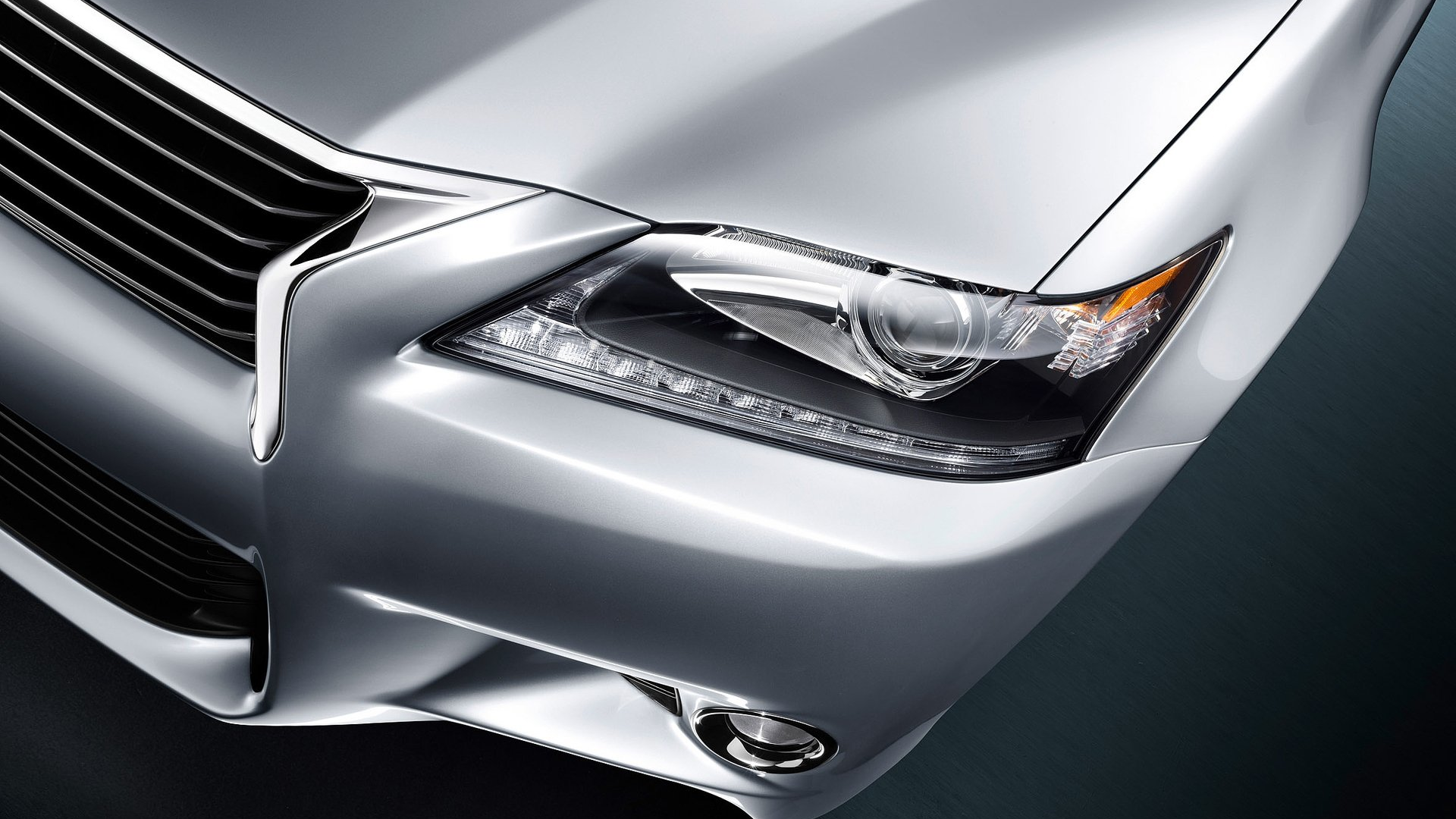
That 2016 facelift made a major change to the GS’s fascia, now restyled with standard Bi-LED headlamps and the design team’s latest take on the Lexus grille. The new front bumper ties in with new rocker panels that sharpen the GS’s coupe-inspired side profile. New wheels, tail lamps, and trim helped round out the updates.
The Lexus Safety System + was newly available for 2016 as well, and the GS 350 with V6 engine received improved power and torque versus the previous year. A new GS 200t RWD model brought a 2-liter turbo engine to the lineup, lowering the GS’s starting price, too. The GS 350h hybrid carried on.

Where nomenclature is concerned, look for the GS 200t with a 241-hp, 2.0-liter turbocharged four-cylinder engine. The GS 350 makes 311 horsepower from a 3.5-liter DOHC V6 with dual Variable Valve Timing with intelligence (VVT-i). The GS 450h hybrid combines output from an Atkinson cycle 3.5-liter V6 gasoline engine and a water-cooled electric motor for 338 total horsepower, making the GS Hybrid the fastest GS you can buy (excluding the exotic V8-powered GS-F).
On models equipped with AWD, a 70-percent rear-wheel torque bias keeps things stable and responsive when the going gets slippery, though a 50:50 power split can be automatically engaged as needed. A special “Snow” mode helps improve traction at the press of a button.

If you’ve never driven a Lexus GS before, you’re in for a treat. This rear-drive-based luxury sedan’s latest generation offered one of Lexus’ most proven engines, and the best take yet on the GS’s cabin with all modern Lexus must-haves on board.
The GS’s signature solid, dense, high-quality feel extends from the switchgear to the ride to the feel of the door handles and radio control knobs. In previous test drives of this car, your writer always appreciated the finer details of the GS’s execution and a feel that helped support its high-end price. I’ll always remember the GS as a machine with an interior, fit, finish, and quality that helped build strong appeal.

On the safety front, new and optional equipment for the 2016 model year update included the Pre-Collision System (PCS) with Pedestrian Detection, Lane Departure Alert (LDA) with Steering Assist, Intelligent High Beam (IHB) and All-Speed Dynamic Radar Cruise Control.
Lane Departure Alert, with Steering Assist enabled, can help the vehicle stay in the center of its lane by smoothly increasing steering torque a small amount to assist in maintaining course. Automatic high beams are also on board. Ditto new colors, the latest multimedia systems, and new wood trim selections that rounded out the 2016 model year update.
This would be the last time Lexus rolled out any significant changes to the GS, which would carry over for the next few years largely unchanged until the end of its run.
Lexus GS Pricing Then Versus Now

Earlier, we outlined why the 2016 model year is such an important one for the context of this feature. The market knows that the 2016 and newer GS has better safety gear, infotainment tech, and styling. Prices reflect this.
In its latest generation, the Lexus GS’s pricing tended to hover around $50,000 each year it was on sale. Today, a hypothetical shopper with $25,000 in their pocket looking for a modern Lexus GS has two paths to consider: pre-facelift or post-facelift. Both can be had for $25,000, though the extra equipment and value in the facelifted model doesn’t come free. In this scenario, the cost of the added equipment for a facelifted GS is a higher odometer reading and possibly a lower equipment level.

Specifically, you’ll find sub-40,000-mile units around the $25,000 mark all day long when searching for a pre-facelift (2013-2015) model year GS. At that same price point, it’s tough to find a facelifted model (2016-2020) with less than 60,000 miles on the odometer. The most well-equipped facelifted units with the highest-performing engines for $25,000 can have upwards of 80,000 miles on their odometers.
If low mileage matters more to you than features and looks, the pre-facelift GS might just be your best value. If a higher odometer reading doesn’t scare you, or if you can cough up a few extra bucks for your budget, a facelifted unit will provide the most modern Lexus GS experience possible.
Is This The More Reliable Mercedes E-Class Alternative You’ve Been Looking For?

The Lexus GS has a well-earned reputation for reliability, thanks in no small part to its extensive use of well-proven, highly produced engines and systems. It also looks delightfully free of wiring and sensor problems somewhat typical of aging European cars. Repairpal.com puts annual costs at $592, versus $788 for an E-Class of the same era.
The E-Class and GS have been competitors for ages, and the E-Class remains on sale today, surviving in a market where the GS didn’t. A look back at some dependability data reveals an interesting point worth consideration for those on the fence.

We’ll use the JD Power Vehicle Dependability Study (VDS) as a reference point. This annual study surveys owners of vehicles that are three years old to find out what sort of problems, hassles and issues they’ve experienced in the past three years. To see how Lexus was doing when the 2013 GS arrived, we need to look at the 2016 JD Power VDS report, since it’s based on 2013 model-year vehicles.
That year, the 2013 Lexus GS and 2013 Mercedes E-Class were the first and second highest-ranked cars in the midsize premium class based on survey data. Lexus was also in top position among all automakers in the study, building the most dependable vehicles on the road. On the other hand, Mercedes was performing above the industry average for dependability, but not quite cracking top-10 territory.
As the GS continued through this generation, Lexus remained an industry benchmark for dependability, year after year. In this same period, Mercedes-Benz continued to drop down the ladder.

To check in on the final model year of the Lexus GS (2020), we can check out the 2023 JD Power Vehicle Dependability Study (VDS). Here, we see Lexus again leading the industry when it comes to dependability. That same year, Mercedes-Benz dependability was ranked well under the industry average, just five places from the bottom of the list. Here’s a closer look at the most reliable E-Class Sedan generations, if you’re curious.
Sources: Autotempest, JD Power, Repairpal