The E39 BMW M5-Powered Supercar That Was Too Gnarly For America

The history of cars is full of obscure, low-volume creations that did not become household names and remain the preserve of die-hard enthusiasts. It’s also full of short-lived automakers, small firms that failed to catch on and only managed to produce a handful of models before folding.
These two elements are combined in one particularly interesting supercar from the archives of automotive history, the Ascari KZ1: the product of a business venture that lasted less than 20 years, this one-of-a-kind car was infused with motorsport DNA and powered by a BMW engine. This is the story of how the KZ1 came to be, and what followed it.
Before The KZ1: The Ascari Cars Story
In 1994, Klaas Zwart, former racing driver and chairman of oil and gas company Petroline, decided to establish his own automotive business with a focus on racing and high-performance cars. The company was named after Alberto Ascari, the Italian Formula One legend who became the first racing driver to claim multiple World Championship titles (in 1952 and 1953).
Ascari is also one of two drivers who won successive titles for Ferrari, the other one being, of course, Michael Schumacher. Ascari’s untimely death on the Monza circuit in 1955 marked the end of a racing career that left a lasting legacy in the world of motorsport. Zwart decided to pay homage to him with the name of his new business.
The first car to bear the Ascari name was the FGT, a concept car created by none other than automotive design legend Lee Noble. A few years later, Noble would launch the automotive company that bears his name, producing iconic sports cars like the Noble M600.
Related
One Of The Best Driver’s Cars In The World Is A Relative Bargain
The Noble M400. A sports car for the people, by the people. A 430 hp smile-per-every-mile kind of car.
Klaas Zwart bought the design of the FGT, which became the car that kickstarted the brand-new company. Having been envisioned for racing, the FGT had a brief career in the world of motorsport, including a win at Silverstone during the 1995/96 British GT Championship season. It was less successful in its attempt at tackling Le Mans, where it failed to qualify.
The company’s first production car, the Ascari Ecosse, arrived three years later in 1998. A modified version of the FGT oriented towards the road rather than the track, the Ecosse was a low-production volume, with only 17 units built with an eye-watering price tag of $150,000. While the concept version of the FGT had been powered by a Chevrolet engine, and the racing version was powered by a Ford engine, the Ecosse underwent yet another powerplant change, opting for a BMW 4.4-liter V8: the start of a collaboration between BMW and Ascari which would later continue with the KZ1.
Ascari’s racing efforts continued over the following years, with the A410 LMP car competing in the European Sports Car series and gaining a single win at Donington Park in 2001. An updated version of the A410 followed two years later: this car was dubbed the KZR-1, and had little success on the racetrack.

Add CarBuzz to your Google News feed.
A Forgotten British Supercar: The KZ1
|
The Ascari KZ1 In Numbers |
|
|
Engine |
4.9-liter V8 |
|
Horsepower |
493 hp |
|
Transmission |
6-speed manual |
|
0-60 mph |
3.7 seconds |
|
Top Speed |
201 mph |
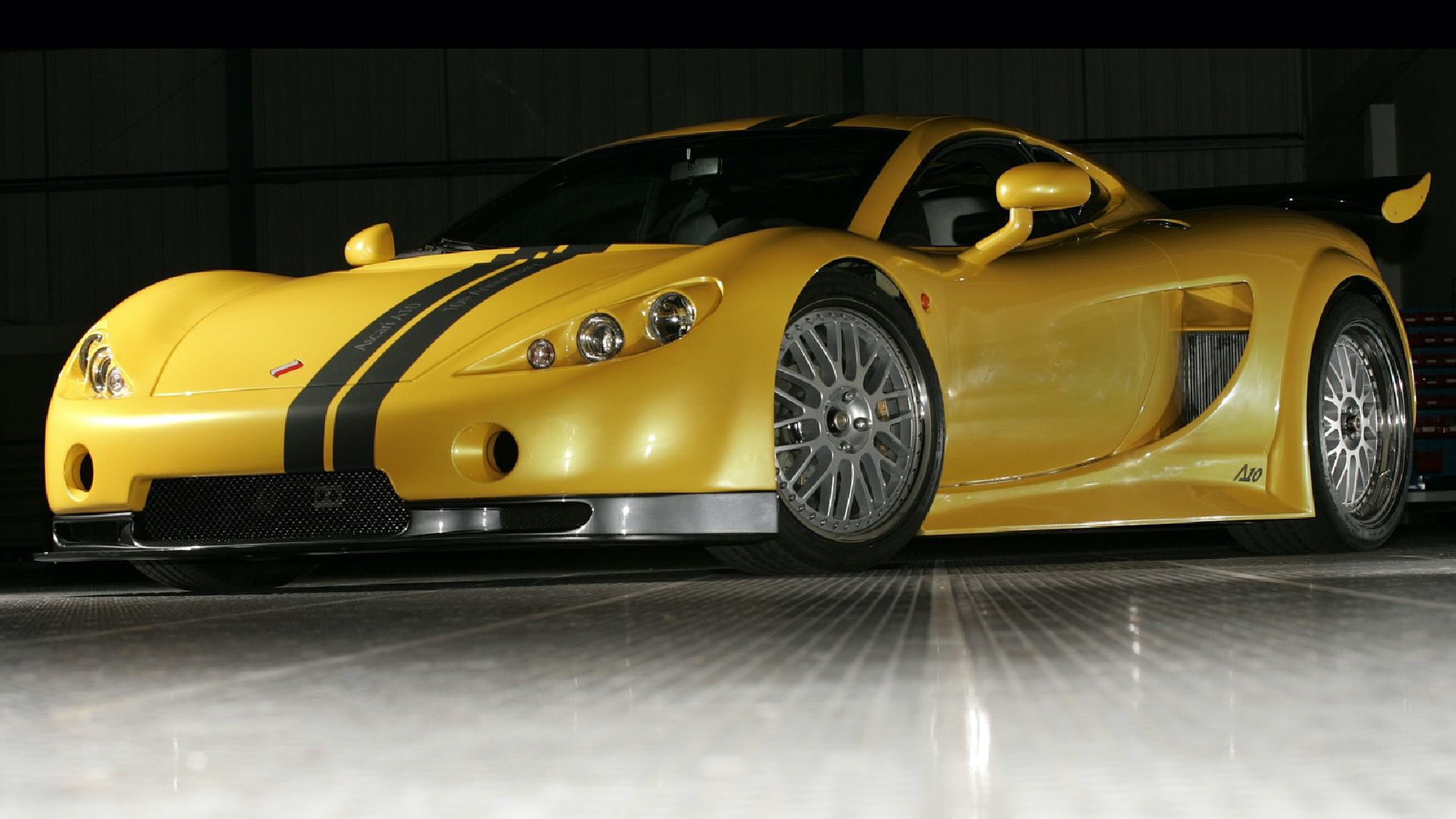
In 2003, Ascari decided to have another stab at the world of road-legal supercars. The resulting effort was the KZ1 (named after the company owner’s initials), which made its debut at the 2005 Autosport International show in Birmingham, UK. If you live in the United States and have never heard of it, it’s because the Ascari KZ1 never made it to the United States. The reasons why it was never exported to the US are not clear, but it’s likely because the financial difficulties that would later kill the company were already beginning to materialize. Ascari also couldn’t afford to give the KZ1 all the basic safety features required by US law, including airbags, ABS, and traction control.
Like the Ecosse, the KZ1 was also a low-production car: this time 50 units were built. The price of the KZ1 was over twice that of the Ecosse, with the cars being sold at $400,000 each; this was partly due to the car’s manufacturing process, which involved a team of 30 skilled craftsmen working on each car for 340 hours.

Related
Ranking Every BMW M5 Generation From Worst To Best
All of them excel, but some carry a more special place in enthusiasts’ hearts than others.
This elaborate process was not enough, however, to prevent quality issues in the KZ1: shortly after the first cars arrived in their new homes, customers began to complain about issues with fit and finish, and a mismatch between the extremely high price and the car’s build quality began to emerge.
That being said, the Ascari had plenty of good sides as well. Its looks were sleek and modern (even with the Peugeot 206-esque headlights, which looked more upmarket than they were when combined with the overall package). The jewel in its crown, however, was the engine: BMW’s S62 engine, the high-performance version of the M62. The S62 had previously been used in the E39 (third-generation) M5, as well as the Z8 roadster.
It was notable in BMW’s history for being the brand’s first V8 engine equipped with the double VANOS system (variable valve timing on both the intake and exhaust camshafts). In the KZ1, the S62 was rearranged to boost power output, from its original 394 hp to 493 hp. While the KZ1 was assembled at Ascari’s own facilities in Banbury, UK, its engine was built in BMW’s factory in Dingolfing, Germany.
Gone Racing: The KZ1-R
Around the same time the KZ1 was making its debut, a racing version also arrived, dubbed the KZ1-R. The KZ1-R was designed to compete in the now-defunct GT3 European Championship and other lower-level sports car championships. It made several improvements on the KZ1, maintaining the road-car character while adding some motorsport DNA into the mix; one feature of the road car that was kept in the KZ1-R, setting it apart from most other race cars, was power steering.
The front of the car was redesigned with a new splitter that maximized downforce. At the rear, the small adjustable spoiler that had featured on the original car was replaced with a large wing for the same purpose. The KZ1-R also has a larger wheelbase, reflected in the rear fenders which were expanded to accommodate the new dimensions.
Weight reduction was achieved thanks to a carbon fiber body and chassis, as well as a stripped-down interior: power windows were removed, Alcantara replaced leather, carbon fiber racing seats were added, and a roll cage was fitted. The KZ1-R used the same S62 engine that powered the road-going version, but this time it was tuned to produce an even higher power output at 513 hp.
After The KZ1: Ascari’s Demise
The success of the KZ1-R on the racetrack prompted Ascari to create a road-legal version, directly inspired by the GT3 race car. This version of the KZ1 was built in 2005 and kept all the additional elements installed on the racing variant, such as the front splitter and rear wing. Performance was also similar, with a slightly slower top speed at 199 mph.
The following year saw the debut of what would remain Ascari’s last model, the Ascari A10. The A10 used a modified version of the carbon fiber chassis already seen in the KZ1-R. The body was also newly created by designer Paul Brown, and incorporated a race-ready roll cage and fire suppression system that adhered to FIA specifications. Other aspects of the A10 marked it out as a car ready to tackle both the road and the track: the removal of creature comforts such as air conditioning, stereo and soundproofing contributed to its very low weight (2,822 lbs).
The production run originally planned for the A10 involved a total of fifty cars produced, in a similar way to the KZ1. However, as the company was already struggling by this point, only a single car was produced, which made an appearance on Top Gear in 2007. This car became part of Klaas Zwart’s own private collection.
The cost of producing Ascari’s cars was extremely high, even rumored to be higher than their list price; eventually, Ascari succumbed to financial pressures, and the company folded in 2010. Ascari’s Banbury factory, however, is still playing a part in the automotive world, now being the home of the Haas Formula One team.
Sources:
AutoZine, Monochrome Watches, Automotive Affairs,
Ascari