
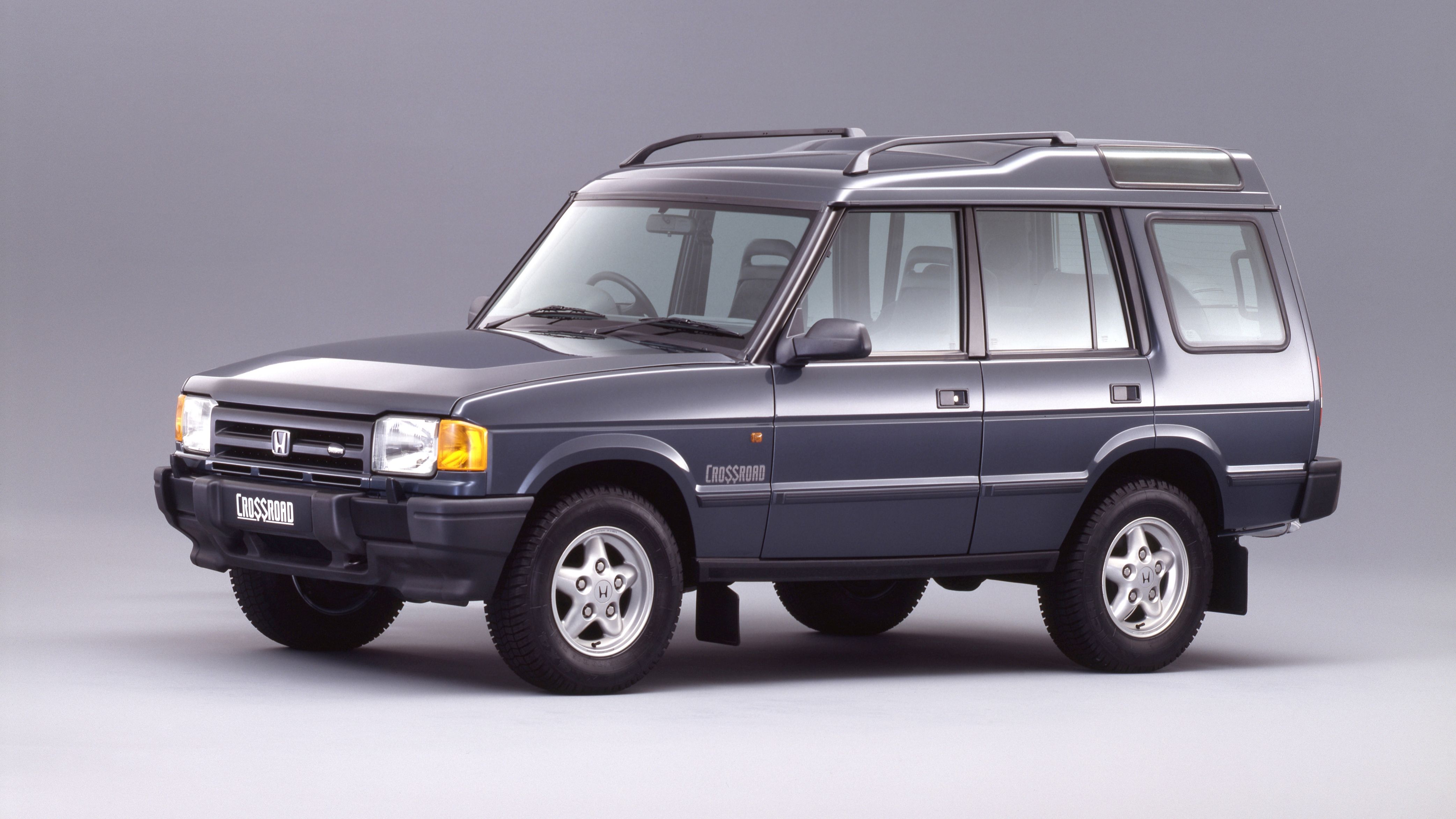
The Hardcore Honda Off-Roader Everyone Forgot About

Honda has only ever had one V8-powered road-going model, an off-road-ready SUV, that wasn’t really a model built by Honda, but borrowed from another automaker. It was called the Honda Crossroad.
Related
The World Deserves Another V8 Honda, Because The First One Wasn’t Even Japanese
Many drivers would love to see one of these engines from Honda, but does Honda want to make one?
This square-bodied SUV resulted from a joint venture between Honda and British Leyland, the parent company of Rover and Land Rover. This partnership shared technology between the two companies and improved sales in foreign markets. It was a short-lived model, one that has been lost to time.
The information, figures, and data included in this article have been sourced from the manufacturer and other reputable sources.
The Only V8-Powered Honda Was A Land Rover
Badge engineering involves rebranding a model for sharing between manufacturers. Examples include the General Motors Firebird – a rebadged Camaro – and the Alfa Romeo Tonale and the Dodge Hornet in the North American market. The Honda Crossroad is an example of badge engineering between Honda and Land Rover, where a car supplied by Land Rover was sold as a Honda.
In the early ’90s, Honda was under pressure from manufacturers like Toyota, Isuzu, and Mitsubishi, which produced 4×4 SUV models, a facet of Honda’s lineup that the automaker lacked. In response, Honda entered the off-road SUV segment by approaching Land Rover to offer a model missing from the automaker’s ranks. Before that, Honda had already partnered with Isuzu to rebrand its Isuzu Rodeo 4×4 SUV model, adopting the Honda Passport moniker for the US market. The full-size Isuzu Trooper SUV was also rebadged as the Acura SLX SUV.

Related
2026 Honda Passport Will Take A Page Out Of The Bronco’s Playbook
The Hyundai Santa Fe rival is ready to go hardcore.
From 1993 to 1998, Land Rover produced the first-generation Discovery, and it was rebadged in the Japanese market as the Honda Crossroad. It wasn’t even a reskin, and looked just like the Discovery save for the different badging. The Discovery I was a version of Land Rover’s first new model series since the Range Rover in 1970. It was the first full line of Land Rover products since the manufacturer’s reintegration into the North American market. This mid-size SUV was available in three-door and five-door configurations, which also applied to the Honda Crossroad. When it debuted in North America, it quickly garnered a significant following, given that it was uncontested in its segment, with more than 70,000 examples sold in the six years since its debut. While Discovery 1 was successful in the North American market, the Crossroad SUV sold in Japan was not.
Land Rover-Sourced Grunt
The Honda Crossroad’s beating heart was the well-known low-revving 3.9-liter naturally aspirated aluminum Rover V8 paired with a four-speed automatic transmission. The V8 engine was a left-field engine configuration in Honda’s ranks, considering that its Integra Type R featured a tiny but mighty 1.8-liter four-cylinder with a redline of 8,400 rpm. Although the North American market equivalent saw success, the Japanese press was reportedly not impressed with the Crossroad.
|
Engine |
3.9L naturally aspirated V8 |
|---|---|
|
Horsepower |
177.5 hp @ 4,750 rpm |
|
Torque |
230 lb-ft @ 3,100 rpm |
|
Transmission |
4-speed automatic |
|
Drivetrain |
4WD w/ low range |
According to reports, the Honda Crossroad became infamous in Japan for its suboptimal performance, poor build quality, and steep asking price. Honda’s reputation for reliability had been sullied by many of the “quirks” of the Discovery 1, with one of the elements that became a chink in the Crossroad’s armor being the V8 engine.

Related
Ranking The Best Honda SUVs For 2024
All of Honda’s SUVs for 2024, ranked by their BuzzScores.
A mixture of poor fuel economy, high maintenance costs, and substandard reliability were the straws that inevitably broke the Crossroad’s back. The Japanese market preferred vehicles that offered good fuel economy, were not too big, and were reliable, so the Crossroad was unfit for the automotive landscape of the Japanese market. Honda’s Crossroad got a rather cool reception from the Japanese consumer base and the media. Its woes were exacerbated by a recall in 1997, caused by a fault with the driver-side door lock that could cause the door to open while the Crossroad was in motion. It was far from a best-selling Honda, with records stating that just around 10,000 models were sold in Japan while it was in production from 1993 to 1998.

Related
Honda HR-V Vs. CR-V: Honda’s Affordable Crossovers Compared
HR-V or CR-V? Discover which 2024 Honda crossover best suits your style, space, and performance needs.
Aside from mechanical issues that plagued the Crossroad, other issues played a role as well with the first generation. One of these was the BMW buyout of the Rover group halfway through the ’90s. This proposed deal didn’t sit well with Honda’s management, nearly causing the early retirement of the Crossroad. Ultimately, the partnership between Honda and Land Rover remained, meaning that the Crossroad models would live on for a few more years before being put out to pasture in 1998. Honda’s V8-powered off-road SUV was far from smooth sailing, and the Crossroad nameplate was shelved by 1999.

Add CarBuzz to your Google News feed.
Encore
It would be almost a decade before the Honda Crossroad nameplate would return, Honda this time ditching the Land Rover partnership and underpinning the off-road-ready SUV with Honda-only parts. The second-generation Crossroad was offered in both SUV and minivan configurations. The three-row derivative measured 168.7 inches from tip to tail and, like the generation that founded the nameplate, was exclusive to the Japanese market.
|
Engine |
2.0L naturally aspirated four-cylinder |
|---|---|
|
Horsepower |
148 hp |
|
Torque |
140 lb-ft |
|
Transmission |
5-speed automatic |
|
Drivetrain |
4WD |
One of the biggest changes introduced to the Crossroad nameplate was the engines used to power the second generation. Instead of Land Rover’s 3.9-liter V8 engine, the new Crossroad models were powered by two variations of Honda’s R-Series i-VTEC four-cylinder engines: a 1.8-liter and a 2.0-liter. Both engines were attached to a five-speed automatic transmission. The updated Crossroad range consisted of five offerings, with the models utilizing the smaller displacement engines positioned as the entry-level offerings and the larger displacement versions curtailing the upper end of the range. The new powertrains remedied some of the previous generation’s reliability issues. The modern R18 and R20 engines improved fuel economy at the cost of the V8’s bottom-end torque.

Related
10 Most Successful Honda Models Ever Built
Honda is a company whose reputation for building great cars is world-renowned. So, here are 10 of their most successful cars ever.
Another change to the mechanical components in the second generation included a new FWD-based AWD drivetrain. The front suspension consisted of McPherson struts aiding in straight-line stability, and the rear suspension consisted of a reactive-link, double-wishbone system offering increased third-row passenger space. The second-generation Honda Crossroad was short-lived as its production was stopped in 2010, just three years after its reveal. The first Crossroad is still the only model in the Japanese automaker’s history to be motivated by a V8, and one of the most controversial and unreliable Hondas ever.
Sources:
Land Rover
,
Honda
, JGS4X4 Land Rover Parts.

