The Mainstream Car Brands Selling the Fewest Vehicles in America

Automakers typically sell a wide range of vehicles to expand their customer base and target different market segments. Toyota, for instance, sells 20 different types of cars in America. And that’s not counting hybrid variants or new offerings, such as the bZ Woodland electric SUV, due to arrive in 2026. Even a luxury SUV specialist like Land Rover sells six different vehicles at different sizes and price points (or nine, depending on how you classify the Defenders).
But some established, mainstream auto brands currently sell far fewer than that. Stellantis, in particular, has four different brands in America selling three car nameplates or fewer – smaller lineups than Maserati. One Japanese automaker is now down to three nameplates as well. Here are the mainstream automotive brands currently selling the fewest cars in the United States.
For this piece, we defined a “mainstream” automotive brand as an established car brand that has been in operation for decades. We discounted brands such as Lucid, Rivian, and Ineos, which are just beginning to expand their lineups, and priced beyond what most people can afford. We focused on vehicles still in production for the 2025 model year. We also tabulated nameplates with multiple powertrain options (i.e., Outlander and Outlander PHEV) as one vehicle.
Fiat
Vehicles Sold In America: 1
|
Vehicle |
Powertrain |
Segment |
Starting MSRP |
|
Fiat 500e |
EV |
City Car |
$30,000 |
Fiat has a robust lineup of small cars that it sells abroad. But the brand only sells one car in the United States market, the 500e electric car. It’s the exact sort of tiny city car manufacturers typically don’t sell in America, packing 117 horsepower and delivering only 141 miles of EV range. The 500e comes in three versions for 2025: the base Inspi(Red) starting at $30,000, the Icona starting at $32,750, and the Georgio Armani Collector’s Edition, starting at $35,500.
What The Future Holds For Fiat
It’s unclear what Stellantis’s plans are for Fiat in the U.S. moving forward. On the plus side, Fiat sales are up 95% year-over-year in 2025. On the minus side, it took 95% growth to get to just 916 units sold. Fiat does not appear to have any plans in the works to expand its American offerings beyond perhaps a hybrid version of the 500.
Chrysler
Vehicles Sold In America: 2
|
Vehicle |
Powertrain |
Segment |
Starting MSRP |
|
Pacifica |
Gas/PHEV |
Minivan |
$42,450 |
|
Voyager |
Gas |
Minivan |
$39,995 |
Chrysler is one of the most prominent names in the American automotive industry. It has been a long-time shorthand for one of the “Big Three.” And visitors to Stellantis North America’s HQ still turn onto “Chrysler Dr.” But the brand itself – despite celebrating its 100th anniversary – has fallen a bit by the wayside. Chrysler axed the 300 sedan. And Chrysler is now a minivan-only marque. The Pacifica has been in the lineup since the 2017 model year. For the 2025 model year, Chrysler brought the Voyager back from fleet-only production to provide a (slightly) cheaper van option.
What The Future Holds For Chrysler
Chrysler had an EV planned based on the Airflow concept. Chrysler has put that EV on a hiatus. The Pacifica will stay in the lineup with another refresh for 2026. And Chrysler reportedly has a new hybrid crossover and a potential passenger car based on the Halcyon concept.
Dodge
Vehicles Sold In America: 3
|
Vehicle |
Powertrain |
Segment |
Starting MSRP |
|
Charger |
Gas/EV |
Full-size Car |
$59,595 |
|
Durango |
Gas |
Midsize SUV |
$38,495 |
|
Hornet |
Gas/PHEV |
Compact SUV |
$31,400 |
Dodge currently offers three vehicles in America. The brand revived the Charger as an electric car, with a “Sixpack” combustion version on the way. The Durango SUV, in production since 2010, remains strong with a new V8-only lineup. Dodge also sells the Hornet, a rebadged version of the Alfa Romeo Tonale crossover.
What The Future Holds For Dodge
Dodge reportedly pushed its Durango overhaul back from 2027 to 2029. The Hornet hasn’t been a huge seller. And Dodge dealers are now offering massive discounts to help move the Charger Daytona. The brand will hope the new combustion Chargers, potentially powered by Hemi V8s, resonate.
Alfa Romeo
Vehicles Sold In America: 3
|
Vehicle |
Powertrain |
Segment |
Starting MSRP |
|
Stelvio |
Gas |
Midsize SUV |
$48,995 |
|
Giulia |
Gas |
Compact Sedan |
$43,995 |
|
Tonale |
Gas/PHEV |
Subcompact SUV |
$36,535 |
Alfa Romeo’s triumphant return to America in the 2010s stalled out. The brand still sells the same Giulia sedan and Stelvio crossover it launched in the mid-2010s. Though neither car offers the fire-powered Quadrifoglio versions craved by enthusiasts anymore. Alfa Romeo also sells the smaller Tonale crossover. Combined, the three vehicles sold a total of 3,164 units through the first half of 2025.
What The Future Holds For Alfa Romeo
Alfa Romeo’s future remains a bit cloudy. According to the latest reports, replacements are coming for the Stelvio SUV in 2026 and the Giulia sedan in 2027. Alfa Romeo has backed off from its goal of going all-electric by 2027. So those cars should get hybrid and, potentially, outright combustion-powered variants. Alfa Romeo has not announced changes for the American market. But rumors persist.
Mitsubishi
Vehicles Sold In America: 3
|
Vehicle |
Powertrain |
Segment |
Starting MSRP |
|
Outlander |
Gas/PHEV |
Midsize SUV |
$29,995 |
|
Eclipse Cross |
Gas |
Compact SUV |
$27,345 |
|
Outland Sport |
Gas |
Compact SUV |
$24,445 |
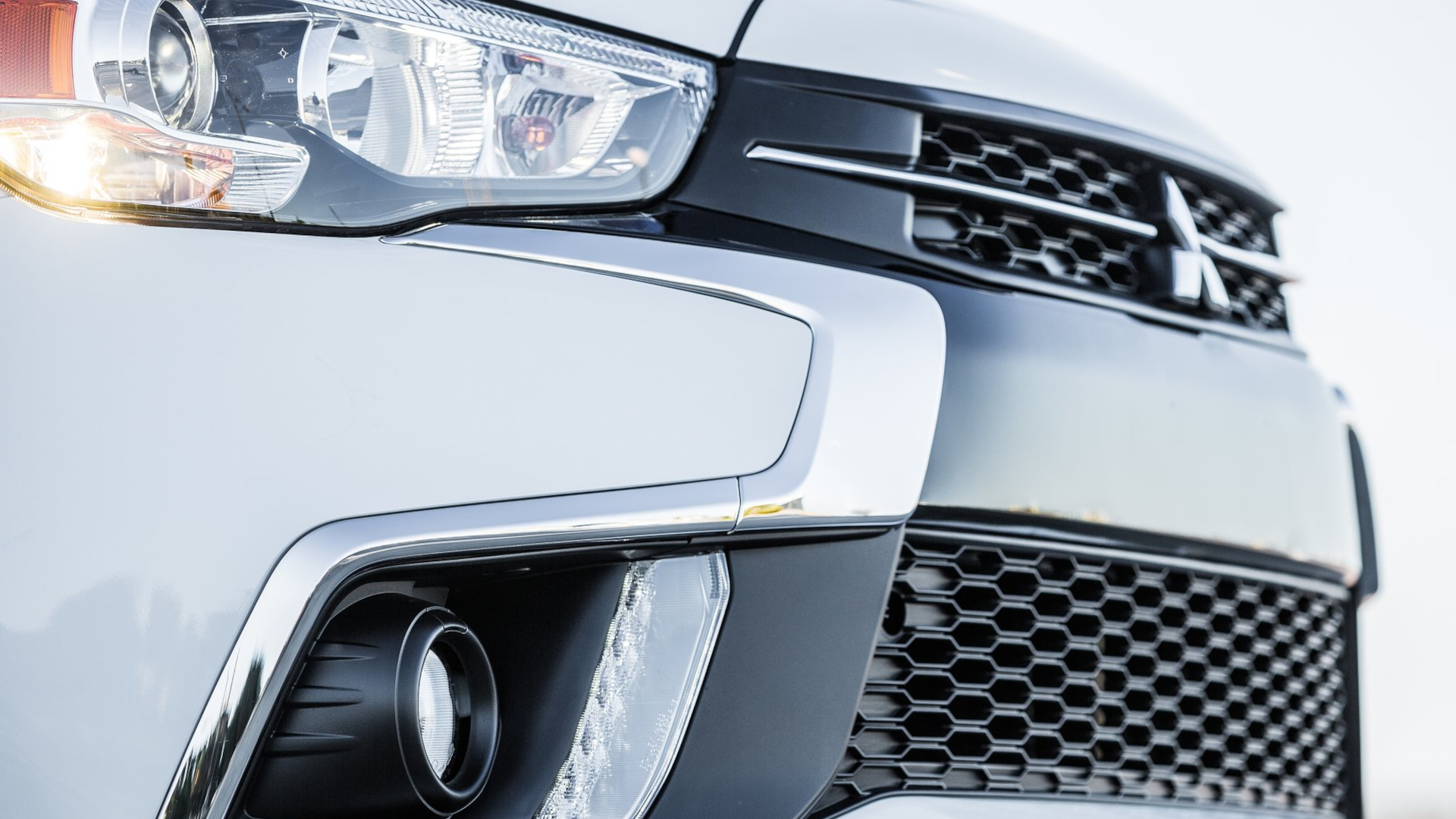
Japanese automakers have excelled at importing and building cars within the United States. Brands like Toyota and Honda have dominated (to the point of shoving American manufacturers out of) some segments. Mitsubishi has been an exception to that rule. The Eclipse and Lancer Evo are long gone. The affordable Mirage left the lineup after 2024. Mitsubishi is now down to just three crossovers: the Eclipse Cross, the Outlander (offered in gas and PHEV versions), and the Outlander Sport.
What The Future Holds For Mitsubishi
Back in 2024, Mitsubishi unveiled an ambitious product plan called Momentum 2030. It called for new vehicle launches every year from 2026 to 2030, including a smaller PHEV crossover and two entries into new segments: potentially a production van version of the D:X concept and a new pickup truck. What we don’t yet know is how much momentum the changing climate, combined with U.S. tariffs, has sapped.