The Mid-Engined Ferrari V8 Hot Hatch You’ve Never Heard Of

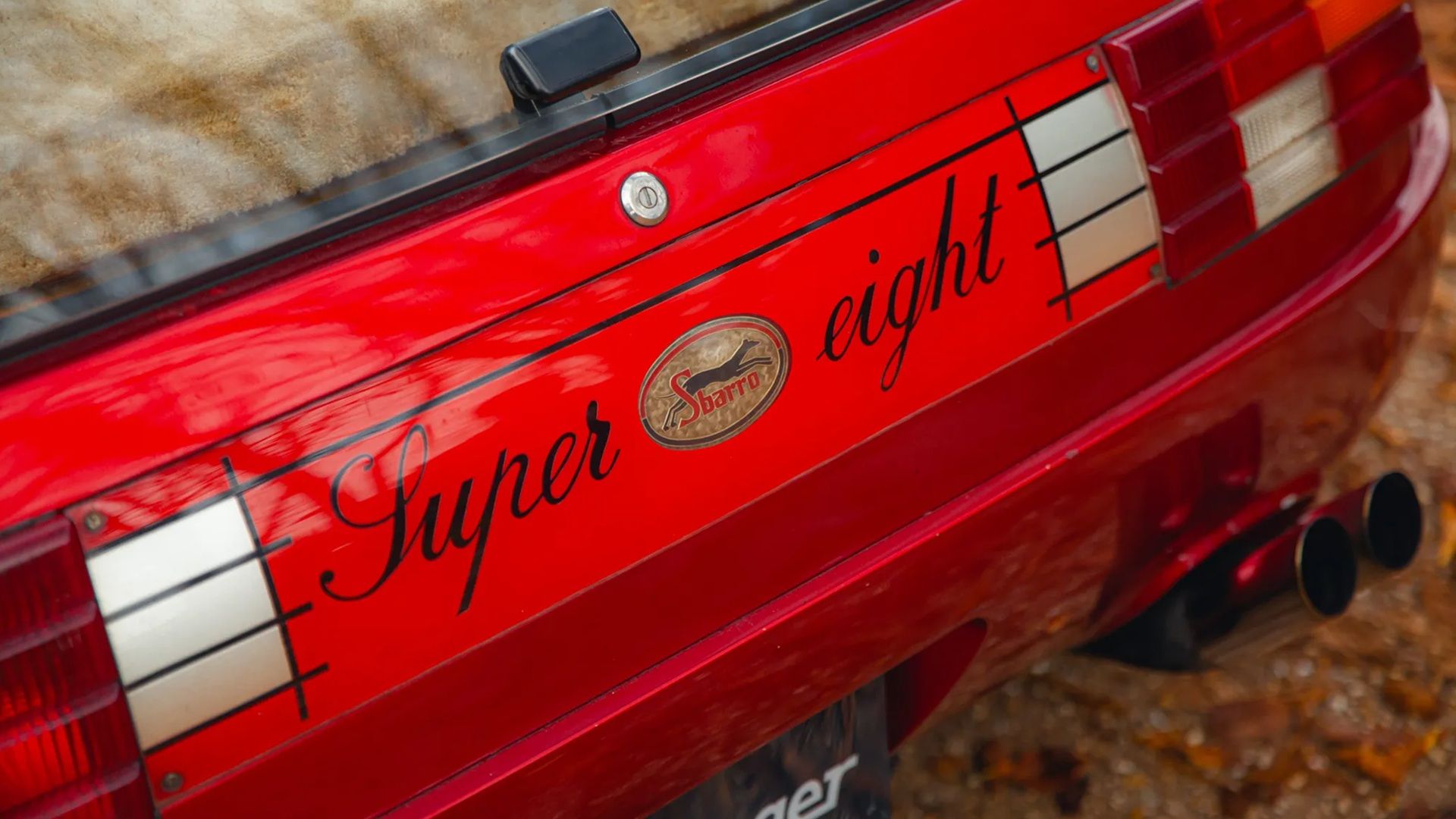
While performance cars from established manufacturers such as Ferrari and Porsche are welcomed by gearheads all over the world, there’s nothing quite like a random coach-built example that combines random ingredients you’d never have thought to try. Cars like the Alfa Romeo Disco Volante fall into this category. Small Swiss engineering company named Sbarro decided to take this approach to heart during the 1980s, as he felt strapping a Ferrari V8 within the body of a hot hatch was a good idea.
Ferrari
Ferrari is an Italian manufacturer of sports cars, supercars, and luxury grand tourers founded by and named after Enzo Ferrari in 1939 – originally as Auto Avio Costruzioni due to legal complications with Alfa Romeo. Ferrari famously only produced roadgoing sports cars as a means of funding its racing exploits, which include multiple F1 World Championships and wins at Le Mans and various other prestigious races. Today, Ferrari is one of the most valuable brand names in the world, limiting production of its highly-sought-after models to maintain desirability, which is in no short supply when they’re powered by some of the world’s most advanced V6, V8, and V12 engines.
The finished product was eventually completed in 1984, and it was truly a sight to behold. Here is its story.

Related
Rolls-Royce Won’t Let Just Anyone Commission A Coachbuilt Car
Discover the four-year process of a hand-selected Rolls-Royce Coachbuild car.
This feature explores the Ferrari-powered Sbarro Super Eight one-off vehicle and how it first came about. All technical data was sourced from Ferrari, as the engine was completely unchanged before being bolted into the Super Eight.
Sbarro Built Special Cars For Special People
Sbarro was founded by Franco Sbarro in 1971, the Italian having worked as an engineer for the Scuderia Filipinietti racing team in the 1960s. The squad competed in Formula 1 every now and again, but mainly focused on competing in various sports car racing series during the period. Ex-F1 supremo Bernie Ecclestone is working on selling his entire collection of F1 cars too, including cars that the team raced against. Feeling his destiny went beyond working on race cars, Sbarro founded his company to develop replicas of race cars, and later his own bespoke creations.
He dealt with some high-profile projects too, with his company converting legendary race cars like the 1966 Ford GT40 and the Lola T70 for road use. His work eventually began to attract rich gearheads who wanted something a little bit different from the run-of-the-mill Lamborghinis and Ferraris, such as Swiss-based industrialist Bernd Grohe. He wanted a one-off hot hatch unlike anything that had come before, and he felt a Ferrari V8 would be the perfect running mate for the vehicle.

Add CarBuzz to your Google News feed.
Having outlined his hopes and dreams, as well as a decent chunk of his bank account to Sbarro, the engineering firm got to work on developing the special hot hatch. Following a busy development period, the finished Super Eight was delivered to Grohe in 1984. What resulted was a truly fascinating little car.

Discussion
Discussion: Would you rather have three custom Chirons for the price of one Bugatti Centodieci?
At around $3 million, you could buy three Chirons for the price of one Bugatti Centodieci. Both the Chiron and Centodieci are spectacular hypercars, but the latter is incredibly rare, with just ten units made. The Centodieci pays tribute to the EB110, and its 1,578-horsepower W16 engine is even more powerful than the normal Chiron’s. At this level, exclusivity takes precedence over rationality. For that reason alone, we’d choose to park one ultra-rare Centodieci in the garage. What about you?
The Underpinnings From A Ferrari 308 Were Utilized
Rather than start from scratch, Sbarro decided to use the foundations and powertrain from a Ferrari 308, which had been in production since 1975 and was the first non-V12 production Ferrari. The Pininfarina-designed body from the 308 was binned, and the car’s frame and powertrain were retained for use in the Super Eight. The chassis was first shortened so that the desired fiberglass body could be placed over the top of it, something that in theory should make the hot hatch lighter and that bit more agile in the bends.
|
1984 Sbarro Super Eight Specifications |
|
|---|---|
|
Engine |
2.9-liter V8 |
|
Power |
240 hp |
|
Torque |
192 lb-ft |
|
0-60 mph |
N/A |
|
Top Speed |
136 mph est. |
The 308s 2.9-liter F106 V8 was left completely untouched, meaning it produced the same 240 hp as the Italian sports car. It was also fuel-injected, making it quite technologically advanced engine available at a time when many powerplants still utilized less efficient carburetors. The grunt was sent to the Super Eight’s rear wheels via the 308s five-speed manual transmission too, so no bespoke powertrain parts needed to be manufactured. It was also mounted in the middle of the car, like in the 308.

Related
The Ferrari 308M Is A Stunning $600,000 Restomod
Maggiore reimagines an icon for the modern era.
The Sbarro Cannibalized As Many Parts From The 308 As Possible
Aside from the chassis and powertrain, Sbarro also made sure to make use of the expertise poured into the handling of the Ferrari 308. The ventilated disc brakes were saved and used on the Super Eight, as was the finely-tuned double-wishbone independent suspension setup utilized on the front and rear of the vehicle. This came twinned with a set of coilover springs, while the front and rear roll bars were also retained to stiffen up the chassis and reduce body roll.

Related
Ferrari V8-Powered Subaru WRX STI Rally Car Defines Insanity
This little sucker howls.
While the Super Eight was an exact replica of a 308 in terms of its mechanical underpinnings, the same couldn’t be said for the interior and exterior.
The Super Eight Had A Bespoke Body And Cabin
To make the hot hatch dream a reality, the lightweight two-door fiberglass body was styled with typical 1980s angular lines. While the front looked to have drawn inspiration from the Fiat Uno of the time, the rear end looked to have borrowed queues from the Renault 5 Turbo and the 1960s Reliant Scimitar shooting brake.
While perhaps not conventionally pretty in the way of a Ferrari, its aggressive styling, helped by the ultra-wide rear arches, and bright red paint scheme allowed it to stand out from the crowd. The exterior aesthetic was completed by a set of gold 15-inch BBS alloy wheels, which were wrapped in Yokohama road tires.
The Interior Contained The Cream Of 1980s Audio Tech
In terms of the cabin, Sbarro went down the elegant and luxurious route with the trimmings. The seats were covered in tan leather and cloth, which was also used on the door trims. Alongside this, wood trim was applied to the top of the doors and dashboard. Even the center console was colored tan, giving it a completely different vibe to the loud exterior.

Related
Retro Citroen 2CV Van Homage Is A Modern Coachbuilt Oddity
Here’s how you look hella stylish while delivering eggs in France.
The cabin decor was completed with a MOMO sports steering wheel which – surprise, surprise – was also wrapped in tan leather. Despite being treated to plush trimmings, Grohe obviously didn’t feel the need for any kind of temperature control, as the Super Eight doesn’t come with a heater or air conditioning. It does at least get power windows, as well as an elaborate Clarion sound system. The quad-deck setup includes a cassette player and even an equalizer, ensuring there were fewer ways to get better quality Guns N’ Roses other than seeing them live.
Sbarro Also Built A 12-Cylinder Hot Hatch
Interestingly, the Super Eight wasn’t the first hot hatch Sbarro had built. Two years earlier, the company unleashed the Super Twelve on the world. Its body was very similar to the one used for its less powerful successor, with the main difference being that the car was more aggressively wedge-shaped. The headline act here was its 2.6-liter inline-12 powerplant, which was created by combining a pair of Kawasaki six-cylinder motorcycle engines. This isn’t the first time motorcycle engines have been used to power cars, either.
|
1982 Sbarro Super Twelve Specifications |
|
|---|---|
|
Engine |
2.6-liter I12 |
|
Power |
240 hp |
|
Torque |
170 lb-ft |
|
0-60 mph |
5.0 seconds |
|
Top Speed |
178 mph est. |
They were run via a chain-drive system, while a pair of five-speed boxes were combined to work with a single gear lever. Despite possessing 12 cylinders, the engine was only rated at around 240 hp by Sbarro, making it as powerful as the smaller unit used in the Super Eight. Like its successor, the inline-12 was mounted in the middle of the Super Twelve to help improve weight distribution.

Related
When High-End Luxury Is Too Basic: Rolls-Royce Bespoke Vs. Coachbuild
Because too much is never enough.
Despite not being very powerful, it only weighed 1,800 pounds. This allowed it to reach 60 mph in only 5.0 seconds, though the engine didn’t provide the smoothest power delivery and combined with the light weight, made it tricky to drive. Sbarro therefore decided to use the smaller V8 powerplant in the Super Eight, which had more torque and was smoother. Sbarro is still in business to this day, continually offering mad vehicles for a wide range of customers and businesses. If you fancy a side-wheel drive VW Golf with a V7 engine, you know whom to call.
Sources:
Sbarro
.