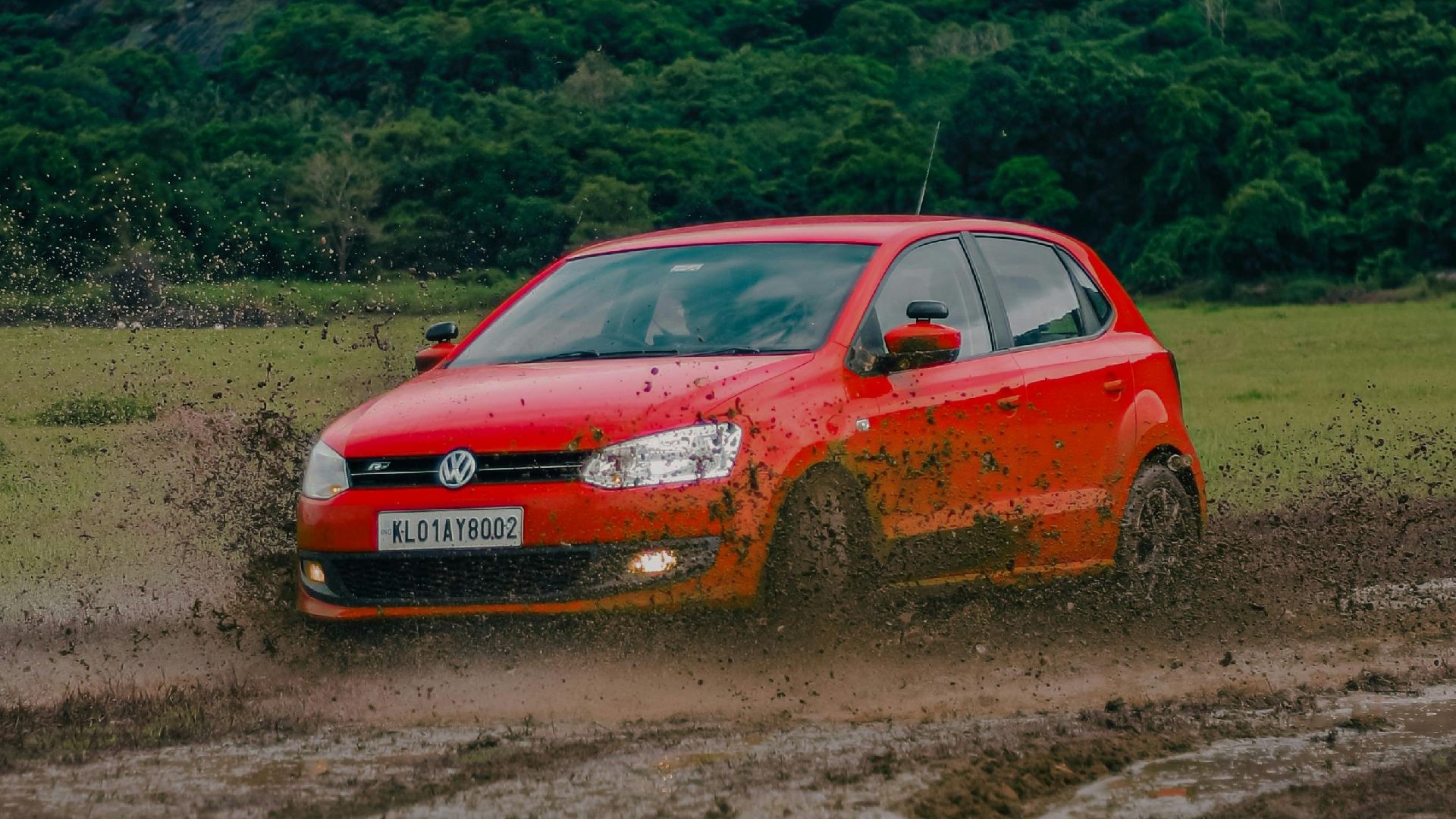
The Ultimate Guide To Driving In Mud

For many drivers, especially those who could be called more “casual” about their automotive enthusiasm, inclement weather and the conditions it spawns can be the bane of their existence. For some drivers, snow and rain is enough of a deterrent to force these drivers to change all but the biggest and most important of plans, and understandably so; after all, a car is essentially a functional bomb wrapped up in anywhere from 1 to 2.5 tons of metal at best, shrapnel at worst. Yet mud is often the forgotten child in discussion of these inclement conditions despite being one of the most dangerous and difficult to drive in.
In the right conditions, a mud patch can combine the worst characteristics of quicksand and a patch of ice; it’ll offer no traction for your wheels to spin on while also sinking your vehicle deeper and deeper into its clutches with each attempt at escape. While options like a 4-wheel-drive system with 2H, 4H, and 4L modes, a rear differential lock, lightweight design, and more in vehicles like the Isuzu D-Max pickup can certainly help drivers get out of a sinking situation, there’s also some prep work and decision-making drivers shoudl keep in mind whenever driving in mud.
10 Pack For The Mud
One of the simplest yet most effective things drivers can do when knowing they’ll be driving in muddy conditions is to simply pack a bag of helpful tools and items in advance. For example, a tow strap can be invaluable when attempting to rescue a stuck vehicle, as can shovels, traction aids (such as planks of wood or formal recovery boards), and more. One often overlooked piece of equipment which is good to have is some form of portable air compressor. This will allow for adjustments to tire pressure on the fly, ensuring that drivers can maximize their chances of escaping mud depending on how the rescue operation unfolds.
9 Check Your Tires

On that note, checking one’s tire pressure before driving in any scenario where mud will be involved is equally essential, as is ensuring the proper type of tire is being used. All-terrain or mud-terrain tires will help with improving traction and grip on the slippery ground, being specifically designed to do so whereas regular all-season tires (which are not the same as all-terrain) will likely fail in any scenario involving mud. There are also some mud tires which offer larger, self-cleaning threads, ideal for dispersing mud and ensuring the tire is achieving the maximum friction coefficient with the ground at all times. As should be expected, tires are one of the most important factors when it comes to the trials and tribulations to be expected driving in mud.

Add CarBuzz to your Google News feed.
8 Engage 4WD Mode

As mentioned above, a 4-wheel-drive system is especially invaluable when it comes to driving in mud. Whereas an all-wheel-drive system delivers equal power to all four wheels all the time (albeit with some exceptions like BMW’s xDrive system), a 4-wheel-drive system gives the driver the ability to decide which tires are getting power and how much power they’re getting (in a range). For example, if the two rear wheels are sunk but the front two are on solid ground, it’ll be easier to rescue the vehicle by switching to 2-wheel-drive than trying 4-wheel. The 4H (4-high) and 4L (4-low) options also shine in different scenarios; the former is suited for general muddy conditions, whereas the latter is useful for deeper or thicker mud by generating much more torque at a much slower rotational wheel speed.

Related
4WD vs. AWD: What’s the real difference between these two?
While both configurations can power all four wheels simultaneously, four-wheel-drive vehicles are typically suited for proper off-roading, with technologies like low-range transfer cases. On the other hand, all-wheel-drive vehicles are generally intended for regular road use, but with superior grip and traction in slippery conditions. AWD also benefits many high-performance cars that would otherwise struggle to put down their power to a single axle.
7 Maintain Steady Momentum

Much like snow, mud is also one inclement condition which drivers finding themselves stuck in will want to avoid any form of sudden acceleration or breaking. Such massive and sudden shifts in weight and momentum can end up sinking a car deeper down, or even create a scenario where the car lurches forward, but now fully out of the driver’s control. By keeping a smooth, steady pace, it’ll help to avoid wheel spin and sinking by giving the tires as much time as possible to find something to grab onto. This is especially important for deep mud, as going pedal to the metal will only dig a further hole for each of the vehicle’s four corners to get nice and cozy in.
6 Keep Your Wheels Straight

Much like its wintry cousin snow, drivers will also want to keep their wheels as straight as possible when trying to escape mud. By turning in mud, it’ll create more movement and shift in the terrain, in turn creating pockets which can further buckle under the vehicle’s weight and sink it further. Thick mud especially will prove problematic, as any amount shifted by turning the wheels is likely to encroach back in and completely surround the tire in its entirety. While it may seem counterintuitive, staying on the straight and narrow is the best way to boost chances of escaping mud, especially thick, deep patches.
5 Use The Rear Differential Lock

As mentioned above, a rear differential lock is one of the most invaluable options a vehicle can have when driving in muddy conditions. A differential lock forces all wheels on the locked axle to spin at the same speed. For example, if the right rear wheel has found traction in the mud, but the left wheel is just spinning with no traction, locking the two can ensure the right tire helps creep the car out while keeping the left tire slow enough to grab any possible traction it may find. There’s also an inherent increase in traction generally by ensuring both wheels move together, helping vehicles to power themselves out of mud (especially when paired with a 4-wheel-drive system).
4 Avoid Over-Revving

Similarly to how maintaining steady momentum by avoiding sudden braking or acceleration is key, drivers will also want to find a sweet spot in terms of power and acceleration depending on the situation they find themselves in. While there certainly are situations where one may want to overrev the engine, this will generally hurt in most cases by spinning the wheels too fast and essentially turning them into mud shovels. Drivers will need to feel out the situation through their vehicle, discerning when traction is high and when it starts to slip based on their current power output. Doing so effectively is key to escaping mud, even with all the help and tools in the world.
3 Recovery From Stuck

Even if all of the above steps are followed to a tee, however, there are unfortunately some scenarios where the mud will prove victorious, seemingly leaving a vehicle bogged down and stuck. However, panicking is the last thing drivers should do. Instead, start by gently rocking the vehicle back and forth by providing moderate acceleration in alternation forward and reverse gears. This will help shift and compact the mud the vehicle is sitting on, possibly creating traction where it didn’t exist before. Some of the aforementioned packed tools can also prove invaluable, like recovery boards/wooden planks and a shovel which can be used to shift and compact mud deliberately by hand.
2 Post-Mud Cleanup

After a successful return to pavement, the last thing owners will want to do is stick true to the old adage “ridden hard and put away wet.” While paint damage is one obvious consequence of letting mud linger, it can also quicken the rotting process every vehicle will eventually go through. This is especially true for the vehicle’s undercarriage, and even more so for wheel wells and brake systems. By thoroughly cleaning a vehicle after exposing it to muddy conditions, owners are ensuring that their vehicles not only look good again, but will avoid potential long-term damage. A thorough detailing also offers another key invaluable benefit in the form of…
1 Inspect for Damage

…inherently forcing owners to thoroughly inspect their vehicles and discover any potential damage as a result. Even the tamest of muddy terrains have the possibility of causing significant damage, such as from something as simple as a 4k rpm tire flinging a rock up into the undercarriage and frame. Obvious spots to inspect are the general undercarriage, suspension, and tires, but drivers should also pay especially close attention to steering and braking systems. Failures in either of these areas would be worthy of the adjective “catastrophic,” and could endanger not only the driver, but others around them if these failures happen on the open road. At a minimum, owners should inspect these systems themselves, but having their statuses verified by professionals at dealerships or shops is certainly worth it for the safety of themselves and others.
Sources:
Isuzu