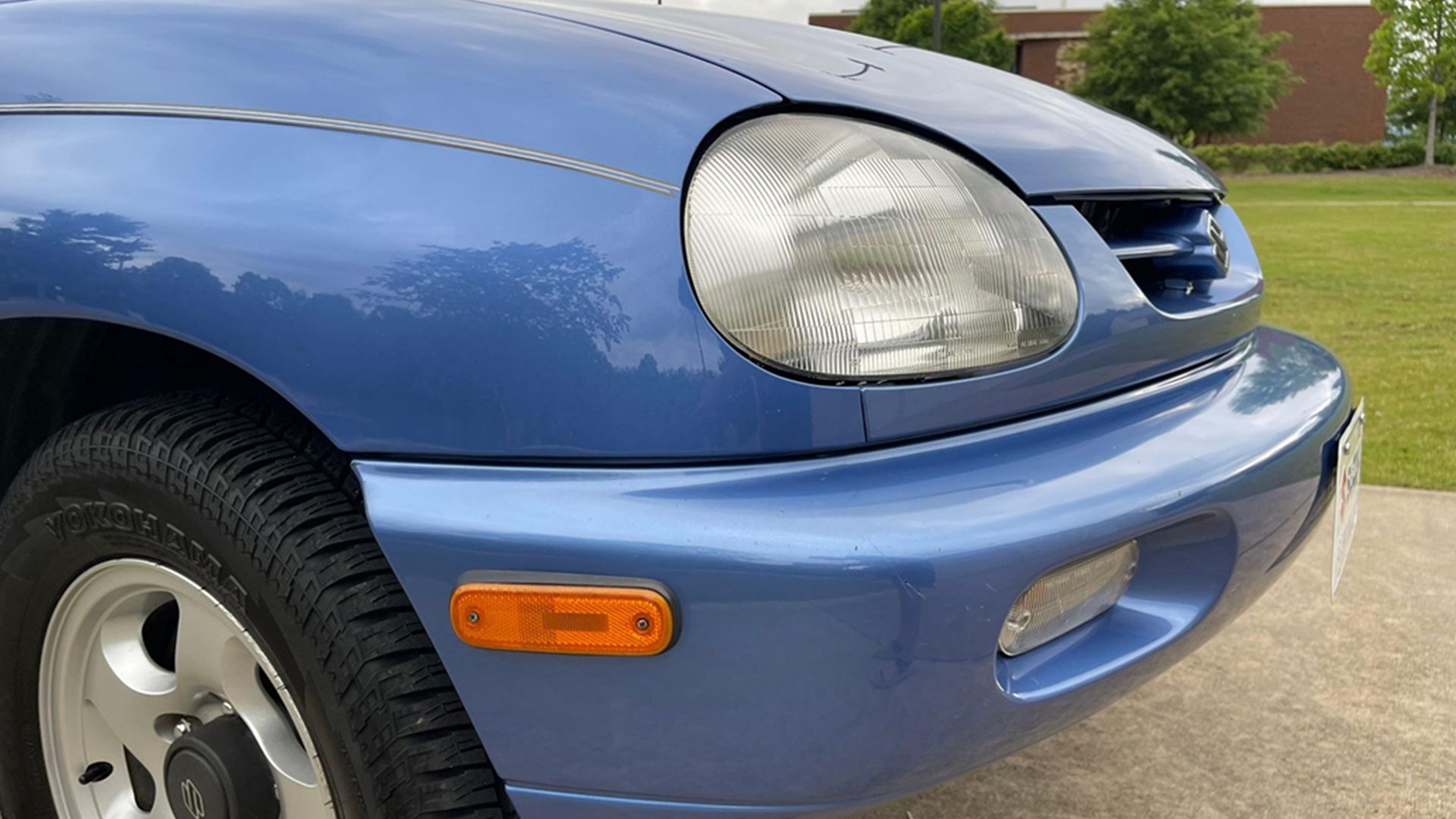
The Weird Japanese Car That Was Half Sports Car, Half Convertible SUV

The performance SUV market is huge in 2025, with options like the Lamborghini Urus and the BMW XM being available as brand-new offerings, while cars like the BMW X5 M and the Mercedes-Benz ML55 AMG stand out as tempting used bargains. The segment remained largely a dream in the mid-1990s, though Japanese brand Suzuki decided to offer an example of sorts.
Available Models
Designed to look like a sports car, its X-90 was penned to floor the world. It did just that, but not for the reasons Suzuki desired.
The X-90 Was Designed To Establish A New Breed Of SUV
While modern performance SUVs lean more into the SUV part of the bargain, but also offer uprated engines and suspension to make them more capable when going for a spirited drive, Suzuki wanted to go for a more even split with its X-90. At the time of its conception in 1995, a sporty SUV mostly constituted a standard model with a more spritely powerplant. Some vehicles, like the GMC Typhoon, went against this logic, but it was true for the most part.
The Mazda MX-5 had exploded in popularity since it was unleashed onto the world in 1989, so Suzuki had the seemingly bright idea to try and offer a small SUV that could tackle off-road trails, but also looked and drove like a small sports car like the MX-5. Aside from this, it was also designed to be affordable, with the X-90 starting from just over $15,000 when it reached the US in 1996. This translates to a little over $31,000 in today’s money.
The Foundations Of The Marque’s Sidekick Were Utilized
Things didn’t exactly start out promising from a sporting standpoint, as Suzuki decided to use the underpinnings of its rugged Sidekick mini-SUV – which was more rugged in appearance than the planned X-90 – to build upon. While it offered a decent base for an off-roader, the Sidekick didn’t offer the most dynamic driving experience in the world. Suzuki wanted the X-90 to tempt younger drivers who wanted to experience a range of life’s pleasures, so it needed to thrill them on the open road before being able to deal with swampy roads on the way to the lake.
It did the latter bit well, though it was far from an engaging drive on the open road. Its body also split opinion, as it was too tall to work as a sports car, but too curvy to work as a rugged and cool off-roader. It was also impractical, as it only had seating for two and was equipped with a small 8.3 cubic foot trunk, which made it difficult to use when going to the beach or lake, as you could carry very little. This was reduced to 6.2 cubic feet when the Targa top roof panels were removed and stored, though the option to have the wind flowing through your locks was nice to have.

Discussion
Are high-performance SUVs really all that?
An SUV is the kind of vehicle you buy when you have a family and need room for everyone and all their stuff, along with the ability to tow. Some are more off-road focused while others go for luxury, but there are also those that go hard on performance, like the Dodge Durango SRT. It isn’t a sports car, but it does have a ton of power. Would you buy one, or is it a fool’s errand to buy a performance SUV?
The X-90 Wasn’t Fast, Either
Aside from the challenging looks and lack of practicality, the X-90 couldn’t offer a sports car experience either. It was shipped with a naturally aspirated 1.6-liter inline-four engine from the Sidekick, which was also once badged as a Chevrolet, that provided just 96 hp. This was connected to either a five-speed manual gearbox or a four-speed auto unit. Whichever transmission you opted for, you’d be lucky to reach 60 mph in under 11 seconds, and you’d eventually run out of puff just after 90 mph.
|
1995-1998 Suzuki X-90 Specifications |
|
|---|---|
|
Engine |
1.6L NA I4 |
|
Power |
96 hp |
|
Torque |
98 lb-ft |
|
0-60 mph |
Est. 11 seconds |
|
Top Speed |
94 mph |
|
Ground Clearance |
6.6 inches |
The X-90s Sidekick Underpinnings Meant It Didn’t Corner How It Looked
The trouble with designing a small SUV that is meant to look like a sports car, is that drivers will also be expecting it to handle like one. The use of a live – or beam – axle on the rear did little to enhance its sporting pretensions, while its suspension was set up more to deal with off-road challenges than on-road ones. The X-90 tended to suffer more body roll than you’d expect from a normal sports car, while its lack of grunt ensured it couldn’t thrill its occupants on the straights either.

Related
The Swedish SUV Built On The Bones Of A Chevy Trailblazer
When a svelte Swede marry a beefy American, the result can be quite intriguing, as can be seen with the curious case of the Saab 9-7X.
So, to sum up: the X-90 didn’t really look like a sports car, and it didn’t handle or accelerate like one, though it at least captured the impractical nature of one. It’s not sounding particularly compelling at this point, though it did come with at least one ace up its sleeve.
Suzuki’s Sporty SUV Could Get The Job Done Off-Road
In its quest to ensure the X-90 could excel off-road, Suzuki equipped it with a handy four-wheel-drive system that could switch between utilizing only the rear wheels on the road, before then switching to using all four when things got tough. It may not have been able to match the Toyota RAV4’s 8.0 inches of ground clearance (the X-90 coming with just 6.6 inches of clearance) but it was still enough to get the job done.

Related
Suzuki Samurai: Revisiting The Popular Baby Wrangler
This little rig has been big business for Suzuki, so it is worth telling the tale of its origins, features, and legacy.
Its small size and lack of extra seating meant it was light, too, with the manual version weighing in at just over 2,300 lbs, meaning it could skip over rough terrain like a mountain goat. The X-90 was an impressive little off-roader, though the Sidekick it was based on already had this box ticked. The X-90 was an interesting idea, but the execution of everything aside from its off-road ability fell too flat to make it a compelling choice.
The X-90 Was A Flop, But Is Now A Bargain Used Buy
As a result, the little X-90 failed to capture the public’s attention. It only lasted for a little over two years before finally being put out of its misery, during which time just over 7,200 examples were shipped to the US. The X-90’s reputation has had little reparation done in the nearly 30 years since it disappeared, and as a result, its value on the used market remains at an all-time low.

Related
Six-Wheel Suzuki Jimny Has More Tires Than Cylinders
The coolest truck you’ll see this week.
|
1995-1998 Suzuki X-90 Used Values |
|
|---|---|
|
KBB |
$2,130–$2,381 |
|
Classic.com Average Auction Sale Cost |
$8,116 |
|
Highest Sale |
$14,555 |
|
Lowest Sale |
$3,700 |
According to Kelley Blue Book, early 1996 X-90s can be had in good condition for around $2,000, while later 1998 models should demand around $2,500 from your wallet. Cars in better condition and with fewer miles on the clock perform better on the used market, as illustrated by Classic.com, a site that collates auction listings from around the world. A good example is a gold 35,000-miler X-90 that was sold through Bring a Trailer in mid-2023, which managed to attract $9,200. As the Suzuki was a thoroughly usable car, most cars were utilized consistently by their owners, meaning there are very few low-mileage examples left on the market.
This provides a great opportunity to get one for a bargain price, even if just to experience it for a summer before moving it on to a new buyer. The X-90 may have been a complete failure for Suzuki, but it’s still an interesting and affordable used specimen that stands out that bit more from a typical Toyota RAV4 or Sidekick.
Sources: Suzuki