
Unlikely Automotive Heroes That Mattered More Than You Think

Once in a while, a car comes along that changes paradigms or even creates new ones. It can happen at a company level, a brand level, or at an industry level, and the cars usually turn up with little fanfare and take time for their importance to emerge. Early examples include the Pontiac LeMans, which, with the addition of a performance package, suddenly invented the muscle car segment in the 1960s.
Lexus
Founded in 1989, Lexus is a premium automaker created by Toyota as a rival to Mercedes-Benz and BMW. Its first model, the Lexus LS, became renowned as a true S-Class rival at a fraction of the cost and is known as one of the most reliable cars in the world. Subsequent models from the brand have achieved equal fame, including the IS, RX, and LX. With global sales of 824,258 cars in 2023, Lexus has become a prime example of how a start-up can enter the premium space and succeed, something few rivals have managed since.
- Founded
-
1989
- Founder
-
Eiji Toyoda, Toyota
- Headquarters
-
Nagoya, Japan
- Owned By
-
Toyota Motor Corporation
- Current CEO
-
Takashi Watanabe (President)
If we go even earlier, we can point to the BMC Mini, which became a cultural phenomenon and created the city car by turning the engine sideways under the hood and mounting the transmission underneath. You can also point to something like the Chrysler Plymouth Voyager and Dodge Caravan that saved Chrysler and created an entirely new mainstream segment for the auto industry. These days, Chrysler only sells minivans and nothing else. Not all the cars we’re talking about here hit as big as the above examples, but they are also not the kind of cars you would assume to be automotive heroes.
This article was originally published in 2022, but has been updated with the latest information available in 2025.
6
Lexus LS400
|
1990 – 1994 Lexus LS400 |
|
|---|---|
|
Engine |
4.0-liter NA V8 |
|
Horsepower |
250 hp |
|
Torque |
260 lb-ft |
|
Transmission |
4-speed automatic |
In the 1980s, Honda created its Acura brand to sell more upmarket cars. However, Acura’s cars were still front-wheel-drive and not quite in the premium market that was ruled by the German brands Mercedes, BMW, and Audi. Japanese cars were still synonymous with economy and reliability, but then came the Lexus LS400, arguably the best Lexus ever built.
The LS400 was designed in secret with no budget or time restriction. Six years later, it debuted at the North American International Auto Show as a 1990 model and was regarded as an expensive Japanese sedan as opposed to a less expensive luxury car, despite being rear-wheel-drive and V8-powered. However, Lexus had aimed it squarely at the Mercedes-Benz S-Class, and the automotive media started to catch on to what the LS400 was.
Later on, we would realize that the LS400 was the birth of world-class Japanese luxury cars that could compete with European examples in features and ride quality and beat them on price.

Related
The Lexus-Rivaling Luxury Sub-Brand From Mazda You Didn’t Know Existed
Lexus had the LS, but what Mazda nearly had could’ve been so much greater. But the odds were always stacked against the Japanese brand.
5
Range Rover
|
1970 – 1994 Range Rover |
|
|---|---|
|
Engine |
3.5-liter NA V8 |
|
Horsepower |
135 hp |
|
Torque |
185 lb-ft |
|
Transmission |
4-speed manual |
It’s hard to believe that the Range Rover’s original mission statement was simply to be a more comfortable vehicle than the original Land Rover Series. The 1969 model had two doors, enough space in the back for a farmer to lob in a bale of hay, and leaf spring suspension for the driver as he traversed his land around the farm. It was a utilitarian affair inside with vinyl seats, plastic dashboards, and minimal carpeting. It was far from the ultra-luxurious off-roader we know now, but its story is truly one of rough cotton to silk.
Gentrified British landowners soon saw the value of the original Range Rover as a way to get around their estates for shooting, fishing, and when the staff was busy, lugging around a bale of hay. It wasn’t long before those landowners started driving their Range Rovers with its plush suspension into London for the weekend, where they would stay in upmarket hotels or their city homes.

Related
Land Rover Range Rover Generations: Everything You Need To Know In One Place
The Range Rover has been synonymous with luxury off-roading for years, blending opulence, top-class finishes, and excellent rough-it capability.
City dwellers started to notice, and the Range Rover became a status symbol popular in rich areas of London like Kensington and Chelsea (Hence the nickname “Chelsea Tractor”) and branched out from there. This didn’t go unnoticed by Land Rover, and in 1981, the first-generation Range Rover gained two more doors. The second generation moved upmarket in the mid-1990s, and the luxury 4×4 had been born. Land Rover still acknowledges this with the Velar name – it was originally the codename given to the prototypes back in the 1960s. The OG Range Rover spawned an entire genre of off-roaders that place luxury above all else.
4
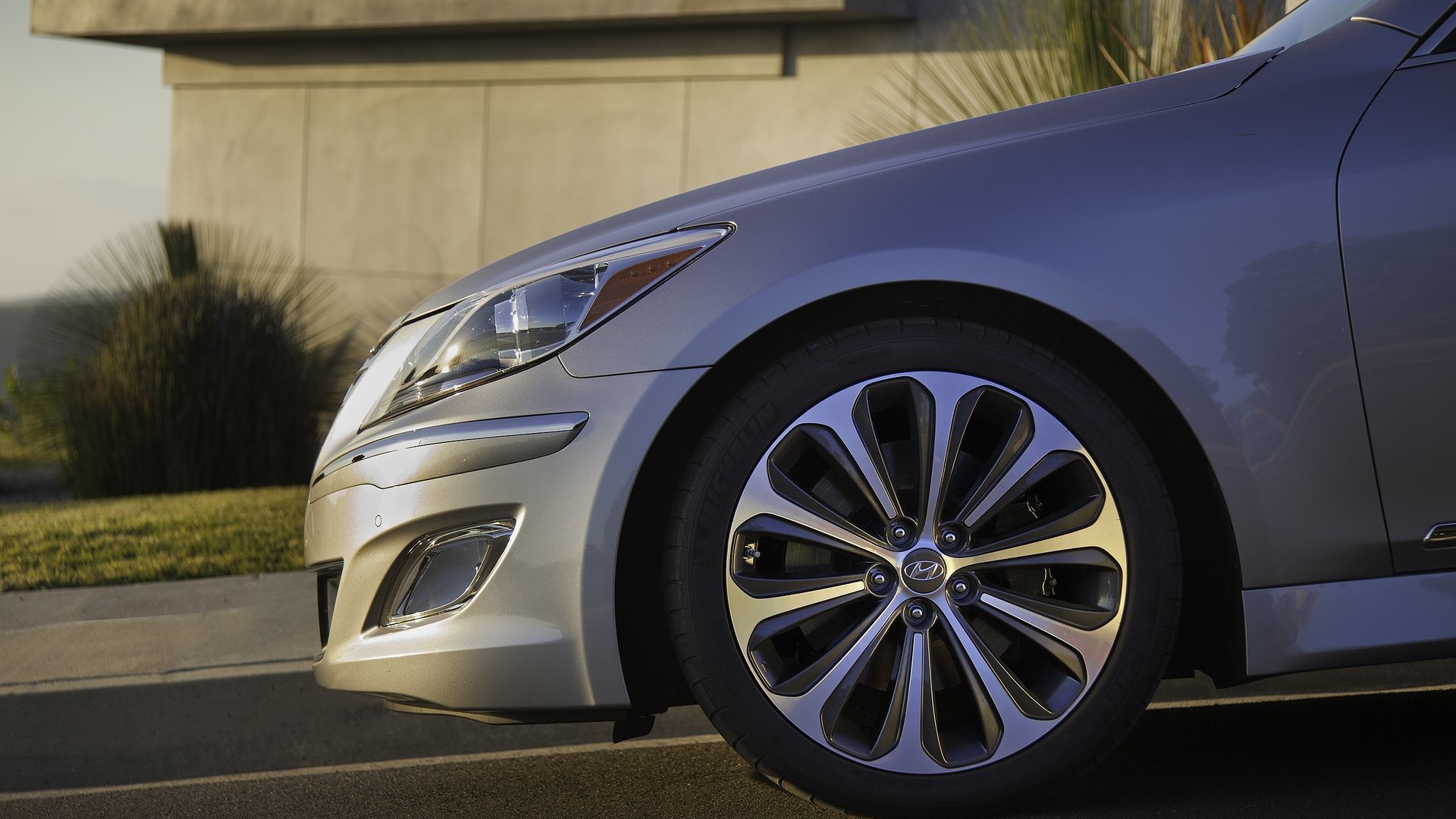
Hyundai Genesis
|
2012 Hyundai Genesis |
|
|---|---|
|
Engine |
5.0-liter NA V8 |
|
Horsepower |
429 hp |
|
Torque |
376 lb-ft |
|
Transmission |
8-speed automatic |
Hyundai broke into the US market with entry-level pricing, just as Ford, GM, and Chrysler effectively abandoned the segment. Fortunately for Hyundai, the Excel was a sales success for the brand. Unfortunately for owners of the Excel, it created the joke that Hyundai stood for “Hope you understand nothing’s drivable and inexpensive.” To cut a long story short, Hyundai has spent a lot of time and money changing that perception by building better cars.
The tipping point for Hyundai was the 2001 Tiberon, which was a sporty coupe that had both decent power and build quality. That paved the way for an unlikely car – the Hyundai Genesis.
In the same way that the Lexus LS400 showed that Japanese brands could do luxury, the Hyundai Genesis showed that the South Korean brands were capable of building a premium sports sedan. Moreover, Hyundai created the Genesis Coupe to show it could do an upmarket and engaging sports coupe as well. The two cars’ surprise success and consumer demand for the Genesis name led Hyundai to spin it off into a stand-alone luxury brand that, with products like the Genesis G90, is now going toe-to-toe with BMW, Mercedes, Audi, and Lexus. The brand has now grown to a point where it even wants to take the fight to Rolls-Royce, not to mention building a series of high-performance models under the Magma banner.
3
Honda Insight
|
1999 Honda Insight |
|
|---|---|
|
Engine |
1.0-liter 3-Cylinder Hybrid |
|
Horsepower |
73 hp |
|
Torque |
91 lb-ft |
|
Transmission |
5-speed manual |
The Toyota Prius might be the poster car for hybrid technology, but the Honda Insight came to the US first and has a list of achievements that shouldn’t be forgotten. It debuted with an EPA rating of 53 mpg combined. Currently, the Prius Prime logs in at 55 mpg. The Prius stole the show, but those ratings are from when the Insight went into production in 1999.
To get there, Honda created a lightweight aluminum monocoque chassis reinforced with more aluminum, and its body weight was half as heavy as a three-door Civic of the time. Also, to shave weight off, the original Insight came with aluminum front brake calipers and rear drums, aluminum wheels, and a plastic fuel tank. With the manual transmission option and no air-conditioning, the original Insight comes in at a featherweight 1,878 pounds, lighter than any mass-production car available in the US today.
2
Volkswagen Touareg
|
Volkswagen Touareg R50 |
|
|---|---|
|
Engine |
5.0-liter V10 Turbocharged Diesel |
|
Horsepower |
346 hp |
|
Torque |
627 lb-ft |
|
Transmission |
6-speed automatic |
The Volkswagen Touareg has been a low-key option for anyone in the market for a premium midsize crossover since 2002. The platform was developed by Volkswagen as a joint venture to underpin the Porsche Cayenne and stretched to help create the Audi Q7. As a result, the first-generation Touareg had some awesome powerplants available to turn it into a perfect sleeper.
You could option a 4.2-liter V8, and between 2005 and 2010, a W12 was also available, making 444 hp and 443 lb-ft of torque. No sales are recorded of the W12 version in the US, but we did get the oddest option – a 5.0-liter V10 TDI engine making just over 300 hp and a massive 553 lb-ft of torque.
To double down on its unlikely hero status, the Touareg went into its second generation in 2010 and, along with the Audi Q8, spawned the Bentley Bentayga and the Lamborghini Urus.

Related
10 Of The Best Diesel Engines Ranked By Torque Output
Take a look at some of the most forceful diesel engines ever developed.
1
Suzuki Samurai
|
1985 Suzuki Samurai |
|
|---|---|
|
Engine |
1.3-liter NA four-cylinder |
|
Horsepower |
45 hp |
|
Torque |
54 lb-ft |
|
Transmission |
4-speed manual |
The Suzuki Samurai was and maybe still is, hands down, the most underrated off-roader in the world. Sure, taking one off-road is the closest you can come to experiencing how a pea in a tin whistle feels, but its small size and absurd amount of agility let it go places larger, more technically advanced, and more expensive 4x4s couldn’t.
In 1985, it came to the US with a price tag of just $7,500 for the top trim, powered by a 63-hp 1.3-liter engine. Unfortunately, Consumer Reports rolled one in “routine road conditions,” and sales started to plummet. When Suzuki sued, Consumer Reports settled and, as part of the agreement, said, “never intended to imply that the Samurai easily rolls over in routine driving conditions.”

