What is Named Entity Recognition (NER) in Voice Agents?

Entity Recognition (NER) in Voice Agents
Named Entity Recognition (NER) is a crucial component in the functionality of AI voice agents, enabling them to identify and categorize specific pieces of information within a conversation. This technology allows AI to extract meaningful data, such as names, locations, dates, organizations, and numerical values, from spoken language. By incorporating NER, voice agents can improve accuracy, provide personalized responses, and enhance overall user interactions.
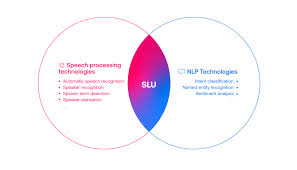
NER works by processing speech-to-text (STT) outputs and analyzing the transcribed text to detect predefined entities. When a user speaks to a voice agent, the system first converts the spoken words into text. Then, the NER model scans the text to identify key entities and categorize them appropriately. For example, in a query like “Book a flight to New York for next Monday,” NER would recognize “New York” as a location and “next Monday” as a date. These recognized entities help the AI understand the request and generate an accurate response.
One of the primary advantages of NER in voice agents is its ability to handle complex user queries efficiently. Human conversations often contain multiple pieces of information in a single sentence, requiring AI to extract relevant details accurately. Without NER, a voice agent might struggle to distinguish between different elements in a request, leading to confusion or incorrect responses. By implementing NER, AI can break down sentences into meaningful components, ensuring that it captures and processes essential details correctly.
What is Named Entity Recognition (NER) in Voice Agents?
Another key benefit of NER is its role in personalization. Many Automated Al voice agent evaluation and benchmarking, such as virtual assistants and customer service bots, use NER to recognize user-specific data, such as names and account details. If a user asks, “What’s my bank balance?” the AI may need to associate the request with a specific account. By using NER to detect the user’s name and other identifying information from previous interactions, the AI can deliver a more personalized response while maintaining security and accuracy.
Context-awareness is another area where NER plays a significant role. In natural conversations, words and phrases can have different meanings depending on the context. For instance, the word “Apple” could refer to the fruit or the technology company. An advanced NER model considers the surrounding words and context to determine the correct meaning. This ability helps voice agents avoid misinterpretations and enhances their comprehension of complex requests.
Despite its advantages, NER faces challenges in voice recognition due to speech variations, accents, and ambiguous phrasing. To improve performance, AI developers train NER models on diverse datasets, incorporating different linguistic patterns and real-world conversational data. Continuous learning and AI model updates ensure that NER remains effective, even as language evolves.
Named Entity Recognition is an essential technology in AI voice agents, enabling them to identify critical details, process user queries accurately, and enhance interaction quality. By leveraging NER, voice agents can provide more precise responses, improve personalization, and better understand user intent. As AI voice technology continues to advance, NER will remain a fundamental component in delivering efficient and intelligent voice-based interactions.