What is the role of inductors in RF PCBs?

role of inductors in RF PCBs
Inductors play a crucial role in RF (Radio Frequency) PCBs (Printed Circuit Boards), contributing to the efficient functioning of high-frequency circuits. These passive components store energy in the form of a magnetic field and are widely used in a range of RF applications, including signal processing, filtering, and impedance matching. The role of inductors in RF PCBs is multi-faceted, helping to shape signal integrity, reduce noise, and control power delivery in systems like communications, radar, and wireless networks. In this article, we will explore the specific functions of inductors in RF PCBs and their impact on overall performance.
One of the primary functions of inductors in RF PCBs is in the creation of filters for signal processing. RF circuits typically handle a broad spectrum of frequencies, and not all of them are desired for a particular application. Inductors, in combination with capacitors, are often used in low-pass, high-pass, band-pass, and band-stop filters to isolate and pass only the frequencies of interest. These filters are essential for removing unwanted noise or interference from the signal, ensuring that the final output is clear and precise. For example, in a communication system, a band-pass filter with inductors and capacitors allows the desired communication frequency to pass through while blocking signals from other frequency bands.
Inductors also play a vital role in impedance matching within rf pcb. Impedance matching is critical in RF circuits because any impedance mismatch between components, such as antennas, transmission lines, and receivers, can lead to signal reflections, loss of power, and reduced efficiency. Inductors help achieve impedance matching by providing an appropriate reactance at specific frequencies, thereby ensuring that the signal is transmitted with minimal loss. In applications where the impedance of different circuit elements does not match, inductors are used in series or parallel configurations to fine-tune the impedance and improve the overall system efficiency.
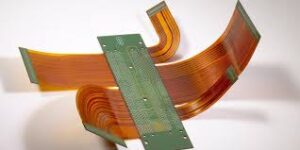
What is the role of inductors in RF PCBs?
Another key function of inductors in RF PCBs is in the management of power delivery and energy storage. Inductors can be used to smooth the power supply in RF circuits, particularly in high-frequency switching power supplies. By storing energy in their magnetic fields, inductors help smooth out voltage fluctuations and provide a stable supply of power to the circuit. This is especially important in RF systems where stable voltage is essential for maintaining signal quality and reducing noise. Additionally, inductors are used in voltage step-up or step-down converters, such as in DC-DC converters, which are commonly used to provide regulated power to sensitive RF components like amplifiers or mixers.
Inductors are also employed in tuning circuits for RF applications. RF tuners adjust the frequency response of the circuit, enabling it to select or resonate at specific frequencies. Inductors, often in combination with capacitors, are used to create resonant circuits that allow for precise tuning to the desired frequency. This is particularly important in applications like radio receivers or transmitters, where selecting the correct frequency is necessary for clear and accurate communication. Inductors provide the inductive reactance needed for tuning, making them integral to the performance of these circuits.
In addition to these primary functions, inductors help in reducing electromagnetic interference (EMI) and improving the overall noise performance of the RF circuit. As inductors are passive components, they can be used to block unwanted high-frequency noise and prevent it from affecting other parts of the circuit. By strategically placing inductors within the PCB layout, designers can ensure that the RF signals remain clean and unaffected by external electromagnetic disturbances, which is particularly important in applications such as wireless communication and radar systems.
Finally, inductors are also important in maintaining stability in RF circuits. The high-frequency nature of RF signals makes the circuits susceptible to instability, which can cause signal distortion, oscillations, or even complete failure. Inductors, when placed correctly in the circuit, help maintain the stability of the system by providing controlled reactance and ensuring that the signal flows as intended without unexpected fluctuations.
In conclusion, inductors play a critical role in RF PCBs by facilitating signal filtering, impedance matching, power management, energy storage, tuning, noise suppression, and stability. Their ability to store and release energy in the form of a magnetic field makes them indispensable in high-frequency applications. Whether in communication systems, radar, or wireless networks, inductors ensure that RF circuits operate efficiently, with minimal signal loss or interference, thereby improving the performance and reliability of the entire system. Understanding the function and placement of inductors in RF PCBs is essential for designing circuits that meet the stringent demands of high-frequency applications.