Why Car Reliability Discussions Always Turn Into A Dumpster Fire

We love a good reliability survey because it’s the one thing we can’t speak about in a new car review. We can tell you about everything else, except whether it will last. Thankfully, organizations like J.D. Power conduct surveys, speaking directly to owners to determine how reliable their new vehicle has been. But J.D. Power is often accused of taking money from the highest bidder, even though their methodology is clearly stated. That argument also goes out the window when you realize what J.D. Power’s actual business model is. Various industries (automotive, financial, healthcare, home, insurance, technology, travel, and utilities) all pay to gain access to information provided by customers. These industries use these large-scale surveys to improve their customer-facing solutions.
Apart from the nonsensical “fake news” comments, there are also the “lived experience” contributors: “My uncle’s best friend’s cousin’s mom was walking her dog one day and saw a shop where 15 Nissan Frontiers were waiting to be fixed.” I mention the Nissan Frontier because our research shows that it’s the most reliable midsize pickup truck made in the last 10 years. That upset quite a few people, but not as much as the article that named the Nissan Titan the most reliable pickup truck built in the last 10 years.
We’ve been in this industry long enough to know a few things about reliability, so sit back while we drop some knowledge.
Some Brands Are Simply More Reliable Than Others
Naturally, we’re talking about the two most famous reliable brands in history: Toyota and Honda. Any study worth reading will have these two somewhere near the top, and there’s a very good reason for this. Both Honda and Toyota are extremely pragmatic when it comes to introducing new technology. Instead, they’ll constantly refine an engine over decades. A prime example is the Honda K Engine, which has been in production since 2001. And we’re willing to bet Toyota would still be building the Toyota 1/2/3UZ-FE if environmental legislation didn’t kill it off.
If you look at a list of the most reliable engines ever made, you’ll see they were refined over years. The only anomaly is Jeep’s 4.0-liter straight-six, developed in just 26 months. But it was a simple engine, which is another key attribute in the convoluted world of reliability.
Another key attribute that goes hand-in-hand with reliability is tolerance levels. The best example of this is the famous Toyota Land Cruiser. Not the luxurious off-roader recently introduced to the US market, but rather the 70 Series still sold in Third World countries and via industrial sales in the rest of the world. While other automakers will have a 20% tolerance built into a part, the 70 Series takes it to another level.
If the claimed load capacity of a 70 Series is 5,000 pounds, you can easily chuck another 2,500 lbs on there. Toyota simply builds certain models knowing that they’ll be abused, which is why Top Gear was famously unable to kill a Hilux. This has led many Toyota fans to believe that the Japanese brand makes the most reliable cars, period. But it wouldn’t be fair to acknowledge the robust 70 Series and not acknowledge all the times Toyota failed.
Even The Best Brands Build Lemons Sometimes
Even Toyota makes an appearance on the list of the biggest pickup truck recalls in automotive history. To be fair, it was because of the infamous floor mat recall. Still, in recent history, we have seen Toyota slip up big time. First, its first EV’s wheels literally came off, and bz4X owners had to wait months for a solution. It would be comical if it weren’t so tragic. Here was the automotive brand most synonymous with reliability, and it couldn’t figure out how to put wheels on a car properly.
Still, it’s a low-volume EV, and at least Toyota knows how to build a V6 for a pickup truck, right?
As it turns out, Toyota can also get that wrong. Over 100,000 Toyota Tundras and Lexus LXs were left with metal shavings in their engine blocks and to make matters worse, dealers weren’t willing to trade these cars while Toyota was looking for a solution. And now the all-new Tacoma is suffering from gearbox problems.
To be clear, we’re not picking on Toyota. We’re merely pointing out that even brands synonymous with reliability can make the odd mistake. As far as recalls go, Ford is still way in the lead over the last few years, and it will probably claim the title for doing the most for a fourth year in a row.
Every Car Has The Potential To Hit A Million Miles
Unless you drive an Alfa Romeo, every car can hit a million miles. Once again, this is not a dig at Alfas. I own one, and no matter how much you spend on maintenance, it’s just sitting there on the driveway wondering how much money it’s going to cost this month. It’s my lived experience.
We’ve seen loads of engine teardown videos and, in 99% of cases, an engine fails because an owner fails to put down the cash for routine maintenance. Sure, it’s not that expensive to do an oil change, but once you need to change timing belts and water pumps, the price increases dramatically. So you let it go, hoping that it won’t become an issue.
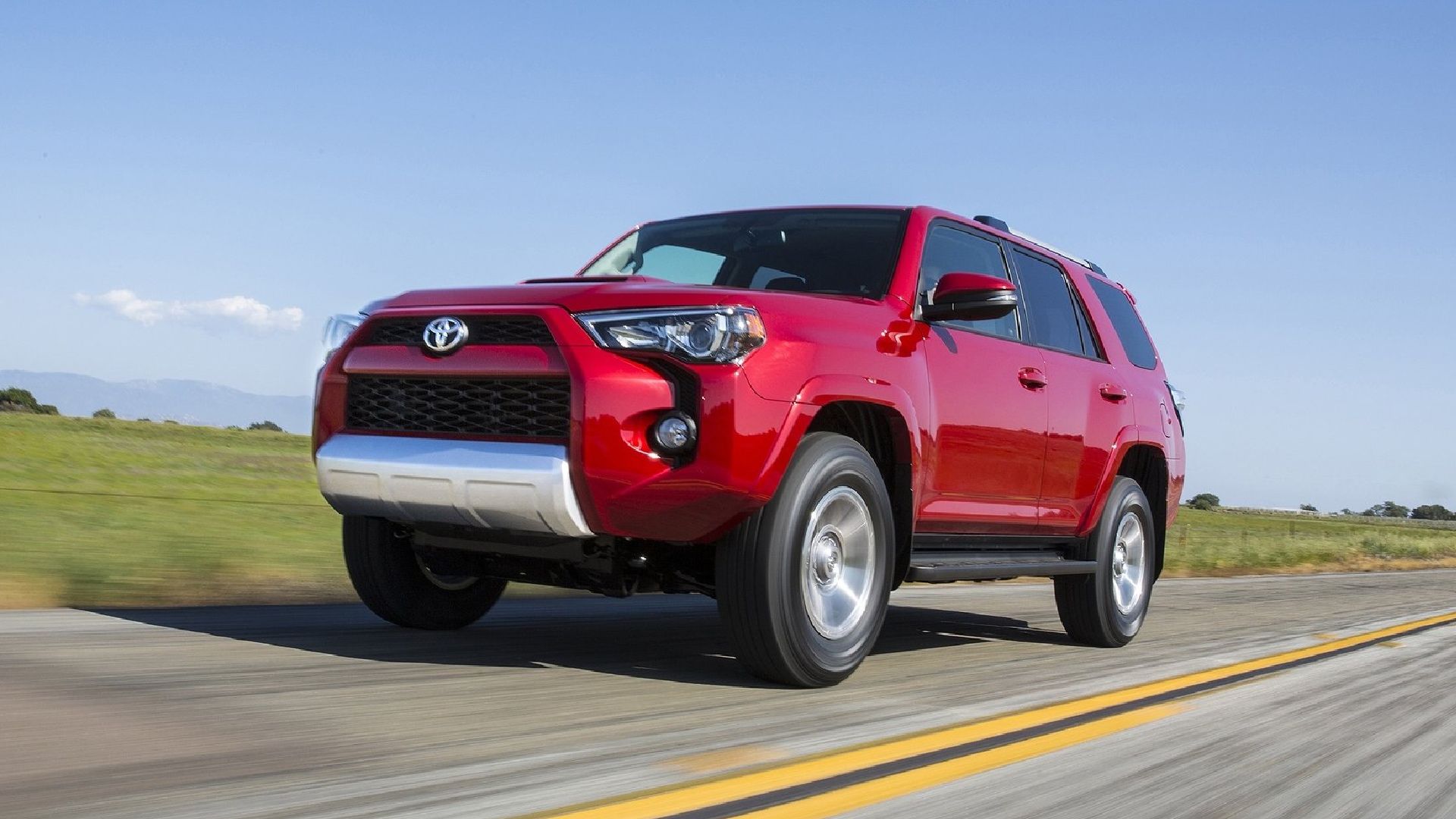
If you don’t follow the recommended routine maintenance, your car is a timebomb waiting to go off. Even if you drive a V8 4Runner, which is easily one of the most reliable cars ever made, its engine will self-destruct eventually if you don’t keep an eye on the fluids. It may take longer because Toyotas tend to have higher tolerance levels, but it will happen.
Brand Loyalty Is Making You Blind (And Angry)
Brand loyalty is an interesting phenomenon, and it usually comes from a person’s parents. You grow up in a Toyota family, and your parents demand that your first car also be a Toyota because they’re reliable. Then you’re in the Toyota family, and the process repeats itself with the next generation. I had the same thing. My dad was a Mercedes-Benz man, and when it came to pickups and SUVs, he believed Nissan was the best. I used to think I was a Mercedes Man, but then I drove a Porsche. And the new Ranger is better than the Frontier because it just is. That’s the thing with being exposed to so many cars. You quickly realize that there is an entire automotive world beyond your extremely narrow view.
If you go out and test drive every full-size pickup truck and settle on a Ford F-150 because it suits you best, I can respect that. But what I don’t get is dismissing a competitor straight off the bat because your grandpappy was once left stranded at the side of the road in a Chevy. Everyone’s personal mechanic also has an opinion on what the worst truck is to work on. According to multiple sources, the worst truck to work on is the Titan, the Ford F-150, the Tundra, and the Honda Ridgeline.
Two Things Can Be True At The Same Time
Just because the Nissan Titan is the most reliable pickup truck of the last 10 years does not mean that your truck is a POS. The ratings for quality and reliability are so narrow that the worst car on the list scored 85 out of 100, while the Titan scored 88. That’s a difference of three percentage points, which is negligible. That means the GMC finished three percentage points behind the Titan, so it’s hardly unreliable.
Most of the pickup trucks on sale in America have been available for decades, which means their respective automakers know how to get the basic details correct. Despite this, we still advise against buying a new generation model with a brand-new engine in the first model year.
There’s one undeniable trend you can track across all brands and multiple generations. Complaints are at an all-time high when a new model is introduced, and the number of complaints goes down as the issues are resolved.
The Problem With Surveys
The biggest complaints against modern cars are modern features. For the last five years or so, the biggest complaints people had were related to the infotainment. Most new cars tend to be fine on the mechanical side, but the infotainment and advanced driver assistance features drag their reputation down.
The other big problem is that surveys and websites that focus on reliability tend to focus on anecdotal evidence. This can go one of two ways. First, we have to wonder whether the owner of a brand-new car will be willing to admit that it’s problematic. A great example is the Tesla Cybertruck. Tesla has recalled the truck, and despite this, there are loyal fans out there who absolutely refuse to admit that it has issues. And it’s not just Tesla Stans. We see the same sort of behavior from the owners of other brands, too.
The second issue is the seriousness of complaints versus the amount of cars sold. When a car gets 30 complaints about having uncomfortable seats, yet the automaker sold more than 150,000 units, is that a serious complaint?
Then there’s the case of the one guy who logged a complaint against the Pontiac Aztek, claiming it made him less attractive to the opposite sex. Isn’t that more of a you problem, guy?
Conclusion: Will Reliability Always Be A Hornet’s Nest?
Probably, but only because people will always be biased toward their own brand, which is understandable. You are 100% entitled to prefer one brand over the other but don’t force that opinion down on other people, especially if your proof is nothing more than a story heard from an uncle who read it in a tweet.
The truth is that even the best automakers screw up, as we mentioned earlier. Toyota is a bastion of reliability, and yet it’s somehow managed to get caught up in two significant scandals. And somehow Alfa Romeo ended up on top of the J.D. Power Customer Satisfaction Index. Sure, it’s not a long-term thing, but at least it shows Alfas are now being put together properly, at least for the first few months. A few years ago, the side mirror would fall off within spitting distance of the dealership.