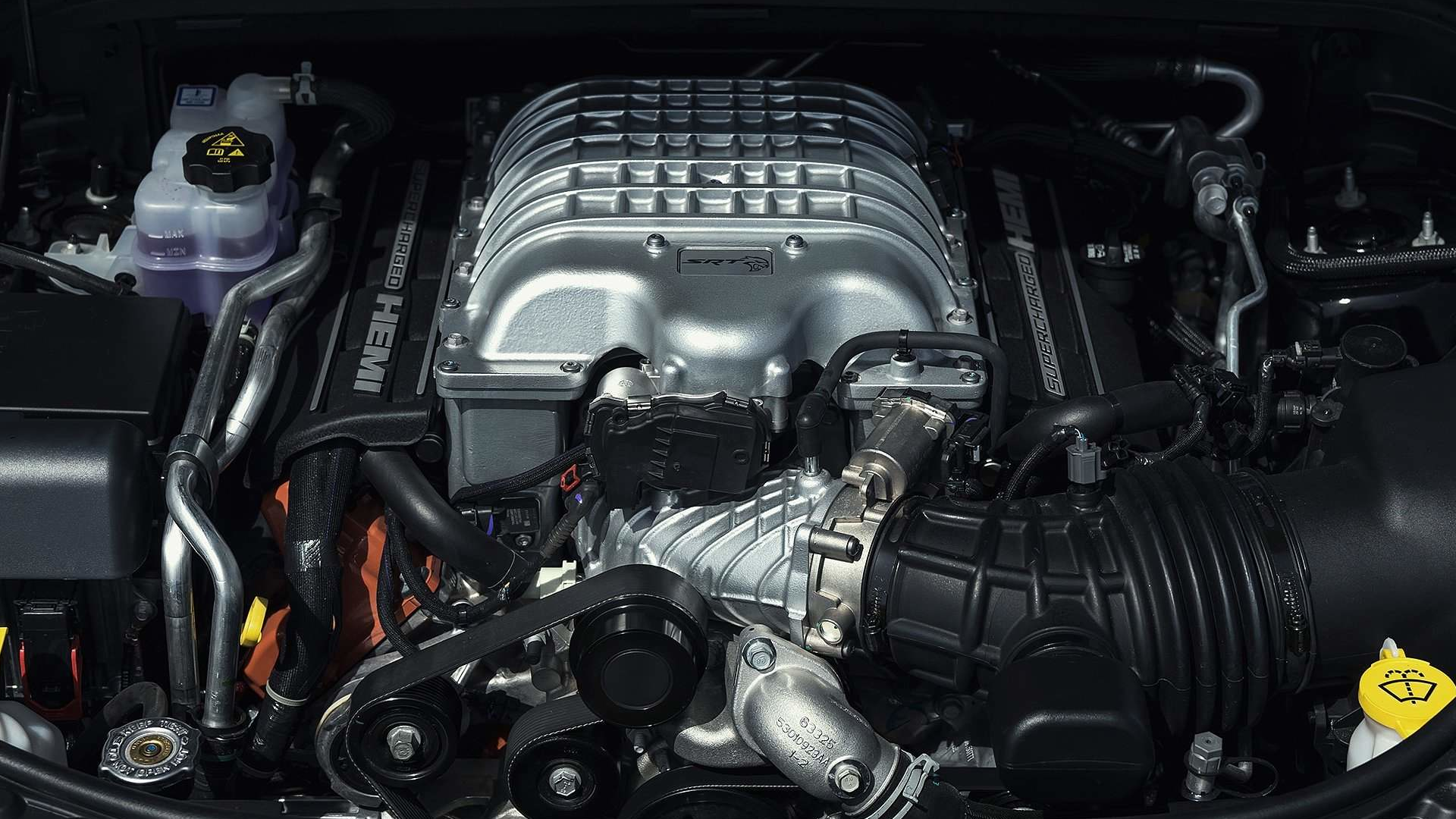
Why Supercharged Engines Are A Dying Breed

The humble supercharger, which has helped boost power outputs for as long as cars have existed, is now on its way out. Increasingly compact and efficient turbochargers, as well as other methods of boosting power output like hybrid systems, have made supercharging all but obsolete, its disadvantages overtaking its advantages in the eyes of consumers.
Related
The Tale Of The Supercharger Began Before The American Civil War
While turbocharging has only been around for roughly 50 years, the supercharger has been seen in cars for over double that amount of time.
Although a handful of supercharged models have stubbornly stuck around in recent years, we can expect superchargers to be phased out of the market completely over the second half of the decade. Here is the history that brought us the supercharger, a brief overview of how it works, and why it’s now on its way out.
The information for this feature was obtained from reputable sources.
History Of The Supercharger
The supercharger is the oldest form of forced induction around, and one that even predates the car itself. The earliest ancestors of the supercharger were fairly rudimentary devices that forced air into furnaces and industrial machinery. Later on, the same technology was applied to engines, first in aircraft and then in cars as the emerging automotive industry began to exploit the capabilities of supercharging to boost power output. Between the end of the 19th and the beginning of the 20th century, several famous names in automotive history, such as Gottlieb Daimler and Louis Renault, began to research supercharger technology and filed patents for their respective devices. By the 1920s, several supercharged models, such as the famous “Bentley Blower”, had arrived on the market.
When World War II broke out, supercharging was widely adopted in combat aircraft; although, by this point, turbocharging technology was already being researched, technical limitations prevented it from being implemented effectively, and superchargers prevailed. After the war, the supercharger had its big moment in the world of motor racing, as hot-rod enthusiasts and professional teams alike installed superchargers on their cars to gain a competitive edge. Aftermarket supercharger kits became available in the 1950s, and their popularity exploded in the world of drag racing.

Add CarBuzz to your Google News feed.
The rise of the supercharger coincided with the golden age of the muscle car, as drivers chased higher and higher power outputs with little or no regard for efficiency, economy, and emissions. The supercharger’s mid-century heyday, however, was eventually cut short by emerging new technology: the turbocharger, which had been around in a few production cars since the 1960s but didn’t take off until two decades later, in the 1980s.

Related
The Last Supercharged Pickup Truck In America Has No Equal
Supercharged pickup trucks are on the verge of extinction, but the last one left going into 2025 is a monster with no equal, and we love it for that!
Supercharged cars continued to be available throughout the 20th century, but as turbochargers became more common, the popularity of the supercharger began to wane. Its disappearance accelerated from the turn of the millennium, and today, supercharging is considered fairly niche compared to the far more common turbocharging; only a handful of models equipped with this method of forced induction remain.
How Does A Supercharger Work?
In a supercharger, air is moved through the system using power sourced directly from the engine. This is accomplished through the use of a pulley with a belt connected to the engine’s crankshaft, which builds boost pressure by rotating. There are two main kinds of supercharger available: the most common one is the positive-displacement supercharger, which delivers a fixed amount of air for each revolution of the compressor. The dynamic supercharger is less common and more complex, accelerating the air to a high speed and then exchanging the velocity for pressure by diffusing (slowing down) the air.
Disadvantages Of Supercharging
Superchargers served an important purpose, but also had several disadvantages, which meant they were largely dropped by the industry when a better alternative, turbocharging, became viable for commercial use. One of the main drawbacks of superchargers is that they draw power from the engine in order to function, a phenomenon known as parasitic loss. Although they do, of course, perform the function of boosting power output, they must first draw power in order to work at all. This puts them at a disadvantage compared to the more efficient turbocharger, which relies on waste exhaust energy rather than siphoning usable power.
Superchargers also generate high temperatures and noise levels: in the world of racing, this isn’t a crucial factor, but when it comes to production cars, turbochargers are favored for being cooler and quieter. That being said, enthusiasts will argue that nothing beats that distinctive supercharger whine under full acceleration for sheer thrills and drama.
The Rise Of The Turbocharger
The demise of the supercharger comes largely from the popularity of another forced induction method: turbocharging. Unlike superchargers, turbochargers recycle waste gases to power them, maximizing efficiency and reducing loss of power. This makes them more suitable for application on all sizes of engine, including smaller ones, which are not ideal candidates for supercharging.
The development of turbocharging was slow to start, but once it got going it rapidly began to overtake supercharging. The origin points of the two forced induction methods are actually not that far apart in time, since turbocharging technology was already starting to be developed at the start of the 20th century. However, due to its increased complexity, the turbocharger took longer to evolve into a usable form that could be implemented on production cars. Up until the mid-20th century, the turbocharger was referred to as “turbosupercharger”, as it was considered to be a variation of the supercharger. In a similar fashion to the supercharger, the turbocharger was also first used in non-automotive applications (mainly industrial, aviation, and railway) before eventually finding its way into the world of cars.

Related
5 Cars Begging For The Dodge Demon 170 Supercharger Kit
Dodge Direct Connection is selling the supercharger system used in the Demon 170. These are five vehicles we think would benefit from adopting it.
The first production car to be equipped with a turbocharger arrived in 1962: the Oldsmobile Jetfire, a special version of the Cutlass that only lasted two model years. At this stage, turbocharging technology was still in its infancy; in order to keep temperatures within operating range and eliminate knocking, the Jetfire’s turbocharger had to be cooled with a special water/methanol mix, dubbed the “Turbo-Rocket Fluid” (a similar system still exists today). The public was highly skeptical of this new innovation; the few people who bought a Jetfire frequently forgot to refill the turbo’s fluid reservoir, which resulted in malfunctions and overheating. The additional maintenance required proved to be too much for the average consumer to handle, and it would be a few decades before turbocharging would begin to catch on.

Related
10 Times Oldsmobile Was A Trendsetter In The Automotive Industry
This now-defunct brand is responsible for several leaps forward in automotive innovation. Let’s explore 10 of them.
The turning point arrived in the 1980s, when turbocharger technology and reliability had finally improved and turbocharging began to appear on more production models. Turbochargers did not just gain popularity in passenger cars, but in light trucks as well; in 1989, Dodge became the first manufacturer to use a turbo-diesel engine in a truck, with the Ram pickup. Throughout the following decades, supercharging began to fall out of favor, as automakers and customers leaned towards turbocharging instead. Today, supercharging is very rare, and prospective buyers would have to go out of their way to find one of a handful of models that still offer it.
Can I Still Buy A Supercharged Car?
The short answer is: yes, but probably not for long. A few supercharged models were still available on the market as of 2024, however many of them (including the Jaguar F-Type and Dodge’s Charger and Challenger Hellcat) have been discontinued. If you’re particularly keen, you may be able to find a few examples still floating around, sitting on dealers’ lots.
Some models, like the Cadillac CT5-V Blackwing (the last sedan with a supercharged V8 and an RWD layout sold in America) and the Lotus Emira, are still clinging on for dear life. If you’re dead set on buying a new supercharged car, you still have a few years’ time, but moving quickly is paramount, as it’s unlikely superchargers will stick around to see the end of this decade.
Sources:
White Knuckler, Mantic, Mitsubishi Heavy Industries Group.