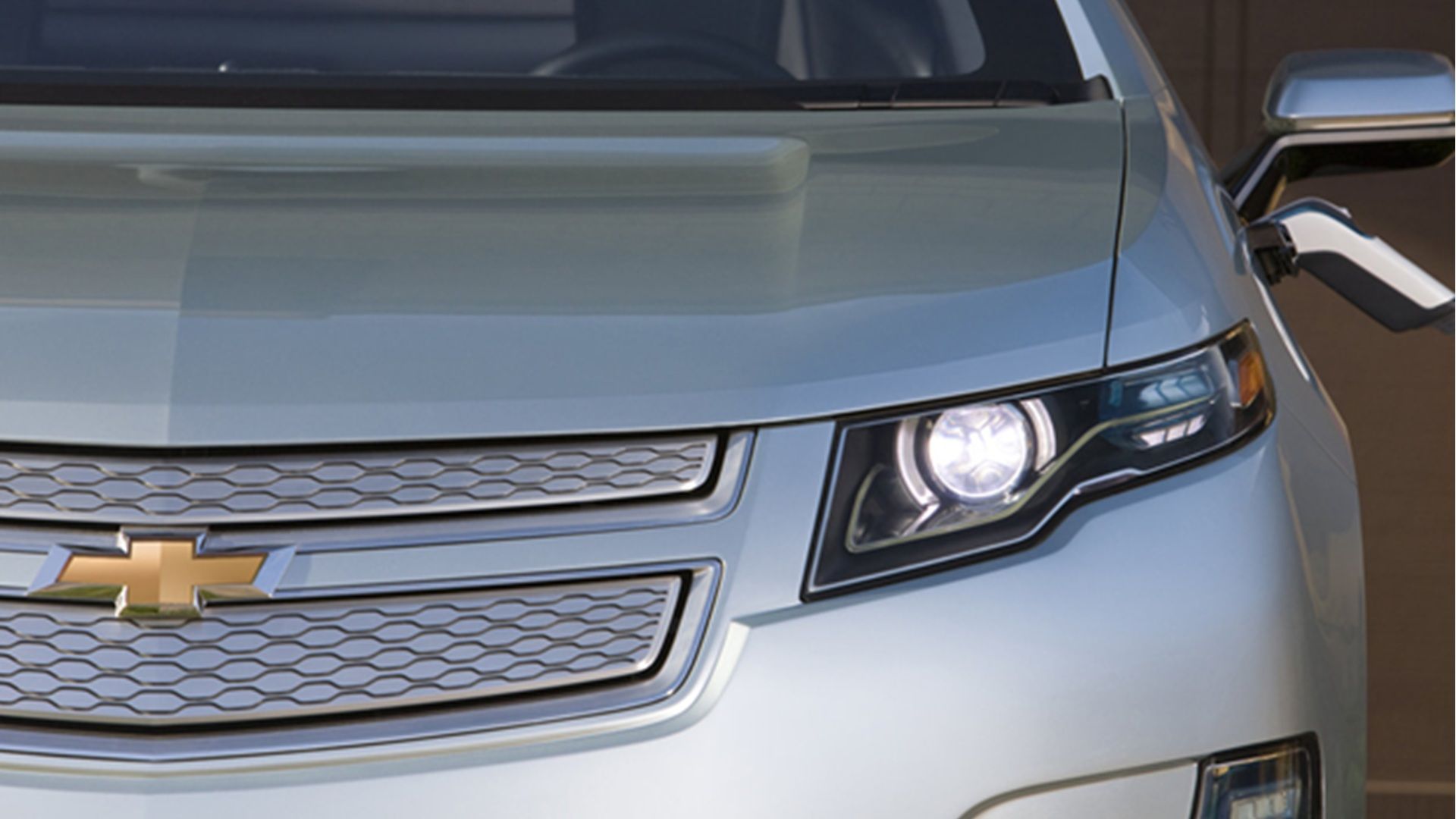
Why The 2011 Chevrolet Volt Is A Revolutionary Bargain

Electric vehicles are improving all the time, with next-generation models from the likes of Toyota and Hyundai set to eclipse the 500-mile range benchmark thanks to the development of solid-state batteries. The batteries currently used in EVs are made from lithium-ion, which reduces peak range significantly, even if many new examples can reach around 300 miles before needing a charge. These can be pretty expensive though, and older used EVs offer a significantly reduced range due to their batteries deteriorating over time.

- Base Trim Engine
-
1.4L Inline-4 Plug-in Hybrid
- Base Trim Transmission
-
Single Speed Automatic
- Base Trim Drivetrain
-
Front-Wheel Drive
As a result, if you’re on a tight budget, a plug-in hybrid of some sort is a good shout. These offer a decent amount of EV-only driving that comes in useful for shorter trips, while a conventional engine is on hand to boost its range significantly for longer drives. This is the cheapest used EV on the market today.
This article shines a light on the 2011 Chevrolet Volt, as it’s the cheapest used PHEV you can pick up on the used market on average, as well as one of the most forward-thinking of its type.
The 2011 Chevy Volt Kicked Off A New Revolution
While hybrid vehicles had been around for over a decade by the time the Chevrolet Volt arrived in the final moments of 2010, the Toyota Prius having been on the market since 1997, Chevy’s new baby was different. A traditional hybrid uses a normal internal combustion engine to drive the wheels like a normal car, but also features a battery alongside that helps the car to accelerate, reducing the work that the engine needs to carry out and thus saving fuel.
The Volt was one of the first mass-produced plug-in hybrid vehicles in the world, with its front wheels instead being driven solely by a single electric motor that gets its power from a lithium-ion battery, which is exactly how a normal EV works. What sets the Volt apart is that it also comes with a 1.4-liter gasoline engine, which isn’t connected to the wheels. The powerplant fires up when the battery runs out of juice, and runs an electrical generator to keep the battery topped up until the fuel tank runs dry.
The Volt Was Available Worldwide
General Motors wanted to start a new trend with the Volt, which took the shape of a compact liftback sedan that was as comfortable on longer, faster roads as it was on tighter city streets. It was also offered as the Holden Volt for the Australasian market, while Europeans got it badged as either an Opel or Vauxhall Ampera. Despite being the best-selling PHEV vehicle to this day, with over 130,000 finding owners, they’re worth very little in 2025.

Discussion
How do hybrid cars work to make them more efficient than regular gas cars?
Hybrid cars give you better fuel economy than gas cars by having a gas engine along with electric motors that use the power stored in a battery. This isn’t the 12-volt that every car has, but more like what’s found in an electric vehicle, though smaller. That battery is recharged through regenerative braking, providing a constant source of extra power that allows a hybrid car to drive on electric power for short periods, thus saving gas.
Used Volts Can Be Had For Peanuts
According to Kelley Blue Book, you can expect to pick up a used, high-mileage 2011 Volt for around $6k, a small fraction of its original $40,000 MSRP. This drop in value looks even more attractive when you consider that with inflation, a brand-new Volt would have cost you the equivalent of $57,000 in today’s money. AutoTempest, a site that collates classified auto listings from around the US, backs up this value, with plenty of decent examples available at this price point.

Related
What 10-Year-Old Used EVs Sell For In 2025
Buying a new EV can be a strain on your bank account, so this is how much a ten-year-old used example will cost on the secondhand market.
|
2011 Chevrolet Volt |
|
|---|---|
|
Powertrain |
Single electric motor, 1.4-liter I4 range extender |
|
Transmission |
1-Speed Automatic |
|
Power |
149 hp |
|
Torque |
273 lb-ft |
|
0-60 mph |
8.8 seconds |
|
Range |
325-380 miles |
|
Average Used Value |
$6,112 |
Spend a little more though, and you’ll be able to find tidy Volts with less than 100,000 miles on the clock for around $7k. Take a gray 2013 version sold through Cars.com, which has covered just 87,000 miles as of July 2025. It comes with the usual standard equipment like climate control and Bluetooth connectivity, as well as a special energy-saving Bose audio system developed specifically for the Volt.
The Volt Boasts A Solid Reliability Record
The Volt may be extremely cheap on the used market, but that doesn’t mean it’ll spend most of its life at the side of the road. The model has proven to be reliable thus far, with RepairPal estimating that a solid specimen will only cost you around $575 per year to keep running well. As far as common problems, the Volt doesn’t suffer from many. General electrical issues seem to be most common on older cars, with the National Highway Traffic Safety Administration showing that the most common complaints leveled at the model are electrical system problems. A total of 23 of the overall 47 complaints cover this, with one of the most common ailments being that the LCD driver’s information screen fails. A replacement cluster could cost upwards of $500.
Being an older car, you’ll also have to make sure its battery is in good working order. If it needs replacing, you’ll have to anticipate a huge bill by going to a Chevy dealer, so finding a reconditioned unit or finding a way to repair yours will be the more economical way to go.
The Volt Was Ahead Of Its Time
GM managed to get a jump on its Western rivals with the Volt, as the likes of BMW, Ford, and Volkswagen didn’t release their own PHEV options for at least a couple of years after the Volt was released to the public. Its powertrain was impressively potent, given its single motor provided a handy 149 hp and 273 lb-ft of torque, all of which came instantaneously. To help enhance the vehicle’s efficiency even further, the Volt was equipped with an energy regeneration setup, which works by recovering power through normally wasted kinetic energy created during braking.
While the Volt could travel between 25 and 50 miles on pure EV power, depending on the conditions, the 1.4-liter engine can add north of 300 miles to the total range when the battery finally runs out of juice. Given the solid range and responsive powertrain, the Volt works excellently as a nippy runaround. Outside of the costly exercise of replacing a poorly battery, this cheap PHEV will also be easy on your wallet on a day-to-day basis, from a maintenance as well as efficiency standpoint.

Related
Automakers Are Honing In The Perfect PHEV Setup
Toyota and Hyundai think they’ve found the right balance of usable range without a crazy-heavy battery for new PHEVs.
BMW’s Range-Extending i3 Is Also A Bit Of A Bargain
If you want an affordable used PHEV, but want an even more compact solution for tighter areas, then a used BMW i3 could prove to be a better shout than the Volt. KBB estimates that you can grab a higher-mileage 2014 i3 Range Extender for around $7k, which is a little bit more than its pure-EV sibling. AutoTempest backs up this valuation, with many sub-100,000-mile RE examples listed for around this price.
|
2014 BMW I3 Range Extender |
|
|---|---|
|
Powertrain |
Single electric motor, 650cc I2 range extender |
|
Transmission |
1-Speed Automatic |
|
Power |
170 hp |
|
Torque |
184 lb-ft |
|
0-60 mph |
7.9 seconds |
|
Range |
Up to 185 miles |
|
Average Used Value |
$6,769 |

Related
What You Can Expect To Pay For Cheapest Used Hybrid SUV You Can Buy In 2025
If you fancy a cut-price hybrid SUV, then this American example will provide you a bit of electrical assistance for a fraction of a brand-new model.
While the Range Extender shares the same 130 kW electric motor as the normal version, which is mounted on the rear axle and powers the back wheels, it also sports a small 650 cc inline-two engine that will power an electrical generator to keep the battery topped up for longer, just like the Volt. While the normal i3 can manage 110 miles on a single charge, the added engine means the RE variant can travel for around 185 miles before it needs a charge or a fuel tank refill. The extra weight added by the powerplant does blunt its performance slightly, given the normal model can reach 60 mph in 7.0 seconds, while the RE takes 7.9 seconds.
When compared to the Volt, the i3 is a full 20 inches shorter, which helps make it a more maneuverable proposition when using it in tighter areas. Depending on where you spend most of your driving time, the Volt and i3 both represent excellent value ways of getting efficient PHEVs in your life.
Sources: AutoTempest, BMW, Chevrolet, Kelley Blue Book, NHTSA, RepairPal.