
Why The Nissan Titan Is The Most Underrated Full-Size Truck Ever Built

Americans take pickup trucks extremely seriously and, these days, they need to be all things to all men. Their main duties used to be towing and hauling, but the modern truck has expanded that scope to include luxury family car and toy. Full-size pickup trucks have replaced almost every single segment, with standard models like the Ford F-150 catering to the majority, while the gloriously irreverent F-150 Raptor R takes care of the fun side of things.
Most of the trucks on sale in the USA span back decades. Because of that, they’ve managed to build the fiercest fans in automotive history. If you think Tesla drivers are bad, wait until you’ve met a person that spent their entire life only driving a Chevy or Ram.
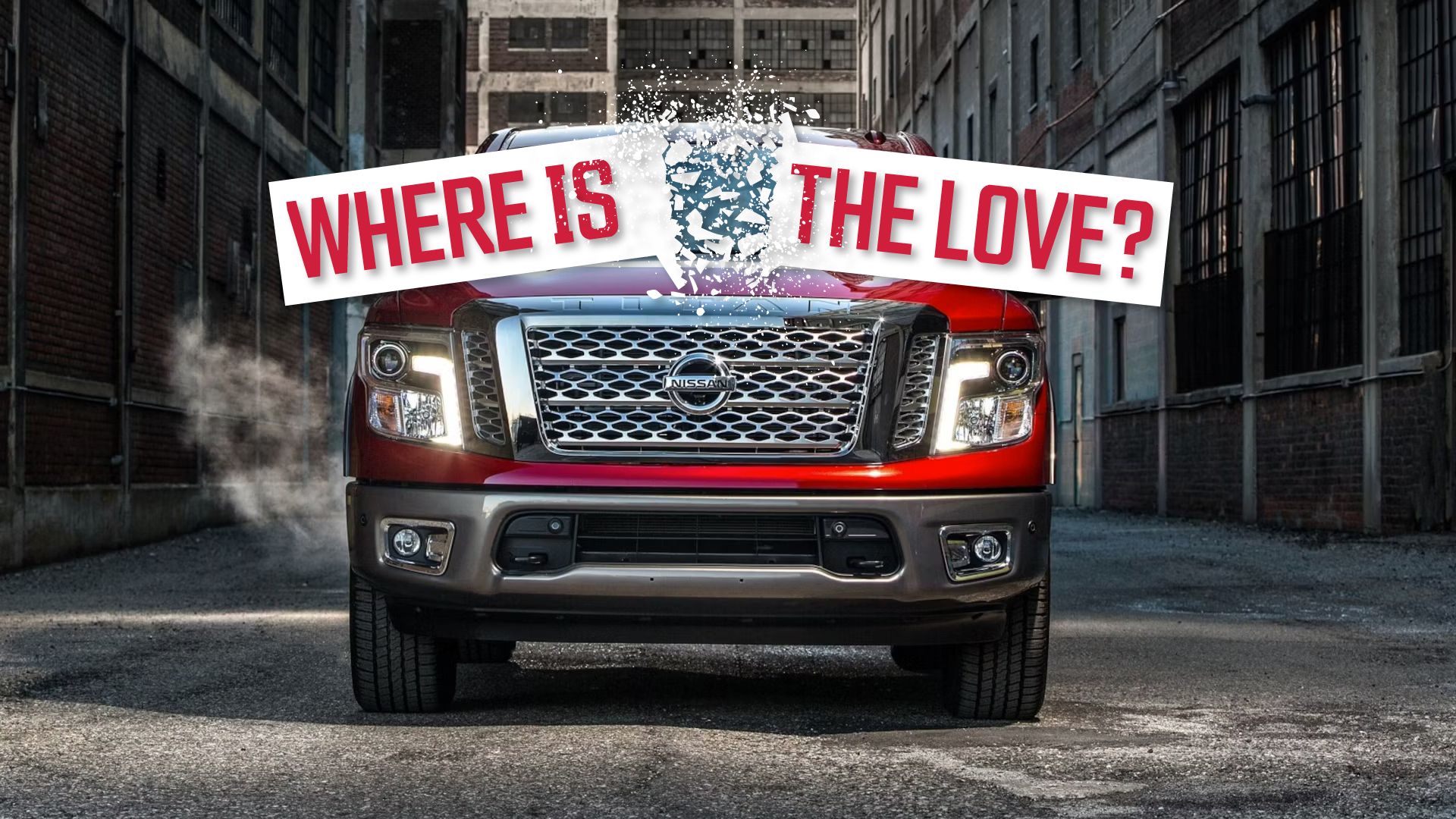
Sadly, this steadfast loyalty has left a couple of trucks in the dust, regardless of their quality and capability. The best example is the Nissan Titan, a full-size pickup that turned old enough to buy a beer this year. This year also happens to be its last trip around the sun, as the Japanese brand announced that it would be killed off without a successor.
Was the Titan really that bad?
The following information regarding the NIssan Titan’s past and present was taken from official Nissan press materials.
Admittedly, The Titan Has Its Issues
Nissan Titan Key Points
- Produced from 2004 to 2024
- Only offered a single gasoline engine its entire life.
- Was offered with a diesel mill for just four years
While we’re not here to bash the poor, dying Titan, we must first shed some light on its issues. After all, trucks don’t just disappear without reason. The first thing to discuss regarding the Titan’s departure from the market was its rather expensive base price. Nissan is asking prospective buyers to cough up at least $48,700 for the lowest-spec Titan, the SV-grade. While it’s not as base as, say, a Ford F-150 XL which costs as low as $36,695, the Titan SV is still rather spartan. It comes with just, in essence, a crew cab and a V8. You don’t even get standard four-wheel drive for its near-$50,000 price tag.
The Titan’s issues spread into other facets of its make-up, as well. One of the most common complaints about the Titan is its boring-as-math interior, which is sparse at best. On top of its sparseness, it’s also outdated in its tech. For example, its top-of-the-line infotainment screen size is just nine inches. For comparison, the top-end screen in the Chevrolet Silverado is a whopping 17.7 inches. A nine-inch screen may have cut it six years ago, but for an upgraded infotainment system, it’s just not enough.
Other issues include things like cheap-feeling interior materials. This is a larger issue in a vehicle like a pickup truck, because things get used and abused quite often on the job, and pickup trucks are work vehicles at their core. Another often-cited issue with the Titan is its small cabin size. The Titan boasts 119.7 cubes of passenger volume in its current crew cab configuration. On the other hand, a truck like the Toyota Tundra contains 122 cubic feet of room. The F-150 crew cab is even bigger, with 132 cubes of passenger space available.
We also can’t forget that while the Titan offers a 400-horsepower V8 as standard, its towing capacity is the lowest of any V8 pickup on the market, coming in at 9,299 pounds, a major death blow in and of itself. However, you can opt for the Titan XD, a heavy-duty version of the Titan, which starts at about $54,800 and bumps max towing capacity up to 11,050 pounds, but it’s still not enough, and comes in at nearly 1,000 pounds less than the Tundra’s max towing capacity of 12,000 pounds.
The Titan Has Some Good In It, Too
Now, the lack of a true base model has only plagued the Titan for one year, as the now-discontinued S-grade base level trim was discontinued in 2023. With the S trim, you still could only get a crew cab and a V8 engine for just under $41,000 brand-new. Interestingly, the 2023 Ram 1500 Tradesman – the base-level trim – costs just under $43,000 new with a crew cab, roughly $2,000 less than the Titan. On top of that, the Ram makes do with a piddly 3.6-liter V6, whereas the Titan offered a 400-horsepower, 5.6-liter V8 under its hood. So, while the Titan seems to be cheaply-made and badly equipped, at least it had a standard V8 and a crew cab configuration for a good price going for it.
Another great aspect to the Titan is its 5.6-liter V8, which Nissan gave the codename “VK56VD”. The engine itself boasts the usual tech seen in modern engines, like variable valve timing, which Nissan calls VVEL, or Variable Valve Event and Lift System. The system is also reported to increase wide-open throttle (WOT) efficiency and performance by reducing something called engine knock, a phenomenon seen under heavy load where the air-fuel mixture within the cylinder pre-ignites, harming engine peak performance.
The VK56VD has always shown itself to be a fairly reliable engine. It should be, as well, seeing as Nissan has offered it on the Titan for the past 20 years. As for the Titan’s reliability as a whole, we crunched the numbers and found it to be the most reliable full-size truck made in the last 10 years.
Add CarBuzz to your Google News feed.
So, Why Is Nissan Axing The Titan?
We touched on that above, but one of the main reasons for Nissan’s axing of the Titan is poor sales. It’s extremely difficult to break into America’s full-size pickup truck segment, especially in 2004 when the Titan first hit the scene. Chevrolet, Ford, and Dodge had already been established for decades. Even Toyota, which entered the truck race around the same time as the Tundra, is still struggling to compete with the big three. When a Toyota fails to take market share away from brands, you know brand loyalty plays a big role.
Nissan has also become another one of those legacy automakers obsessed with reaching some sort of EV target by an arbitrarily chosen date. That means some of their less eco-friendly models need to be given the ax, and the Titan with its 5.6-liter V8 falls into this category. Tightening CAFE (Corporate Average Fuel Economy) ratings play a small hand in their decision, too. Nissan’s mid-size pickup, the Frontier, has also been cited as a reason for the Titan’s downfall, as Nissan wants to give the small truck more room to breathe on their offering list.
Another unfortunate reason for the Titan’s demise is its rather tragic towing capacity. A full-size truck which can only tow 9,299 pounds while costing nearly $50,000 is embarrassing, seeing as a $40,330 F-150 can tow the same amount of weight with its 5.0-liter V8 all the while with the same horsepower and less torque. It just seems, in many ways, the Titan just can’t cut it.
A Big Fall Few Will Hear

While many of us won’t lament the demise of the Titan, the loss of a full-size pickup truck on the American market is sure to create waves, albeit small ones. Die-hard Titan owners will have to either switch to the smaller and recently updated Frontier, or move to a different manufacturer entirely. Not an easy task, especially for those who hold their chosen pickup truck-maker in high regard. Imagine you’re an F-150 fan and Ford cancels the F-150. While we can pretty much guarantee that won’t happen for a long time, it’s easy to imagine the sadness it would bring.
Perhaps this isn’t the end of the Titan, either. We’ve seen several old nameplates reinvented as electric vehicles. Examples include the Dodge Charger Daytona and the horrible Ford Capri. The Titan coming back as Nissan’s first all-electric pickup truck wouldn’t be too far out of left field. Nissan’s already confirmed part of the Titan’s demise was to make room for the Frontier and the upcoming all-electric Frontier. Whether the Titan name actually means enough to shift an adequate number of units for Nissan would be the biggest question to answer should the idea of an electric, full-size truck come up in a Nissan board meeting.

