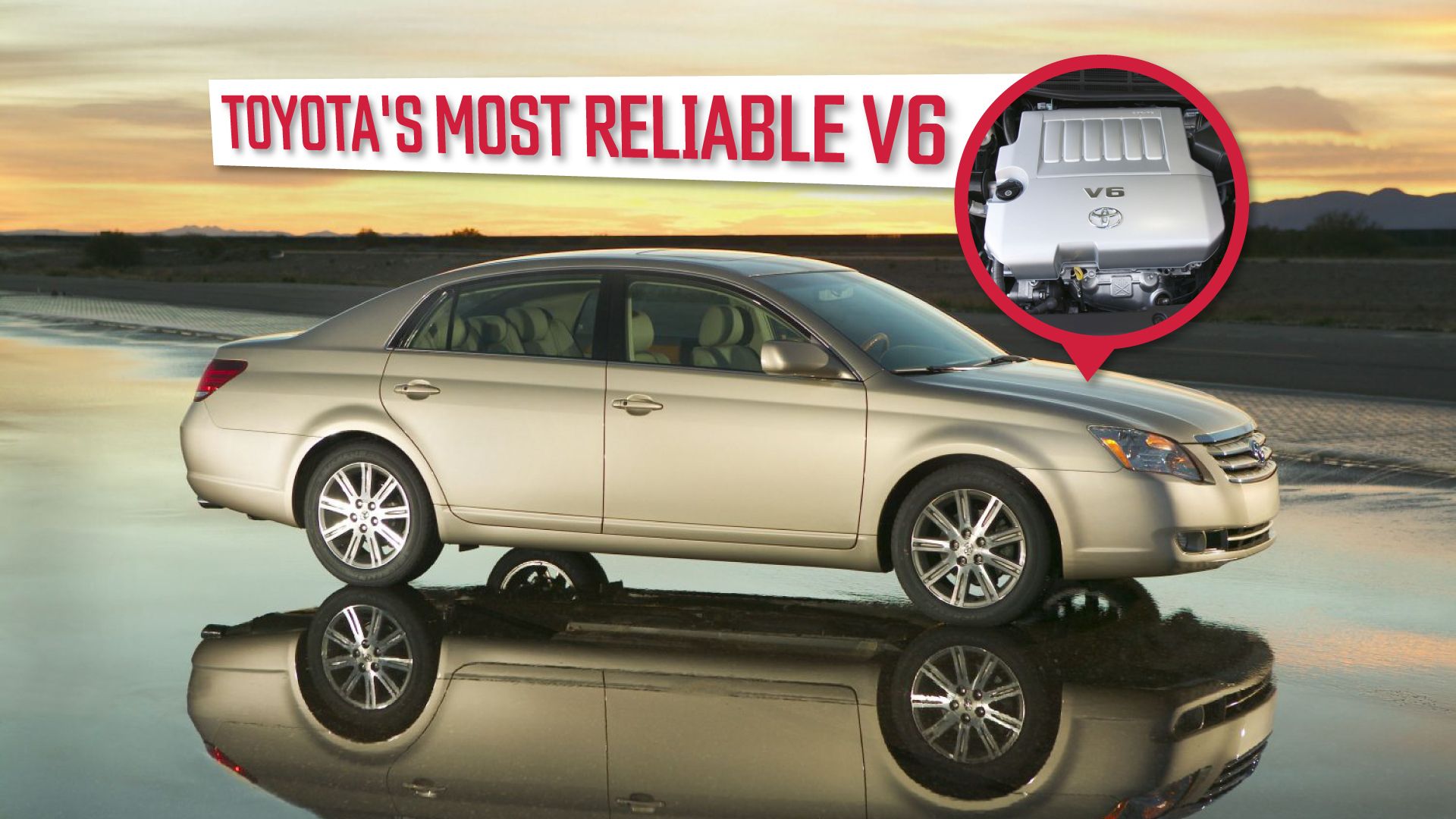
10 Cars Built Around Toyota’s Most Reliable V6

Toyota’s 2GR engine may not have the same iconic status as the 2JZ but it is a future star in the making. The 2JZ was famous for its role in the Mk IV Supra and later as an impressive and durable tuner engine. Debuting in the Toyota Aristo sedan, it was produced from 1991 up until 2002 – the flagship version was the 2JZ-GTE, which utilized a twin-turbo setup instead of the 2JZ-GE’s naturally aspirated system.
Toyota
Toyota is a Japanese automaker founded in 1937 that has developed a reputation for reliability across a multitude of segments, from sports cars and family sedans to pickup trucks and off-roaders. Famous models from the brand include the Hilux, Land Cruiser, Camry, Crown, and Corolla, the latter being the world’s best-selling vehicle nameplate, with more than 50 million Corolla-badged vehicles being sold since it was first introduced. Toyota typically competes in the mainstream market, but is also famous for launching Lexus as a luxury sub-brand to take on Mercedes-Benz.
- Founded
-
August 28, 1937
- Founder
-
Kiichiro Toyoda
- Headquarters
-
Aichi, Japan
- Owned By
-
Publicly Traded
- Current CEO
-
Koji Sato
The 2GR-FE appeared in 2005. Rather than being downsized, it was a lightweight, all-aluminum 3.5-liter V6 block. It was first featured in various Toyota models such as the Avalon sedan, RAV4 crossover, and Lexus’s ES sedan. It is a six-cylinder engine that can be adapted for tuning and engine swap applications like the 2JZ, proving reliable over time thanks to its engineering, which includes a forged crankshaft and connecting rods. The 2GR is worthy of celebration in today’s downsized/turbocharged world of engines.
|
Engine Comparison: 2GR vs. 2JZ |
||
|---|---|---|
|
Engine |
Toyota 2GR |
Toyota 2JZ |
|
Engine Layout |
3.5-liter V6 |
3.0-liter inline-six |
|
Variations |
NA | supercharged | hybrid |
NA | twin-turbocharged |
|
Notes |
DOHC, 4 valves/cylinder, all-aluminum |
DOHC, 4 valves/cylinder, iron block/aluminum head |
|
Power |
270 – 430 hp |
212 – 325 hp |
|
Torque |
248 – 325 lb-ft |
209-325 lb-ft |
Below we’ll take a very brief look at the history of the Toyota 2GR engine and see the diverse range of applications it is used for.

Related
WATCH: Toyota 2GR Engine Teardown Proves Even The Best Can Fail
The engine was sourced from a Lexus ES 350.
The 2GR Engine And Its Variants
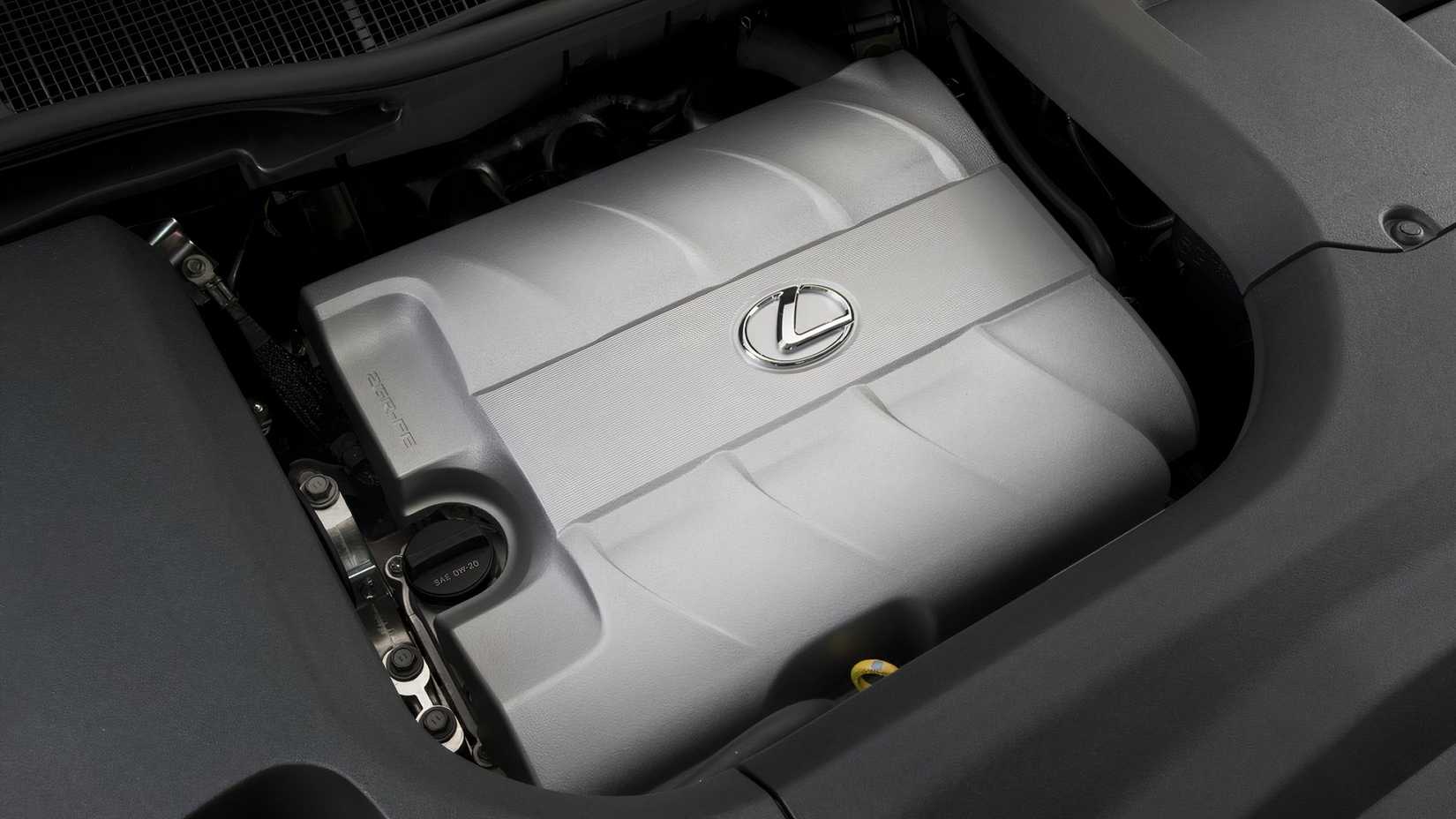
Toyota’s 2GR-FE engine was released in 2005. Broadly speaking, the FE and FSE were replaced by the FKS and hybrid FXS around 2015. In the middle, the FXE was a derivative of the FSE with minor changes, including optional hybrid hardware, featuring in a few models only. However, despite its age, the original 2GR-FE continues in the Lotus Emira today, even though its production for regular Toyota and Lexus models ceased years ago.
|
Toyota 2GR Engine Family Specs |
|||||
|---|---|---|---|---|---|
|
Engine |
2GR-FE |
2GR-FSE |
2GR-FXE |
2GR-FKS |
2GR-FXS |
|
Engine Layout |
3.5-liter V6 |
||||
|
Engine Block/Head |
Aluminum, 60-degree bank |
||||
|
Notes |
D-4S fuel injection |
Hybrid |
D-4S fuel injection |
Hybrid |
|
|
Dates Produced |
2005-present |
2005-2017 |
2009-2015 |
2015-present |
2015-present |
|
Power |
270 – 430 hp |
304-355 hp |
245-292 hp |
278-311 hp |
306-409 hp |
|
Torque |
248 – 325 lb-ft |
278-280 lb-ft |
233-262 lb-ft |
265-280 lb-ft |
258 lb-ft |
The second variant – the 2GR-FSE – added Toyota’s D-4S twin injection system that features a combination of direct and port injection. Notably, the FSE was also on the Ward’s 10 Best Engines list for 2006, 2007, 2008, and 2009. Following on from the FE and FSE versions, the FKS and hybridized FXS finished production more recently, and got replaced with Toyota’s new Dynamic Force range of engines which are mostly downsized. The FKS/FXS live on in some Lexus models (IS, ES, RC, TX), as well as the Toyota Century SUV. It is a power-dense engine, capable of more than 300 hp without forced induction, as well as being relatively lightweight and – above all – reliable and durable.
Its torque figures are not impressive by the standards of modern turbocharged engines, but the 2GR has been the powertrain of choice for cars from the family-oriented Previa minivan, up to luxury-oriented Lexus SUVs, and even sports cars like the Evora and Emira. Here are ten models that have proven the flexibility and power of the 2GR.
Toyota Blade Master
|
Toyota Blade Master |
|
|---|---|
|
Engine Version |
2GR-FE |
|
Power |
276 hp |
|
Torque |
254 lb-ft |
|
Drivetrain |
FWD |
|
Transmission |
6-speed automatic |
Based on the Toyota Blade – which is a premium, Japanese variant of the Toyota Auris hatchback not sold in the US – the Blade Master featured the 2GR-FE engine, crammed into its small engine bay. Although it also came with upgrades to the brakes, suspension, and other areas, the car’s only choice of transmission was an automatic, which is an indication of its overall intent and dynamics. The 2GR offered up a similar output to other Toyota and Lexus models, sending its power to the front wheels only. Its 276 hp/254 lb-ft puts the Blade Master well into hot hatch territory for the time (around 2007-2012) and results in one of the more curious applications of the relatively big 2GR V6.

Related
10 Cars With 2JZ Engines You Probably Didn’t Know About
Of course, the Supra is on the list, but did you know the 2JZ powered nearly a dozen cars?
Toyota Previa
|
Toyota Previa |
|
|---|---|
|
Engine Version |
2GR-FE |
|
Power |
271 hp |
|
Torque |
250 lb-ft |
|
Drivetrain |
FWD |
|
Transmission |
4/6-speed automatic |
From a hatchback to a minivan (MPV), the 2GR’s inclusion in the later-generation Previa (called the Estima in Japan and Tarago in Australia) shows off its ability to go from one extreme to another. Here, the 2GR-FE offers up power and torque in the typical range for the ‘FE’ version. Debuting the 2GR in its third generation, the Previa had lost the first-generation’s quirky front-mid-engine layout long ago and the V6 was installed in a traditional front-engine setup like the previous generation. A variety of transmissions were available over the period that the 2GR graced the Previa’s engine bay but the V6 only received automatic transmissions instead of the hybrid models’ CVT or a manual for other trims. The 2GR eventually got dropped from the lineup a few years after its facelift.
Lotus Emira
|
Lotus Emira |
|
|---|---|
|
Engine Version |
Supercharged 2GR-FE |
|
Power |
400 hp |
|
Torque |
310 hp (MT) | 317 lb-ft (AT) |
|
Drivetrain |
RWD |
|
Transmission |
6-speed manual | 6-speed auto |
While the Previa and Blade Master show the 2GR-FE in a more typical form, the Emira illustrates how the FE can be used differently. Despite being introduced in 2005 and discontinued by 2019 for Toyota and Lexus models, Lotus chose to use the FE for 2022’s Emira. It wasn’t a first for Lotus – it also appeared in the Evora and the Exige. The Emira’s 2GR is supercharged as standard, offering 400 hp in a mid-engine format, sending its power to the rear wheels.
It is the flagship engine in the Emira’s lineup, sitting above the 2.0-liter, turbocharged Mercedes-AMG I4 which produces 360 hp. Toyota’s V6 makes a convincing sports car engine in the Evora, offering suitable power and character despite its origins in far-tamer Toyota models.

Related
2025 Lotus Emira I4 First Edition First Drive Review: Lotus And AMG Are Like Oil And Water
We spent a week and England and used the new Lotus Emira with a turbocharged AMG engine to get around. Here’s what we thought.
Lotus Evora
|
Lotus Evora |
|
|---|---|
|
Engine Version |
2GR-FE | Supercharged 2GR-FE |
|
Power |
276 – 430 hp |
|
Torque |
258 – 332 lb-ft |
|
Drivetrain |
RWD |
|
Transmission |
6-speed manual | 6-speed auto |
Lotus used the 2GR-FE for the Evora from 2009-2021. It offered similar outputs to other 2GR-powered Toyota models in naturally aspirated form, but the Evora’s light weight and focus on handling meant that the 2GR was still a perfect fit. Supercharged versions such as the Evora S and Evora 400 offered a nice upgrade in power – to 345 hp and 400 hp, respectively. The more modern Evora GT makes 415 hp. Like the Emira, the Evora also used a mid-engine, rear-wheel drive layout, and a choice of manual and automatic six-speed transmissions. As a welcome change from some of Lotus’ less reliable motors of the past, the choice to use a Toyota engine was a wise one in the Evora, offering power and reliability. The supercharged versions effectively make the Evora a junior supercar too, with the kind of reliability that the original Lotus Esprit would be proud of.

Related
This Mid-Engine Sports Car With Toyota Reliability Is A Steal In 2025
Think you can’t afford a mid-engine sports car? Think again. And this one packs one of the most reliable V6s ever built.
Toyota Camry
|
Toyota Camry |
|
|---|---|
|
Engine Version |
2GR-FE | 2GR-FKS |
|
Power |
268 – 301 hp |
|
Torque |
248 – 267 lb-ft |
|
Drivetrain |
FWD |
|
Transmission |
6-speed auto | 8-speed autoc |
Frequently at the top of the lists of the US best-selling cars, the ubiquitous Toyota Camry also featured the ‘FE’ version of the 2GR from 2006-2017, and later the non-hybrid ‘FKS’ from 2017 to 2024. It offers up to 301 hp with the 2GR-FKS engine, which is a high output for a naturally aspirated engine of its size, but torque is lower by the standards of modern turbocharged engines. Toyota’s Camry only offered an automatic transmission (either six- or eight-speed, depending on the year) and power went to the front wheels only, making the Camry’s spec sheet simple. The 2GR’s life in the Camry is a great example of its reliability, considering the Camry’s status as a relatively affordable, dependable sedan; one of the US’ favorite models.

Related
Toyota Engine Teardown Shows What Happens When One Of The World’s Most Reliable Engines Goes Bad
The 2AR-FE is well-known for its appearances in the Toyota RAV4 and Camry.
Toyota Sienna
|
Toyota Sienna |
|
|---|---|
|
Engine Version |
2GR-FE | 2GR-FKS |
|
Power |
266 – 296 hp |
|
Torque |
242 lb-ft |
|
Drivetrain |
FWD | AWD |
|
Transmission |
5-speed auto |
As we can see above, the spec sheet for the Sienna – another minivan model from Toyota – is relatively similar to other mass-produced Toyota models in the range. Like many other Toyota applications of the 2GR, the Sienna family first adopted the ‘FE’ and later switched over to the ‘FKS’, with just one choice of automatic transmission. For this car, though, all-wheel drive was an option. Capable of providing the right balance of reliability and power for this heavier workhorse, the 2GR engine ran in the Sienna from around 2007 up to 2020. The minivan later replaced the 2GR with a new 2.5-liter hybrid powertrain from Toyota’s Dynamic Force family of engines.

Related
Toyota Sienna Generations: Everything You Need To Know In One Place
People movers might not be exciting, but the Toyota Sienna always stayed committed to its cause and is still available today as a thrifty hybrid.
Lexus RX 450h
|
Lexus RX 450h |
|
|---|---|
|
Engine Version |
2GR-FXE | 2GR-FXS |
|
Power |
295 – 308 hp |
|
Torque |
234 – 247 lb-ft |
|
Drivetrain |
FWD | AWD |
|
Transmission |
CVT |
Toyota’s 2GR-FE appeared in the Lexus RX crossover during the second generation where it powered the RX 350, replacing the old 3.0-liter V6. For the third generation starting in the 2010 model year, the FE returned to power the RX 350, but the new RX 450h hybrid got the FXE power plant, which bumped up total power to 295 hp. The Lexus RX 450h’s 2GR-FXE uses the Atkinson cycle for added efficiency and the car features two electric motors at the front and one at the rear for the AWD version. From 2015-2022, the fourth-gen RX 450h adopted the 2GR-FXS, which is the hybrid variant of the FKS which was used for the non-hybrid RX 350. The RX 450h boasts a total power output of up to 308 hp. A CVT transmission was the standard gearbox for the 450h, while all-wheel drive was an option. The 2GR’s use in the first luxury crossover on the list shows off its potential for use in a wide variety of different segments and classes of vehicles.
New Toyota Century
|
Toyota Century |
|
|---|---|
|
Engine Version |
2GR-FXS |
|
Power |
406 hp |
|
Torque |
>400 lb-ft |
|
Drivetrain |
AWD |
|
Transmission |
CVT |
Talking about different segments, the 2GR’s application as the hybrid FXS in the Toyota Century luxury SUV is surely a clear example of its seemingly unending potential. Weighing in at more than 5,600 lbs, the heavy Century swapped the last version’s three-box sedan profile for the new Toyota Century’s crossover style, losing the old 5.0-liter V8 (which itself replaced the previous 5.0-liter V12) in the process. Built on the Lexus TX/Toyota Grand Highlander TNGA platform, the 2GR-FXS in the Century offers up to more than 400 hp, although torque isn’t specified. It will likely make a similar amount of total torque to the Lexus TX 550h+ which is around 442 lb-ft. Like the FKS, the FXS uses combined port injection and direct injection. A CVT is the only transmission available, as with the Lexus 450h above.
Toyota Highlander
|
Toyota Highlander |
|
|---|---|
|
Engine Version |
2GR-FE | 2GR-FXE | 2GR-FKS | 2GR-FXS |
|
Power |
270 – 295 hp |
|
Torque |
263 lb-ft |
|
Drivetrain |
FWD | AWD |
|
Transmission |
5/6/8-speed auto | CVT |
Another example of the 2GR being a good fit for a range of diverse vehicle types, the V6 is still an ideal fit for the 4,000-lb, eight-seater mid-sized Toyota Highlander SUV. For its second generation in 2008, the Highlander received the first of its 2GR engines – the FE. With a range of transmission options and drivetrain configurations, the heavy SUV made the best of Toyota’s reliable V6. A hybrid variant later followed, using the FXE engine. Like most of the other Toyota models, the Highlander also received the newer FKS engine later on. The 2GR’s application for this vehicle is once again linked to its reliability and adequate power output of 295 hp, but torque is a weak point with only 263 lb-ft on tap.

Related
Toyota Highlander Generations: Everything You Need To Know In One Place
Lexus RC 350
|
Lexus RC 350 |
|
|---|---|
|
Engine Version |
2GR-FSE | 2GR-FKS |
|
Power |
314 hp |
|
Torque |
280 lb-ft |
|
Drivetrain |
RWD | AWD |
|
Transmission |
6-speed auto | 8-speed auto |
The Lexus RC is a 2-door luxury coupe and a derivative of the Lexus IS. It began production for the 2015 model year and Lexus once again chose the 2GR, using it for the mid-range trim – the RC 350. At first, the RC 350 debuted with the FSE engine variation. Unlike some other models, the 2GR didn’t represent the flagship engine in the range – sitting above the RC 350 was the 5.0-liter V8-powered RC F. Below it in the lineup was a 2.0-liter turbocharged version and a 2.5-liter hybrid. As a grand-touring coupe with a focus on luxury over razor-sharp dynamics, the 2GR is a good fit for the mid-level RC 350. Toyota’s newer FKS version of the 2GR replaced the FSE for the 2018 model year.
The 2GR’s Legacy: Toyota’s T24A Engine

Following the ongoing trend of downsized, turbocharged engines to reduce pollution and increase fuel economy, the 2GR’s mantle is taken up by the T24A engine. It is a turbocharged 2.4-liter inline-four engine that can be had with or without hybrid hardware, forming part of Toyota’s Dynamic Force range of engines. Broadly speaking, Toyota’s T24A offers a similar output on paper to the 2GR range despite being smaller, thanks to forced induction. For example, in the current Toyota Tacoma, the new T24A offers up to 278 hp and 317 lb-ft.
Thanks to its presence in so many different models and its proven history of robustness – not to mention its potential as a tuning engine – the 2GR rightfully deserves a place among other engine icons of the past.
23:05

Related
2024 Toyota Tacoma Hybrid First Drive Review: Good Riddance To The V6
You may be upset that the V6 is gone – but the truth is that the hybrid is so much better.
Sources: Toyota, Edmunds, Wards Auto