BMW Built The World’s First Shape-Shifting Roadster

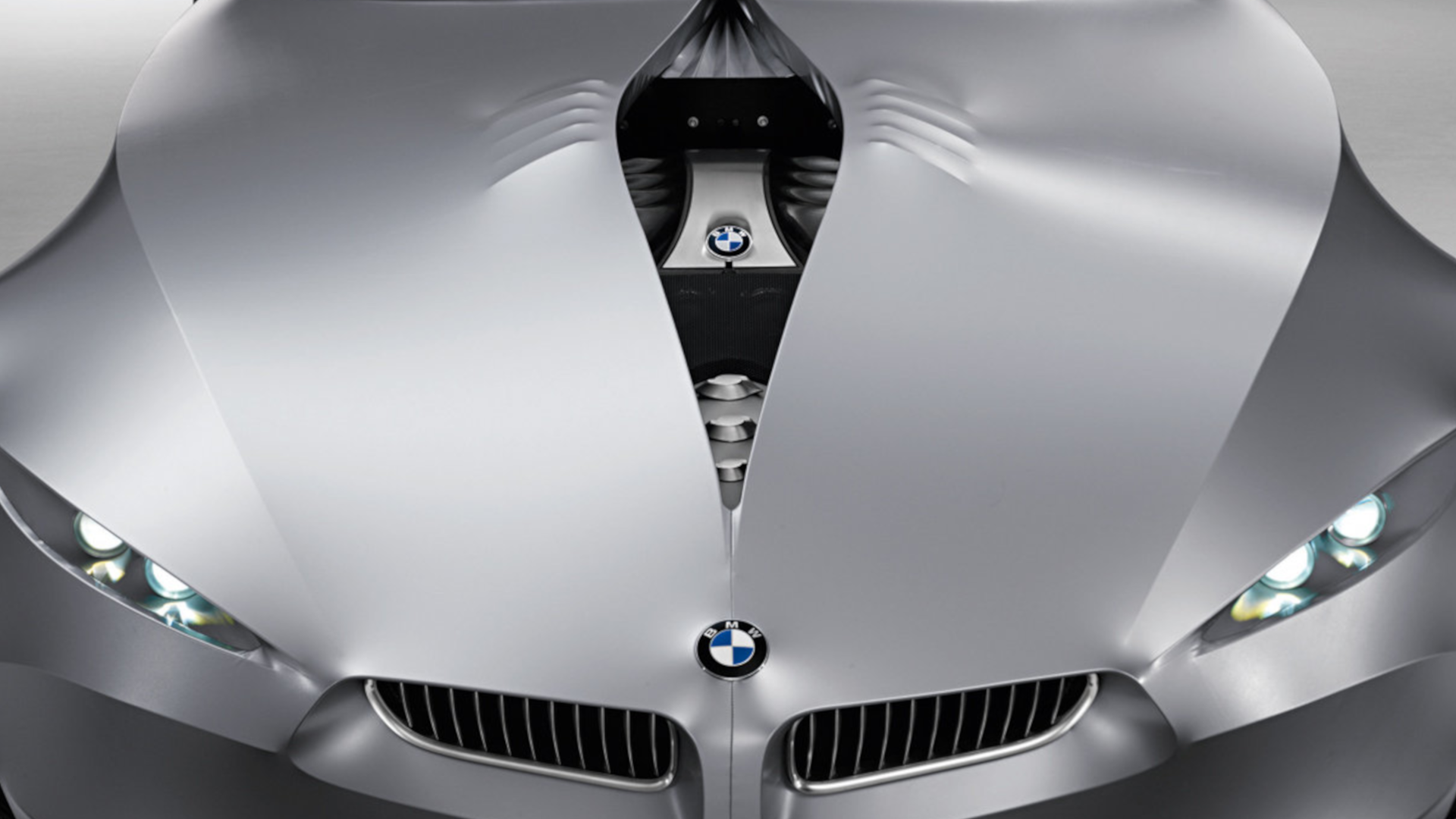
It took the BMW design team some seven years to perfect their concept car, but when designer Chris Bangle eventually unveiled his masterpiece, it revealed – a cloth-draped car. With maybe one of the longest names ever for a concept, the “Geometry and functions in ‘N’ Adaptions Light Visionary Model,” or simply Gina for short, was unlike anything the automotive world had seen when it was unveiled in 2008.
BMW
BMW is a German luxury car and motorbike manufacturer and current owner of Mini, Rolls-Royce, and Alpina. With roots dating back to 1913 as Rapp Motorenwerke, it officially became Bayerische Motoren Werke in 1922 as a manufacturer of aircraft engines. BMW’s first car was built in 1928 when it built the Austin 7 under license from Dixi, which was called the BMW 3/15. BMW grew into a manufacturer of premium and luxury automobiles, launching iconic nameplates like the 3 Series, 5 Series, and 7 Series, and is today known as one of the leading luxury automakers in the world, while the BMW M division is hailed as a leading manufacturer of performance cars.
- Founded
-
1916
- Founder
-
Karl Rapp
- Headquarters
-
Munich, Germany
- Owned By
-
Publicly Traded
- Current CEO
-
Oliver Zipse
It had the basic body structure of Bangle’s Z4 roadster, but with only four major body panels, across which a network of aluminum mesh was constructed to be covered by a polyurethane and spandex material. As the spandex could stretch, the moveable body panels underneath could adjust the car’s appearance in different ways, but always be covered by the gray spandex – essentially making it look as if it could alter its shape as you drive. Cool, huh?
With a name this long for the concept car, we’ve shortened it to Gina for practical use. The Light Visionary Model part of the name is a reference to the series of concept cars that Bangle championed during his time at BMW.
Spandex For Body Panels? Why not?
|
Specifications: BMW Z4 3.0i (E85) |
|
|---|---|
|
Engine |
3.0-liter inline-6 |
|
Power |
215 hp |
|
Torque |
199 lb-ft |
|
Acceleration |
6.2 seconds |
|
Top speed |
155 mph |
During his tenure at BMW, Chris Bangle created much controversy with some of his designs. Most notably, the Z4 and the 7 Series, which sparked outrage on the enthusiasts’ forums at the time. But what was often overlooked, is that Bangle had a unique way to work with shapes and light, and how these two would interact. Take the Z4, for example, where the light and shadows would dance on the door panels in soft light.

Related
10 Best BMWs From The Controversial Bangle Era
Although controversial when new, the Bangle era BMW models are now in a league of their own – and these are the best out there.
The Gina concept car was his idea, as well. And again, he played with surfaces and how the light fell on them. Indeed, that’s part of the reason that the LVM project got its name from – the Light Visionary Models. By using the aluminum mesh with its moveable electro-mechanical parts on the outer body of his concept car, he could play with the surface of his car. Making it wider, or higher (at the tail, where the spoiler would rise at high speed for extra downforce). Or, as with the hood, it would open straight down the center line, to give access to the engine.
Blank canvas for the designers to work with

But the concept car wasn’t only about watching the light and shadows play on the surfaces. The idea was that it would be a platform, a blank canvas if you will, for designers to give themselves a free hand to rethink the way a car should look like and how one would interact with it. By allowing panels and parts to move around, the designers had more leeway to try new things. As the first, Gina-part of its name alludes to, it gave the designers “N” amount of possibilities for adaptations of the car of the future.
It was all a bit airy-fairy, and even for concept cars, this was a concept maybe three steps ahead of what everyone else was doing. But Chris Bangle was never one to be satisfied with the ordinary.
The Gina – It’s Cute, In A Zeppelin Kind Of Way
Someone said at the unveiling of the Gina concept car that it resembled the result of a hookup between a Zeppelin airship, a BMW 507 and a modern Z4 Roadster. Indeed, it had that long, gray shape of the Zeppelin, and the body-structure of the Z4, with a hint of the historical 507 thrown in for good measure.
The car itself was quite intriguing, though. The spandex material used to cover the body was said to be water-resistant and fairly durable in heat and sun. The team sculpted it taut around the body in such a way that it would always be crease-free. It was only when the doors were swung open in an upwards manner, that the fabric would pile up in planned and prearranged folds.

Related
The Most Beautiful BMW Ever Made Was A Big Flop
Sometimes, big plans fail in catastrophic ways. Others, such as this beautiful Bimmer, simply peter out without so much as a whimper.
At the front, the spandex covered the headlights when they were not in use. If you switch on the lights, the material would slide to the sides. At the back, the brake lights simply shone through the material. The same applied to the grille – the spandex would cover it when stationary, and slide sideways from the center line outwards to open up the grille when you started driving.
Even on the inside, the concept car could shift its shape. Standing next to the car, the spandex would cover both of the two seats. Opening the door, the spandex would open up, revealing the two seats. Then, as you want to make yourself comfortable in the sports seat, the dash and steering wheel will slide closer – from what BMW called its idle position – to the driver. Behind his head, the headrest would rise up from inside the backrest.
So, how practical was this project, then?

In accompanying press releases, BMW gushed about the development of tomorrow’s mobility, and our readiness to challenge what is established, and the ability to present new options. Catchphrases like innovative thinking and maximum freedom of creativity were also used randomly. But for all its “dramatically different solutions that affect the design and functionality of future cars,” we can’t see a car in any sense of the near future having a body made up of spandex.
But even more so, why would one want to have that? With active aerodynamics, which BMW ironically is a big proponent of, we already have shape-shifting bodies. The rear wing can lift when cruising at high speeds. The Bugatti Veyron has a fat panel on the rear end which stands up as you brake hard, to help with extra stopping power. And at the front of modern cars, we have all sorts of flaps that can open and close to direct airflow to either the brakes, or around the front wheels for a cleaner movement and lower drag coefficient.
Shape-shifting, in essence, isn’t that new really. What Bangle and his team did, was to cover the shape-shifting panels with a nice spandex material, like a sock over a veined calf. It makes the car look slicker, but adds complexity and more trouble down the road. How will the system behave after multiple stretches? And sun and rain?
For all BMW’s rah-rah on the future its Gina opened up, the reality is that it was more about Bangle’s love for surfaces – and how light and shadows play on them – than looking for real solutions to everyday problems.
Is This The Future Of Motoring?
Active aerodynamics, and how we can work with that without creating extra drag, is the biggest benefit that came out of this concept vehicle. Wings that are tucked away when not in use are a good example. Or flaps behind the front bumper, for channeling air to either the brakes or around the wheels.
Something that could be looked into is creating a new material to cover wheels for enhanced aerodynamics. In the 1980s, we had disc-shaped wheel-covers to help with this. But if a wheel could virtually be completely closed up with a protective surface, airflow at high speed would be even smoother.

Budgets are focused on other things, today
But, as things stand today, budgets are channeled to new propulsion systems, be they fuel-cells or lithium-ion batteries. We can also see more being done to investigate how to make the cabin more accessible at all times. Luxury cars already have seats that move backwards when you switch the car off, easing egress. Jaguar used to have foot-pedals that could be brought closer to the driver, and telescopic steering wheels have been known for a long time.
It is only recently that side-mirrors are being replaced in some models with a camera. But these are the type of inventions we see becoming a reality in the near future. Not spandex covering up the engine bay and doors.
Conclusion
Chris Bangle has left a solid legacy in the automotive world. His Z4, viewed in the right soft light, is a masterpiece of dancing shadows and light. With his Light Visionary Models he pushed the design envelope even further. Simply put, we haven’t seen concept cars like this ever since. It might have been outlandish to imagine a shape-shifting car. But in the end, Bangle actually produced it. And for that visionary step, we should be grateful to him.
Source: BMW