
The Kia Coupe That Was An Engine Away From Greatness

In the early 2000s, Kia wouldn’t have been the first name that would come to mind if the Quiz Master on a TV show asked for an automaker famous for fun and sexy models. The Koreans were more adept at making solid, budget-friendly hatchbacks and sedans.
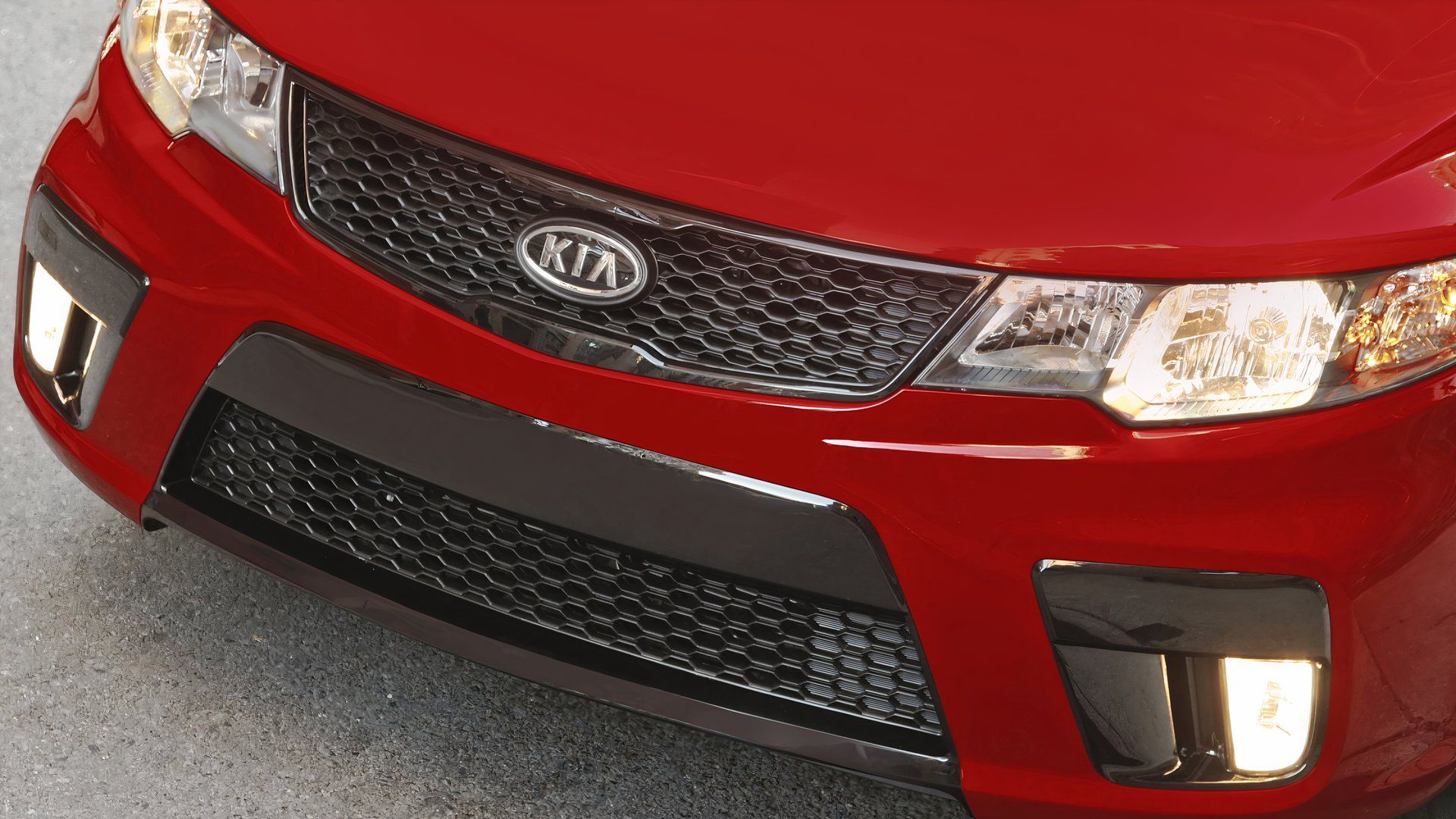
But by 2010, things had started to change. The Korean giant took the Forte sedan, plucked out the two rear doors, and asked former Audi designer Peter Schreyer to merge everything into a nice, balanced piece of metal. Which he did, quite splendidly. Look at the Forte Koup today and it still looks fresh and sharp. A little bit of wedge styling in there, to give it some aggression. Two huge doors. And a fat C-pillar to give you zero side-rearview visibility; but at least you looked cool while you drifted into the car behind you.
In launching the Forte Koup, Kia gave the budget-friendly two-door model a big chance to succeed in the marketplace. Except for one flaw. And by now we guess you’ll know what that is.
Kia’s Forte has been sold under different names in various countries. It’s known as the Cerato in Korea, Australia, and Brazil, and the Forte in North America. From 2024, the brand’s small hatchback has been renamed as the Kia K4.
The Forte Koup – Silly Name, Stylish Car
|
Kia Forte Koup Specifications |
||
|---|---|---|
|
Engine |
2.0-liter inline-4 |
2.4-liter inline-4 |
|
Power |
156 hp |
173 hp |
|
Torque |
144 lb-ft |
168 lb-ft |
|
Gearbox |
6-speed manual / 6-speed automatic |
|
As Kia was transforming from a cheap-and-cheerful maker of family cars, it set itself the target of improving not only the design and interior quality of its cars but also to broaden the scope of its portfolio. On the design front, the automaker got hold of Peter Schreyer in 2006, the talented designer from Audi who penned the successful second-generation A3, among other impressive designs.

Related
Kia Forte Koup Named Car of the Year for 2009
To broaden its appeal in the market, some sexy models were introduced, like the two-door hatchback the Cee’d in some markets – with a very distinctive Audi A3 look to it. The second model was slightly bigger and based on the Forte – the new Forte Koup. Again, Schreyer’s signature style can be spotted here: there were the straight lines along the sides, the wedge-styling, and the pointy nose. That nose was particularly important, as it was the first iteration of the Tiger Nose grille that ha since become a Kia signature.
Silly Name, Great Concept
When it comes to the name, we’d argue Kia tried a bit too hard. Koup is the phonetic spelling of how Americans pronounce coupe, so while it worked for the market, and arguably proved just how America-centric the car was meant to be, it was a quirk for the sake of a quirk. It was akin to Tesla selling its first sports car as the ‘Roadsta.’ A car like this deserved a better name, and arguably one with more allure than the Forte badge. Kia got it right a few years later when it launched the Stinger, choosing a name that generated excitement without needing to resort to cutesy misspellings to stand out.

Related
Kia Forte Koup – Phase Two of Kia’s Evolution
The Koup was aimed at young buyers – around 25 years old – and therefore priced quite keenly. Prices started at $18,195 and undercut the Honda Civic by some $2,000. It was also specced to the hilt. Something like a Bluetooth connection for your smartphone was standard, but the coup de grâce was a set of rings around the speakers that could flash in different colors. A dial on the dash lets you choose from four settings for the lights, including a steady glow, a pulsing “mood” mode, and a “music” mode that apparently struggled to keep up with the beat.
Higher-specced models had a leather interior, red accent stitching, front and side curtain airbags, a tire pressure monitoring system, power windows and automatic headlights, and 17-inch wheels.
The Name Was Odd, But The Engines Were Where It Faltered
The Kia Koup had a lot going for it. The edgy styling. Tasteful interior with leather and contrast stitching. However, the 2.4-liter inline-4 available in the North American market tried its best but ultimately failed. The engine was mated to either a six-speed manual or a six-speed auto, and judging by various reports of the time, you really didn’t want to have the manual. Kia used a throttle-by-wire system for the new Koup, but the calibrations weren’t settled by the time it went to market. Meaning that gearshifts were jerky and downshifts were a bit of a learning curve.
We won’t even talk about the base 2.0-liter engine, as that lacked the power to get out of its own way, let alone out of the way of faster traffic.
It was somewhat of a letdown, considering the rest of the package was mighty impressive. It had stiffer suspension than expected and sharp handling with steering that was better than was to be expected from something with a Kia badge. If it had an engine that could compete with the turbo-fours becoming prevalent in models from Volkswagen, it could’ve been a serious performance contender in the segment. However, there were other flaws, largely attributable to the Koup’s position in a budget-focused segment. Road noise and a lack of sound deadening let down the refinement a little, leaving the Kia lacking compared to Hondas and VWs of the era.
Second Generation Koup Fixed The Power Deficit But Never Lived Up To The Hype
With youthful cars all the rage post-2010 – just look at Toyota’s spin-off Scion and the success it had at the time – the Koup was an important model for Kia. Realizing it could capitalize on the craze for small, affordable, trendy cars, the South Korean brand brought it back for another generation, fixing the lack of a turbo with a new 1.6-liter turbo GDI engine. The base motor was still a 2.0-liter naturally aspirated one, but it now had 173 hp. However, above this, the turbo 1.6 produced 201 hp. Now we’re talking. On paper, it was a winner, but it ultimately failed to meet expectations. Not only was the second generation less striking from a styling perspective, but the turbo engine felt flaccid and never seemed to deliver the 201 hp it promised. Accompanied by huge dollops of turbo lag, it ultimately couldn’t deliver on its promise of being sporty.
The Koup was Kia’s only two-door production model ever built and had the brand managed to deliver a sharp driver’s tool, perhaps we’d have been speaking of Kia with the same praise we now talk about Hyundai’s N division with.
The Sporty Kia That Delivered On All Fronts
While the Forte Koup never delivered the complete package its looks promised, Kia found its footing several years later with the Stinger. The closest thing the brand ever got to another coupe, the Stinger was a four-door liftback that took aim at the BMW 3 Series, and by all accounts, did a damn fine job of it. To quote our own first drive review, which Kia quoted in its Superbowl advert, “It lives up to the hype.”
A rear-wheel drive chassis, powerful turbocharged engines, and achingly good styling, the Stinger was the complete package and served as a halo for the brand until it was discontinued. Kia had once promised to be the sportier of the two Hyundai Motor Group brands, and the Koup looked to be the start of that. The Stinger set the tone further, and if Kia had continued the Forte Koup legacy on the same note as the Stinger, perhaps the funky little performance coupe would still be around today.
But instead, Hyundai took on the mantle of being the fun brand with the funky three-door Veloster and sporty N-branded iterations of the Elantra, Veloster, and Kona. The Forte Koup lives on in memory as a true What If moment, holding all the promise of what might’ve been.

Related
Hyundai Elantra N By The Numbers: 0-60, Horsepower, Lap Times, And More
These are all the headline figures that make the Elantra N such a formidable competitor.
Sources: Kia, Hyundai

