Can flex PCBs be repaired if damaged?

flex PCBs be repaired if damaged
Often used in aerospace and military products, flex PCBs are flexible circuit boards that are interconnected with rigid sections. They can withstand movement and vibration and are ideal for applications that require compact devices. These devices are also designed to withstand harsh environments and a range of temperatures. However, a flex PCB can be damaged if it is subjected to excessive bending or flexing. This is why it is important to carefully design and engineer your flex PCBs in order to minimize the likelihood of damage.
Ripped or cut flex material, heat damaged/lifted pads and broken conductors are among the most common types of damage that can occur to a flex PCB. Fortunately, these issues can be repaired by adding in replacement Kapton or support and gluing the areas that are no longer functioning.
Using high quality materials during the fabrication process is another way to avoid damage to a flex PCB. This includes choosing the right type of copper for your application. For example, rolled-annealed copper is a good choice for flex PCBs because it can stretch much farther than un-annealed copper before fatigue cracking occurs. In addition, rolled-annealed copper is springier in the Z direction which is beneficial for a flex PCB that will be manipulated and bent constantly.
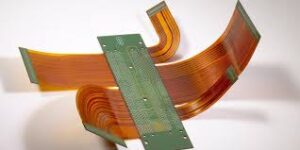
Can flex PCBs be repaired if damaged?
It is also important to clearly define the flex pcbs zones and the maximum allowable bend radius in the early stages of the design process. This will help to ensure that the flex PCB can withstand the desired number of flexes and rigid-flex moves during assembly. If the flex PCB will be dynamic, it is recommended that you use a stiffener to prevent the board from overheating and breaking during assembly.
Another common reason for flex PCB damage is manufacturing defects. These can include scratches during transportation, incorrect resin content of adhesive sheets, low etching pressure, and a variety of other problems. During the fabrication stage, it is crucial to monitor the temperature and pressure of the etching bath and reduce the amount of chlorine ions in the chemical solution.
The final inspection of a flex PCB is an essential step in ensuring that it will work properly. This step is done to identify and repair any defects before the board is shipped. During the inspection process, a visual and electrical test is performed to ensure that the PCB is free of faults.
If your flex circuit is damaged, it is essential that you take the time to identify the problem and find a suitable repair method. This will prevent further damage to the circuit and help you get it back into working condition.
First, you will need to remove the components from the flex circuit and delaminate the layer of plastic covering it. This can be done with a razor blade or an exacto knife. Next, you will need to cut a narrow strip of foil about the width of the trace that has broken. Place the strip over the broken area, overlapping a few mm of trace on each side. Then, apply solder to the pad and use a soldering gun to heat it until it melts. Finally, trim away the excess tape carefully.