Here’s How Much A Roof Box Is Messing With Your Fuel Economy

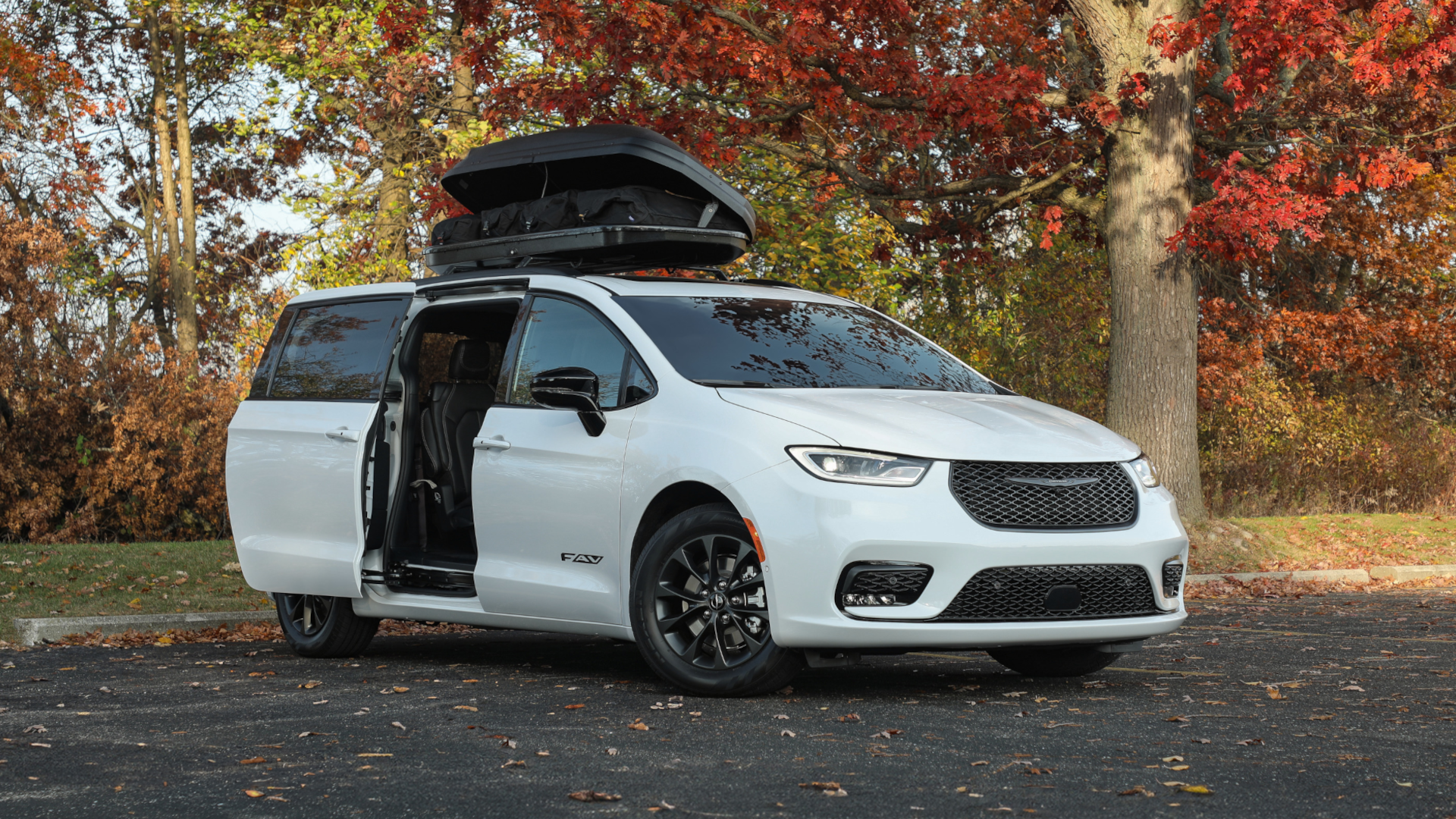
Chrysler recently introduced a new version of the 2025 Chrysler Pacifica. This new Family Adventure Vehicle gets a 16-cubic-foot Thule rooftop cargo box as standard, which is a nice deal. Rooftop storage is extremely useful on extended vacations, and it can be a life-saver on overland or off-road adventures.
Thankfully, you don’t need to buy a new Chrysler to get a neat roof box or roof rack. You can get a set of roof rails for a hundred bucks, depending on your make and model, and it’s not hard to find a great deal on a new or used roof pod. But, these add-ons come with their own hidden costs. That is, they’re actually cutting into your fuel economy if you leave them stacked on top of your car between road trips. Consumer Reports published a pretty informative study on this problem a few years back, and their findings are just as relevant now as ever.
Fuel-economy calculations provided herein are based largely on data pulled from the Consumer Reports studies referenced throughout, with other resources named where relevant.
What’s That $200 Roof Rack Really Going To Cost You?
Consumer Reports ran a test including a 2019 Toyota RAV4 and a 2019 Nissan Altima, testing the vehicles with a roof rack, and with a roof rack and rooftop pod. Maybe the most surprising finding of the study was that the sedan actually took a major hit to fuel efficiency with the roof rack alone.
|
Model |
2019 Nissan Altima |
2019 Toyota RAV4 |
|---|---|---|
|
Fuel Economy Increase With Roof Rack |
11% |
2% |
|
Fuel Economy Increase With Roof Pod |
19% |
13% |
Your fuel economy takes less of a hit when traveling at slow speeds. It’s the highway trip that really kills your mileage. Once you’ve arrived at the campsite, and you’re ready for some slow-and-low rock-climbing, wind resistance isn’t really an issue anymore. So these tests were conducted based on an average speed of 65 mph.
The Altima used in the test was able to get as much as 48 miles to the gallon with nothing at all on the roof, losing 5 mpg with the roof rack alone, and a whopping 9 mpg with the roof pod attached.
Related
Why The 2025 Toyota 4Runner Is The SUV For Every Occasion
Toyota has expanded the 4Runner range with two all-new models.
Consumer Reports conducted a similar study earlier that year, with the same makes and models, and made similar findings. An empty bike bitch rack cost the RAV4 2% of its fuel economy, while two bicycles cost the SUV 12% of its fuel economy. The Altima suffered a more significant loss of 3% with an empty hitch rack, or 25% with two bikes.
The added weight and compromised aerodynamics that comes with adding big storage compartments to the outside of the vehicle will naturally lead to worse fuel economy. These studies only give us more accurate numbers for what we’ve known all along.
A more conservative estimate from the Department of Energy suggests an average fuel economy loss of around 5% when carting around a loaded roof rack. As a broad average, this would cover large and mid-size SUVs and pickups, as well as sedans and small SUVs. Bottom line: you lose less fuel economy in larger vehicles like a Ford Expedition or a Chevy Tahoe, but every vehicle loses some degree of efficiency when you pack the roof.
Roof Pods Could Cost You Around $1,000 After Five Years
Assume you’re driving something like the 2020 Toyota RAV4 and getting 30 miles to the gallon. According to the EPA, this will have you spending roughly $1,500 a year over 15,000 miles, annually. After five years, that’s $7,500. If your roof rack and storage pod have you spending an extra 13% at the pump, that comes out to $975 after five years. With a roof rack alone, that 2% hit will cost you around $150, which isn’t so bad, but you’re still roughly doubling the cost of ownership for the rack.

Related
Ford Develops Deployable Roof Racks With Aerodynamic And Self-Driving Benefits
Ford has expanded upon its previous idea of powered roof accessories, revealing its own take on a deployable system that Rivian recently patented.
The numbers shake out roughly the same for sedans. Consumer Reports’ Altima test saw the car suffering a 19% dip in fuel efficiency when carrying a roof pod. The EPA estimates a 2019 Altima with a 2.5-liter 4-cylinder engine to get around 32 miles to the gallon, which comes out to a fuel expense of $1,000 per year. After five years, that adds up to around $950 in fuel expenses for a typical mid-size sedan like an Altima, a Camry, or an Accord, which is almost a full extra year’s worth of refueling just to carry the roof pod.
Are Small Trailers A Viable Alternative To Rooftop Storage?
Short answer: travel trailers are even worse for your fuel economy than rooftop storage, no matter the size and weight.
Exactly how much fuel economy you’re going to lose when pulling a trailer varies wildly by weight, the aerodynamics of your trailer, and how much your vehicle is rated to tow. A good rule of thumb most towers follow is to assume a 2% loss of fuel economy for every 100 pounds you’re towing.

Add CarBuzz to your Google News feed.
If we’re assuming you’re pulling one of those little teardrop trailers, the lightest of these typically weighs around 500 lbs, which comes out to a 10% drop in fuel efficiency before we’ve taken wind resistance into account. The makers of the Droplet trailer report a drop in fuel economy of up to 20% when pulling one of their trailers. The brand’s flagship model weighs in at around 950 lbs, and is designed specifically for use with smaller vehicles. Even so, the brand’s own estimates have us spending more on pulling this trailer empty than we would be spending carrying a roof pod.

Related
The CyberTrailer Camper Is The Perfect $175,000 Accessory To Match Your Tesla Cybertruck
Despite its name, the CyberTrailer isn’t an official Tesla product, but it’s still pretty cool.
This is to say that no, pulling an extra half-ton of cargo behind your truck, car, or SUV isn’t going to save your fuel economy.
EV developers are doing some exciting stuff with self-powered trailers that won’t affect mileage, but, at present, these are prohibitively expensive and not really intended to serve as a practical cargo-management system for your average off-road enthusiast.
Just Remove The Storage System When You Don’t Need It
The solution to this problem is about as simple as it gets: just take the racks off the roof when you don’t need them. We know it’s a pain in the neck. You just got home from a long camping trip, all you want is a hot bath and a good night’s sleep in a real bed. You don’t want to be messing around in the garage with a screwdriver, and even an easy-release system feels like too much hard work.
We don’t really need to tell you to keep your car clutter-free if you want to improve fuel economy, right? Pulling all that fishing gear from the back and putting it away, removing the roof racks and cargo pod, emptying the coolers, putting the leftover sodas and beers back in the fridge, stowing all the camping equipment. This is basic, common sense stuff. We put it off not because we don’t know any better, but because we’re too darn tired to do anything after a long trip.
That’s fine, just make sure your car is stripped-down and clutter-free before the next time you hit the highway.
Sources:
Department of Energy
,
EPA
,
Droplet
,
Consumer Reports